

Moving can change the conditions that shape health, so health and social policy must plan for a mobile population.
UMass Boston

The University of Massachusetts Boston is nationally recognized as a model of excellence for urban public universities. The scenic waterfront campus, with easy access to downtown Boston, is located next to the John F. Kennedy Library and Presidential Museum and future home to the Edward M. Kennedy Institute for the United States Senate.
Part of the UMass system, UMass Boston combines a small-college experience with the vast resources of a major research university. With a 16:1 student-to-faculty ratio, students easily interact with professors because most teaching occurs in small class sizes. Ninety-three percent of full-time faculty hold the highest degree in their fields.
Links
Articles

Once completed, the 2,177-kilometer GCC Railway will connect six Gulf kingdoms and provide alternative routes to Europe and Asia.
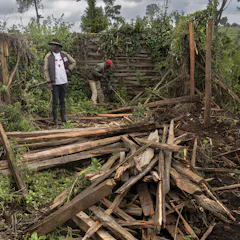
Efforts to protect land and environmental resources, including fighting climate change, often end up displacing people who have lived in those places for generations.
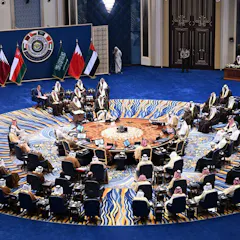
The Gulf Cooperation Council was formed after the Iranian Revolution of 1979. Since then, GCC members have tried different strategies to contend with Tehran.

Everyone likes being told they’re clever, even if it’s coming from an AI chatbot. But their sycophancy has serious consequences for truth and trust.

When a home healthcare aide doesn’t show up, the consequences are immediate and can be dire.

Le débat sur l’IA à l’université se focalise sur la tricherie. Mais le véritable enjeu est ailleurs : c’est tout l’écosystème de formation et de production du savoir qui pourrait être fragilisé.

For body cameras to function as transparency tools, wrongdoing would have to be consistently penalized, highlighting the consequences of noncompliance.

Automating knowledge production and teaching weakens the ecosystem of students and scholars that sustains universities, raising existential questions about their mission.
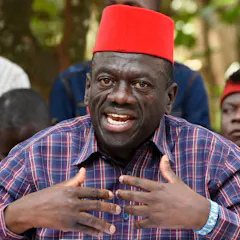
Besigye’s decision to break with the president put him in intense and prolonged personal danger.

Nearly a third of all countries worldwide have pledged to phase out their unabated coal-burning power. But China and India are still adding coal plants – for now.

Experts explain the tension between stability and politicisation in climate governance.
Six scholars with experience in 15 countries provide lessons on best practices for documenting atrocities and elevating the voices of victims and survivors.

The Net-Zero Banking Alliance, intended to curb lending to carbon-intensive sectors, wasn’t effective and more importantly never made much business sense.
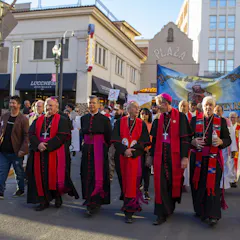
New research from sociologists finds that local Catholic leaders are more likely than many other Christian clergy to speak about immigration with their congregations.

Commercial mining of the deep sea could begin soon. But these metals and minerals are not scarce. Mining will be harmful and the economic benefits are overstated.

When that important link is broken, your health gets worse and the costs borne by the whole health care system for your treatment rise.

AI avatars of dead people are teaching courses and testifying in court. Even with the best of intentions, the emerging practice of AI ‘reanimations’ is an ethical quagmire.
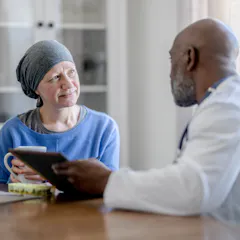
When people over 65 lose Medicaid coverage, they stop seeing their doctors for preventive care due to high costs. This in turn leads to worse health outcomes and higher health care costs.
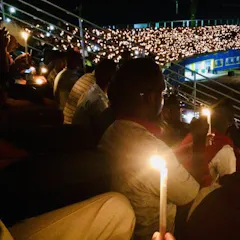
Les pratiques de commémoration du génocide telles que le Kwibuka restent importantes pour les survivants.
Authors
-

Ph.D. Candidate in Global Governance and Human Security, UMass Boston
-
Assistant Professor in Urban Public Health, UMass Boston
-
Senior Research Fellow, Applied Ethics Center, UMass Boston
-
Professor Emeritus of Management, UMass Boston
-
Adjunct professor, UMass Boston
-
PhD Candidate in Sociology, UMass Boston
-
Assistant Professor of Sociology, UMass Boston
-
PhD Student, UMass Boston
-
Junior Research Fellow, Applied Ethics Center, UMass Boston
-
Senior Research Fellow and Lecturer of Gerontology, UMass Boston
-
Professor of Gerontology, UMass Boston
-
Professor of Philosophy and Director of Applied Ethics Center, UMass Boston
-
Lecturer, UMass Boston
-
Professor of Global Governance & Human Security, UMass Boston
-
Adjunct Professor of Public Policy, UMass Boston