

Social capital matters in academic career progress.
Tshwane University of Technology

The Tshwane University of Technology (TUT) is a proud product of South Africa’s first decade of democracy. While the size and scope of this dynamic new institution impress, the quality of its teaching, research and community engagement is what makes the University really stands out.
TUT was established on 1 January 2004, with the merging of the former Technikon Northern Gauteng, Technikon North-West and Technikon Pretoria. At the time of the merger, the uniquely South African institutional designation of “technikon” was dropped in favour for the internationally accepted “university of technology” designation.
Students This new mega-institution annually enrols approximately 60 000 students. Its student body is one of the most demographically representative in the country in terms of both race and gender, reflecting the Rainbow Nation in all its diversity. With almost 22 per cent of contact students accommodated in residences, the University is by far the largest residential higher education institution in Southern Africa.
Campuses Its geographic footprint covers four of South Africa’s nine provinces – Gauteng, Mpumalanga, Limpopo and the North-West Province – with campuses located in Tshwane (Pretoria, Soshanguve and Ga-Rankuwa), Mbombela, eMalahleni (previously called Witbank) and Polokwane (previously called Pietersburg). Large numbers of students are also drawn from other provinces and from neighbouring countries such as Botswana, Zimbabwe, Namibia and Swaziland.
Staff members TUT employs more than 2 700 permanent staff members, including almost 855 highly qualified permanent academics. These academics are increasingly focusing on conducting applied research and community engagement activities in addition to their instructional roles. Caring for the underprivileged, the upliftment of people and assisting those in need are key elements of the University’s community engagement strategy.
Career-focused TUT is truly an institution in service of the Southern African community. One of its key focuses is, therefore, the economic and social development of the Southern African region. In its quest to promote knowledge and technology, it provides the market with a career-focused workforce. It also aims at making a significant contribution to creating sustainable economic growth that will impact on the standard of living of all of the region’s people.
The education offered at TUT, with its entrepreneurial focus, opens up unlimited opportunities for students to become job creators and entrepreneurs. This is established by creating prosperity through the stimulation of innovation and creative thinking. This is facilitated by various incubators and technology stations.
TUT strives to be a leading institution, viewing the diversity of its staff, students and other stakeholders as a strength to be nurtured in service of the country and the African continent. The University is committed to ongoing transformation to make it ever more responsive to the needs of Southern Africa and the continent, as a whole.
Links
Articles
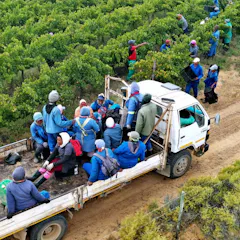
Global supply chains lead to companies capturing most of the value, while suppliers – and especially workers – get a much smaller share.

Rhizobia-based fertiliser technology is cost-effective, non-toxic and sustainable.

The G20’s legacy so far has been to preserve capitalist financial systems.
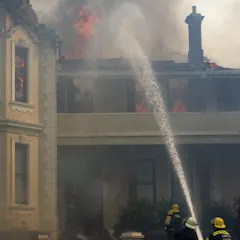
South African universities remain exposed to preventable student risks.

Corruption in the Tshwane Metropolitan Police Department is more than just a betrayal of public trust, it fuels non-compliance with the law.
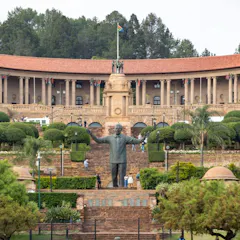
Most of South Africa’s government officials don’t know how to use technology to improve efficiency.

Looking for a pet? Please don’t buy a ferret. They’re not fully domesticated, often escape, and wreak havoc on the environment once they establish feral populations.

South Africa’s rural Sekhukhune is full of interesting sites and heritage. Communities need financial and technical support to start sustainable tourism projects there.
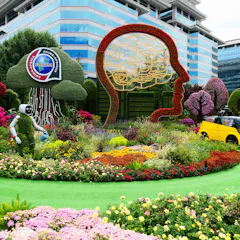
China’s engagement with Africa has evolved over the past 24 years, with a shift towards mutually beneficial investments.

Zuma’s uMkhonto weSizwe is now the largest party in KwaZulu-Natal and the fourth biggest nationally.

The second episode of What happened to Nelson Mandela’s South Africa?, a three-part podcast series on The Conversation Weekly. Featuring interviews with Mashupye Maserumule and Michael Sachs.

The ANC tied itself in knots defending Zuma’s destructive bad behaviour in the past. Acting against him now would require it to own up to its sins.

If public administration education is designed and delivered poorly, it sets a course for the systematic destruction of state capability.
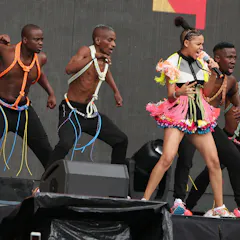
Costume, hair and dance allow her to modernise Tsonga culture – and help shape youth identity.

Architects give their views on a landmark skyscraper burning as Sudan’s capital is systematically destroyed.

Armed police interventions are unconstitutional and incapable of addressing housing and safety in the inner city.

The proportional representation system has long outlived its relevance. Its negative extremes abound in local government.

Les habitants et les Soudanais de la diaspora ont investi dans des maisons pour assurer leur avenir. Aujourd'hui, le conflit détruit l'espoir.

Both residents and Sudanese in the diaspora invested in homes to secure the future. Now the conflict is destroying hope.
Authors
-

Lecturer of Public Administration and Policy, Tshwane University of Technology
-
PhD in public health, Tshwane University of Technology
-
Tourism Lecturer, Tshwane University of Technology
-
DST-NRF SARChI Chair in Innovation Studies, Tshwane University of Technology
-
Professor of Public Affairs, Tshwane University of Technology
-
Head of the Department of Public Management, Tshwane University of Technology
-
Lecturer, Department of Chemistry, Tshwane University of Technology
-
Associate Professor, Tshwane University of Technology
-
Lecturer in Costume Theory and theatre costumer, Tshwane University of Technology
-
Post Doctoral Research Fellow and Lecturer at the Department of Nature Conservation, Tshwane University of Technology
-
Associate Professor in Performing Arts, Tshwane University of Technology
-
Chief Director: Tshwane University of Technology – Institute for Economic Research on Innovation; Node Head: DST/NRF SciSTIP CoE; and Professor Extraordinary: Stellenbosch University – Centre for Research on Evaluation, Science and Technology., Tshwane University of Technology
-
Associate Professor , Tshwane University of Technology
-
Academic Excellence Coordinator, Tshwane University of Technology
-
Tshwane University of Technology