

As Mark Carney raises the possibility of Canada joining the European Union’s Erasmus+ education program, it’s important to figure out what form Canadian participation would take.
Memorial University of Newfoundland

As Newfoundland and Labrador’s only university, Memorial has a special obligation to the people of this province. Established as a memorial to the Newfoundlanders who lost their lives on active service during the First and Second World Wars, Memorial University draws inspiration from these shattering sacrifices of the past as we help to build a better future for our province, our country and our world.
We are a multi-campus, multi-disciplinary, public, teaching/research university committed to excellence in everything we do. We strive to have national and global impact, while fulfilling our social mandate to provide access to university education for the people of the province and to contribute to the social, cultural, scientific and economic development of Newfoundland and Labrador and beyond.
The Memorial experience goes beyond academics; it invites a discovery of self, community and place. At Memorial, we celebrate our unique identity through the stories of our people – the work of scholars and educators, the ingenuity of students, the achievements of alumni – and the impact we collectively make in the province, the country and the world. Memorial is the natural place where people and ideas become.
Memorial University has more than 18,500 students and 5,200 faculty and staff spread across four campuses and nearly 85,000 alumni active throughout the world. From local endeavors to research projects of national concern, Memorial’s impact is felt far and wide.
Links
Articles

Bacteria have transformed some viruses — now called gene-transfer agents — into a means of exchanging genetic material among themselves.

For older employees already experiencing burnout, poorly designed or poorly timed training can become an additional job demand rather than a solution.

Combining more than 15,000 reports from 36 states, researchers estimate that recreational fishing puts $3 billion worth of food on Americans’ tables each year.
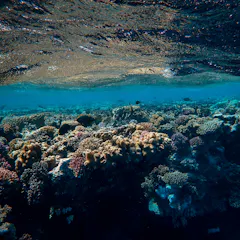
Connectivity isn’t a nice-to-have for coral reefs – it’s their lifeline. And now scientists know which reefs serve as vital ‘stepping stones’ for coral larvae.

Canada remains one of the few high-income countries without a national oversight body focused on the well-being of children and youth.

New research shows how these storytelling choices can distort science – and how to move beyond them.
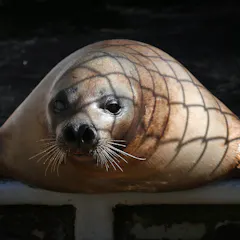
Since Atlantic cod fisheries collapsed in the early 1990s, ecosystems have been less productive and have struggled to recover.

Early experiences shapes children’s developmental trajectories, and despite pressures to adapt to AI in education, there is a need for caution and safeguarding children’s privacy.

Without sustained support for education, housing and mental health, many former youth in care become involved in the criminal justice system.

Colonialism, corporate greed and lax regulation led to widespread pollution, particularly affecting Yellowknives Dene communities.
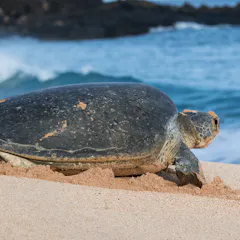
De nouvelles recherches estiment qu’environ 60 tonnes de déchets plastiques jetés dans l’océan se retrouvent dans le corps des femelles tortues vertes.
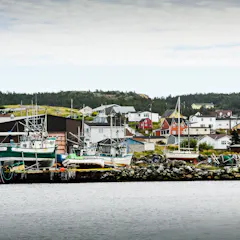
Policymaking on managing Canada’s fisheries could be improved by including provincial authorities and Indigenous stakeholders in more decision-making.
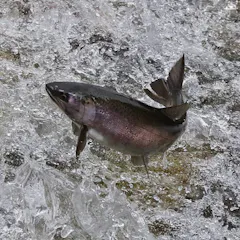
Freshwater ecosystems are among the most threatened and degraded environments in the world. The way we use the land surrounding waterways can have devastating impacts on aquatic life.

Ghana needs to empower women by providing them with the resources they need to flourish and fight abuse.
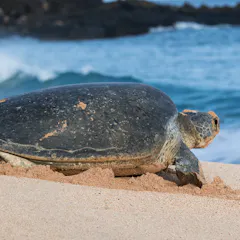
De nouvelles recherches estiment que les tortues vertes femelles abritent, à elles seules, six tonnes de déchets plastiques.
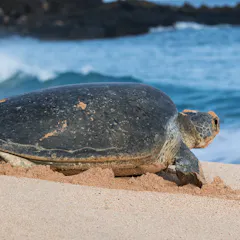
New research estimates that approximately 60 tonnes of plastic debris discarded in the ocean reside within female green turtles at any given time.

A deep dive into the test’s framework suggests it was designed to fail about the same share of students every year, even if they’d made actual progress from previous years.

How can the Liberal Party’s energy ambitions support just and equitable energy transitions?

Global ocean research needs to shift priorities to ensure the health and well-being of our oceans, and by extension, humanity.
Authors
-

PhD Candidate in Ecosystem Ecology, Memorial University of Newfoundland
-
University Research Professor, Department of Biology, Memorial University of Newfoundland
-
Professor, Department of Geography, Memorial University of Newfoundland
-
Professor, Faculty of Education, Memorial University of Newfoundland
-
Professor, Special Education, Memorial University of Newfoundland
-
PhD student in Fisheries Science and Marine Biology, Memorial University of Newfoundland
-
Professor of Sociology,, Memorial University of Newfoundland
-
Assistant Professor, Faculty of Education, Memorial University of Newfoundland
-
Professor, Department of History, Memorial University of Newfoundland
-
Postdoctoral Researcher, Memorial University of Newfoundland
-
Postdoctoral Fellow, Department of Biology, Memorial University of Newfoundland
-
Postdoctoral researcher, Memorial University of Newfoundland
-
Research Scientist, Fisheries and Marine Institute, Memorial University of Newfoundland
-
Research Scientist, Fisheries & Marine Institute, Memorial University of Newfoundland
-
Banting Postdoctoral Fellow, Ocean Sciences, Memorial University of Newfoundland