
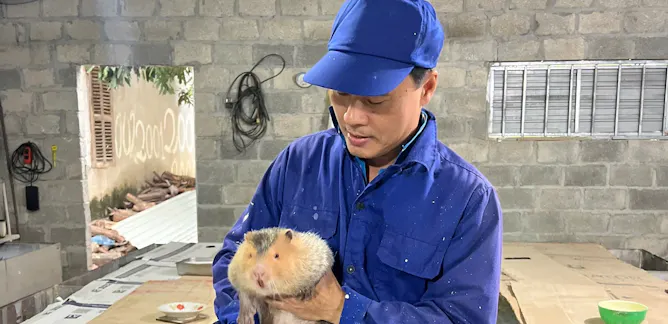
Nearly 9% of Vietnamese wildlife farmers have been infected with hantavirus, pointing to the risks of current farming practices.
International Livestock Research Institute

ILRI envisions… a world where all people have access to enough food and livelihood options to fulfil their potential.
ILRI’s mission is… to improve food and nutritional security and to reduce poverty in developing countries through research for efficient, safe and sustainable use of livestock—ensuring better lives through livestock.
ILRI’s strategic intention is to use livestock as a development tool, one that widens and sustains three major pathways out of poverty. (1) securing the assets of the poor (2) improving smallholder and pastoral productivity (3) increasing market participation by the poor.
Links
Articles
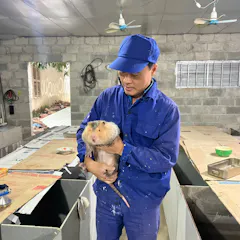
Antibodi hantavirus ditemukan pada sejumlah peternak di Vietnam. Diduga, akibat buruknya manajemen pengendalian penyakit di peternakan.
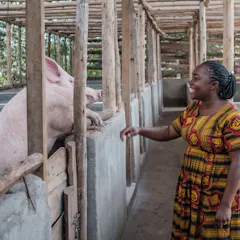
It’s possible to work with and change social norms about suitable work for women.
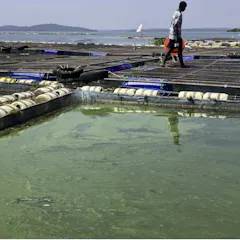
Lake Victoria’s aquaculture industry holds promise for improving food security and livelihoods in east Africa.
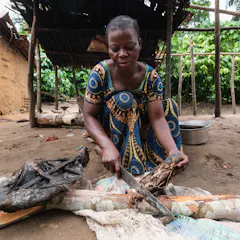
As many as three-quarters of emerging infectious diseases originate from wildlife.
The pace of investment to manage diseases transmissible from animals to humans is dangerously slow.
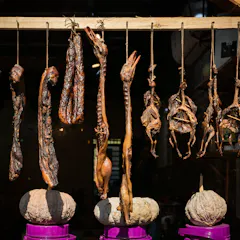
How can the benefits and risks of wild meat consumption be balanced to protect human health, wildlife and the environment?

Les stratégies de lutte contre le mpox doivent aussi s’attaquer à la cause profonde de l’épidémie de variole simienne en Afrique : les conditions de vente de viande sauvage sur les marchés.
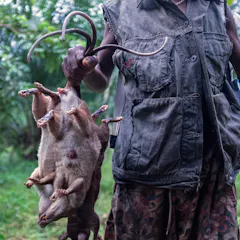
Strategies to beat a disease outbreak like mpox must start with the root causes.
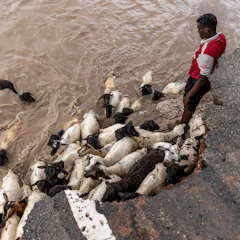
We’re already seeing the impacts of weather extremes on key parts of our lives, from the food we eat to the roads we use and our health.
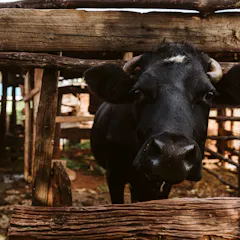
Kenya’s smallholder farmers aren’t using antibiotics properly, some are of poor quality and some antibiotics are being found in milk.

Tangible solutions would reduce livestock methane emissions, while also improving productivity and livelihoods.
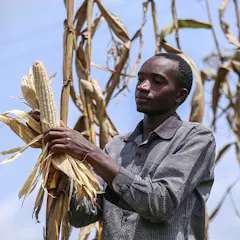
Stricter measures had major impacts on farmers’ livelihoods and food security.

African livestock keepers need help: without proactive interventions, increasing temperatures will reduce meat and milk production.

Lockdowns to curb the spread of COVID-19 had various effects on food as it went from farms to plates.
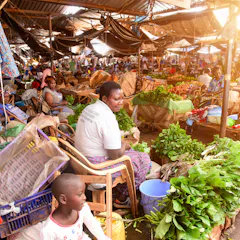
When it comes to food safety solutions, models which enforce bans and regulations don’t fit.
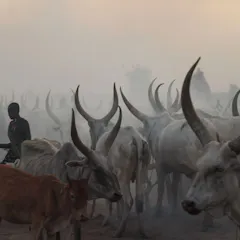
A thousand-year-old “mixing” event allowed African cattle - after spending thousands of years confined to certain regions - to diversify and spread.
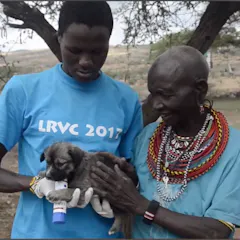
In Kenya, rabies is estimated to kill up to 2,000 people every year.
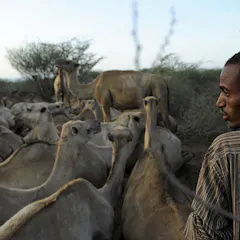
This is the first time that camel handlers in East Africa have been shown to have been exposed to MERS.
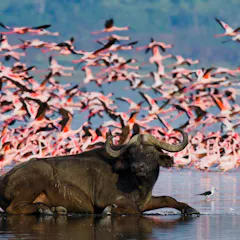
Outbreaks often affect the same areas because, once released, the bacteria continues to live as spores in the soil.
Authors
-

Senior Scientist, Team Leader of the Mazingira Centre, International Livestock Research Institute
-
Economist, spatial statistics expert, International Livestock Research Institute
-
Professor Food Safety Systems at the Natural Resources Institute (UK) and contributing scientist ILRI, International Livestock Research Institute
-
Research scientist, International Livestock Research Institute
-
Scientist, International Livestock Research Institute
-
Post Doctoral Fellow- Gender, International Livestock Research Institute
-
Scientist, International Livestock Research Institute
-
Regional Director, ILRI Asia, International Livestock Research Institute
-
Researcher, farming systems analyst, International Livestock Research Institute
-
Graduate Fellow, International Livestock Research Institute
-
Researcher, modeling and futures expert, International Livestock Research Institute
-
Principal Scientist, Professor of Genetics, University of Nottingham, UK, International Livestock Research Institute
-
Program Leader, Sustainable Livestock Systems, International Livestock Research Institute
-
Senior scientist - Epidemiologist, International Livestock Research Institute
-
Fellow, International Livestock Research Institute