

Mutual suspicion and prejudice continue to undermine relations between South Africans and African immigrants.
Human Sciences Research Council

The HSRC was established in 1968 as South Africa’s statutory research agency and has grown to become the largest dedicated research institute in the social sciences and humanities on the African continent, doing cutting-edge public research in areas that are crucial to development.
Our mandate is to inform the effective formulation and monitoring of government policy; to evaluate policy implementation; to stimulate public debate through the effective dissemination of research-based data and fact-based research results; to foster research collaboration; and to help build research capacity and infrastructure for the human sciences.
The Council conducts large-scale, policy-relevant, social-scientific research for public sector users, non-governmental organisations and international development agencies. Research activities and structures are closely aligned with South Africa’s national development priorities.
The HSRC’s integrated research programmes provide single points of entry – complete with a critical mass of researchers – for interdisciplinary and problem-orientated research in the following areas:
- Africa Institute of South Africa
- Democracy, Governance and Service Delivery
- Economic Performance and Development
- Education and Skills Development
- Human and Social Development
- Population Health, Health Systems and Innovation
- Social Aspects of HIV/AIDS, STIs and TB.
A cross-cutting entity, Research Use and Impact Assessment, seeks to extend and enhance the use and impact of scientific research from the HSRC and other sources of research; and to manage the HSRC’s relationships, reputation and brand.
Links
Articles
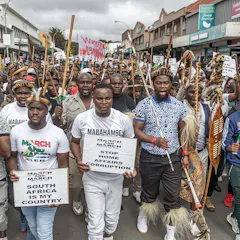
Data show that South Africans have become more hostile towards immigrants.

The G20’s Women 20 group agreed that action is needed to stop unpaid care work and forced labour, and improve women’s health and climate leadership.

Le chemin qui mène des études à la vie active n'est pas tout tracé, et les universités devraient préparer les diplômés à trouver leur voie.

It’s not a straight path from education to making a living, and universities should prepare graduates to find their way.
Many of Africa’s most powerful innovations are not being measured correctly.
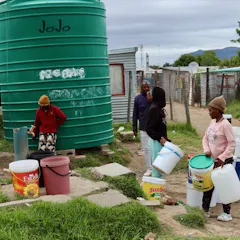
In South Africa’s Eastern Cape, water equipment needs replacement. Water payments should be kept aside to improve the service.

Support for businesses is particularly pressing during times of economic crises so that they can adapt their innovation plans.

Research, development and innovation are essential for fulfilling state-owned enterprises’ mandates and driving economic growth.

South Africa’s mathematics achievement trends are unusual. This could point to possible ways to improve results.

The link between household food insecurity and child malnutrition is stark: 28.8% of South African children under five suffer from stunting.

Individuals must be equipped with the tools to understand and practise consent.

People are at the heart of the HIV pandemic, so it’s important to understand how they make protection decisions.

Better support for PhD students would help South Africa meet its national research and development goals.

The fear of becoming a father is not a sign of weakness. Rather, it shows you understand that it’s a big role.

South Africa’s national survey of food and nutrition security identifies the areas most in need.

John Hlophe’s impeachment sets an example to other members of the judiciary who may feel tempted to abuse their power.
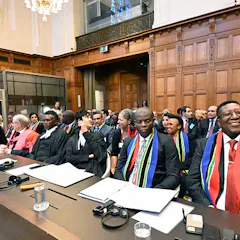
South Africa’s legal team includes lawyers who previously acted against the government.

When they are repeatedly victimised, some individuals turn to bullying as a coping mechanism, seeking power and control.

Awarding punitive costs against legal practitioners would make them think twice about facilitating delaying tactics and malicious lawsuits.
Authors
-

Chief Research Specialist, Human Sciences Research Council
-
Research Specialist at the Centre for Science, Technology and Innovation Indicators, Human Sciences Research Council
-
Chief Research Specialist, Human Sciences Research Council
-
Executive Head of the Centre for Science, Technology and Innovation Indicators, Human Sciences Research Council
-
Chief Research Specialist , Human Sciences Research Council
-
Senior Research Specialist, Centre for Science, Technology and Innovation Indicators (CeSTII), Human Sciences Research Council
-
Research Manager, Human Sciences Research Council
-
Senior Research Specialist, Human Sciences Research Council
-
Chief Research Specialist, Human Sciences Research Council
-
Strategic Lead, Human Sciences Research Council
-
Chief Research Specialist., Human Sciences Research Council
-
Chief Research Specialist, Human Sciences Research Council
-
Professor of Practice, Human Sciences Research Council
-
Distinguished Research Specialist, Human Sciences Research Council
-
Senior Research Specialist, Human Sciences Research Council