
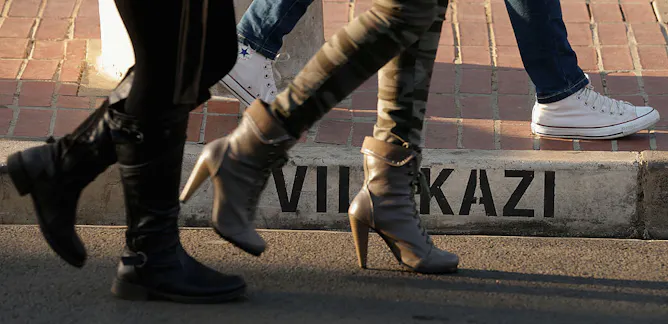
Rather than telling a single story, street names preserve several layers of public memory.
Gauteng City-Region Observatory

The Gauteng City-Region Observatory (GCRO) was established in 2008 as a partnership between the University of Johannesburg (UJ), the University of the Witwatersrand, Johannesburg (Wits) and the Gauteng Provincial Government (GPG), with local government in Gauteng also represented on the GCRO Board. GCRO receives a core grant from the GPG, and the two universities provide significant in-kind support. While the GCRO is based at the two universities, it is also charged with extending links to all the higher education institutions, as well as knowledge councils, private sector think-tanks, research NGOs and information-exchange and learning-networks operating in the city-region.
Links
Articles

Access to the internet in South Africa’s economic powerhouse, Gauteng, is marked by inequalities.
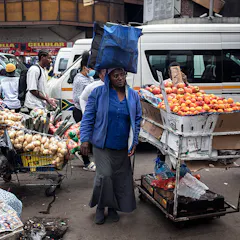
Informal trading is an integral part of the city of Johannesburg’s identity.
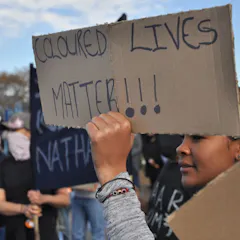
There is a link between an enduring perception of marginalisation within Coloured communities and real material struggles.

The question is not whether a city is fixed – it can never finally be – but rather what trajectory it is on.

A South African government intervention is addressing the symptoms of the 2024 outbreak of food-borne illnesses, not the underlying causes.
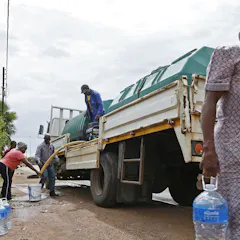
Many people feel unsafe in their homes, and when walking in their neighbourhood during the day or at night.
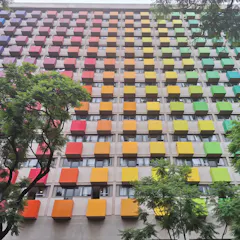
While a few new residential developments improve racial mixing, most other developments do not.
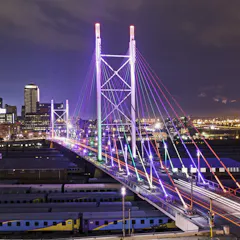
If the numbers are correct, and it’s not certain that they are, Cape Town may have overtaken Johannesburg as the largest city in South Africa.

Very little attention has been paid to the justice implications of electricity distribution.
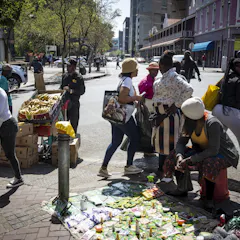
The city’s street trading management approach is mainly restrictive. Relocations, harassment and confiscation of of traders’ stock are common.
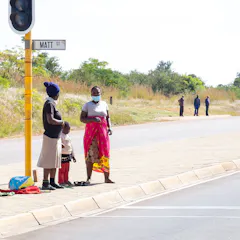
Women are testing positive at a higher rate than men and women, they have a greater social and economic vulnerability, particularly during lockdown, with working-age being the most affected.
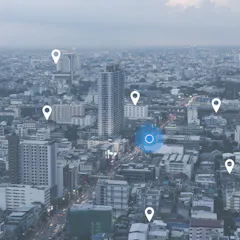
Address data are maintained in silos at different government entities. There is limited coordination and adherence to international standards; good practice is lacking around information management.
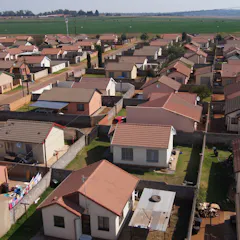
Vulnerability in the context of Covid-19 is really complex. Many households in Gauteng have different challenges.
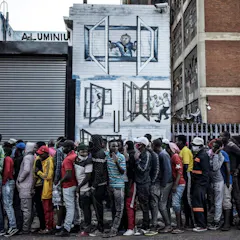
The social impacts of the coronavirus will leave a legacy long after the virus itself.
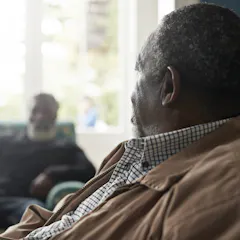
Households headed by the elderly are likely to be particularly vulnerable in the COVID-19 pandemic.

Graffiti contributes to place-making by creating meaningful or identifiable spaces.
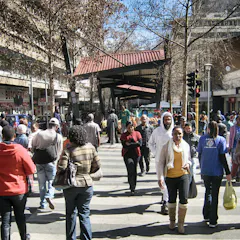
The latest data offer a vital resource for understanding Gauteng’s multi-faceted challenges.
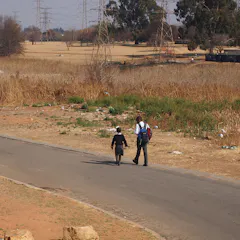
Over a third of pupils in the Gauteng province still travel more than five kilometres to school.
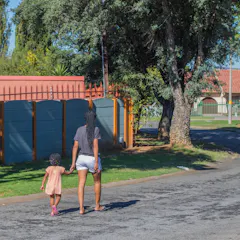
It’s critical to understand how mothers from all backgrounds navigate obstacles within the city as part of their daily lives.
Authors
-

Researcher of urban & cultural studies, Gauteng City-Region Observatory
-
Researcher, Gauteng City-Region Observatory
-
Senior Researcher, Gauteng City-Region Observatory
-
Director: Research Strategy, Gauteng City-Region Observatory
-
Senior Researcher, Gauteng City-Region Observatory
-
Senior Researcher, Gauteng City-Region Observatory
-
Executive Director, Gauteng City-Region Observatory
-
Researcher, Gauteng City-Region Observatory
-
Researcher, Gauteng City-Region Observatory
-
Researcher in Geospatial Science, Pr. Sci. Nat., Gauteng City-Region Observatory
-
Postdoctoral Research Fellow, Gauteng City-Region Observatory