

Cells called macrophages can devour living cancer cells – and may hold the key for successful treatment.
Garvan Institute

The Garvan Institute of Medical Research is a world leader in biomedical research, pioneering study into some of the most widespread diseases affecting our community today. Research at Garvan is focused on understanding the role of genes in health and disease as the basis for developing future cures.
Links
Articles
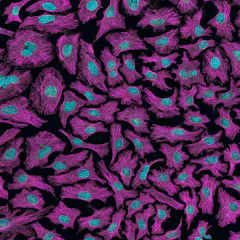
If a doctor tells you have a tumour, what does that actually mean? Do you have cancer? Let’s clear up any confusion.

Genetic evidence reveals a long, previously unknown period of adaptation to cold climates in the history of ancient human migrations across the globe.

Science is about more than crisis management – it’s about how we understand our present and future, and realise our potential as people

Variant-specific vaccines would undoubtedly increase immunity. But waves of new variants would engulf the population faster than these vaccines could ever be deployed.
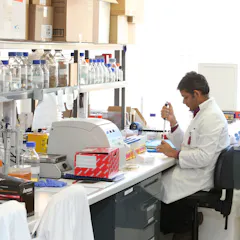
The federal budget contains money for big-ticket items like the SKA telescope and mRNA vaccines. But dwindling funds for universities and fundamental science will leave us vulnerable to future problems.

The marine creature amphioxus allows scientists to explore some of the steps that took place as simple creatures evolved to become complex animals.

“Precision medicine” is allowing us to analyse a person’s genetic makeup and target treatments based on their specific needs.

Scientists have discovered the genetic “switch” that causes many animals, including fish, frogs and humans, to look the same at a certain point in embryonic development.

Scientists in the US have found that a feel-good exercise hormone called irisin does indeed exist in humans, putting to bed long-disputed claims that it is a myth.
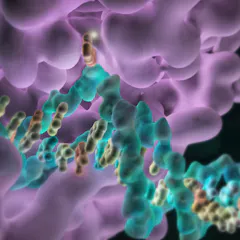
It takes a careful balance between art and science to illustrate the processes that take place within our cells and explain the complexities of epigenetics.

What causes cancer? This deceptively simple question has a devilishly complex answer. So when US researchers proposed a relatively simple mathematical formula to explain a long-standing conundrum in cancer…

Some obese people may be able to remain metabolically healthy despite their size because their bodies produce low levels of a certain molecule, according to a study published today in the journal Cell…

People take vitamin supplements for all kinds of reasons, from maintaining general health to preventing cancer. But there’s no convincing evidence that vitamin supplementation benefits people who don’t…
Rapid developments in tools to study complex interactions are transforming biology and biomedical research. A series of powerful analytical methods coined “omics” is driving us away from reductionist approaches…
The history of biology is peppered with invaluable contributions by physics and physicists. Even if we leave aside the argument that it’s all just physics anyway, theoretical and practical biology leans…

The holy grail of obesity research is a simple, single solution that could stem the tide of this epidemic. But research we published in PLOS ONE today shows that this is an implausible, if not impossible…
MATHS AND SCIENCE EDUCATION: We’ve asked our authors about the state of maths and science education in Australia and its future direction. In this instalment, Marguerite Evans-Galea, Darren Saunders, and…
For the first time, 3D images have been used to track tumors as they spread, and the effects of particular drugs on cancer…
Abdominal fat has been found to put Australian women - but not men - less at risk of bone fracture. In a new study, researchers…
Authors
-

Research Officer, Garvan Institute; Senior Lecturer, UNSW., Garvan Institute
-
Research Officer, Garvan Institute
-
Associate Professor, Garvan Institute
-
President, Australian Academy of Science; Laboratory Head, Garvan Institute
-
Executive Director, Garvan Institute of Medical Research, Garvan Institute
-
Principal researcher at Garvan Institute & Conjoint Professor of Medicine, UNSW,, Garvan Institute
-
Head of the Cellular and Molecular Metabolism Laboratory and Head of the Diabetes and Metabolism Division, Garvan Institute
-
Medical Oncologist and PhD Candidate in immunology, Garvan Institute
-
Petre Chair in Cancer Biology, Lab Head - Cancer Developmental Biology, Garvan Institute
-
Lab Head-Developmental Epigenomics and Senior Research Fellow, Garvan Institute
-
Research Officer, Garvan Institute
-
Chair professor, Garvan Institute
-
Senior Principal Research Fellow, Garvan Institute
-
Program Director – Precision Immunology / Laboratory Head, Garvan Institute
-
Postdoctoral Researcher, Immunology, Garvan Institute