

Crypto can offer quick riches and an air of high-tech worldliness, but it also encompasses some ethical harms that might give investors pause.
Ethics + Religion – Articles, Analysis, Opinion
Displaying 426 - 450 of 2198 articles
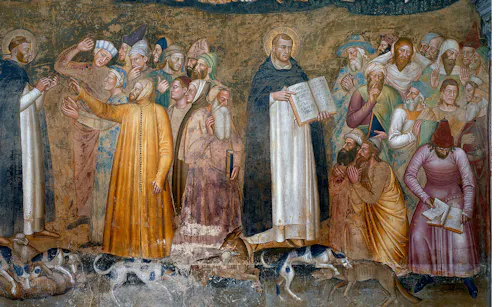
The 13th-century theologian’s influences included Greek, Muslim and Jewish thinkers.

Despite assumptions to the contrary, Tallchief showed that Indigenous people could not just exceed the standards of Western arts but also set new ones, writes a scholar of Indigenous cultures.

Diversity training programs work best, our research shows, when they form part of a broader, ongoing company effort against intolerance.

Disturbing ideas about motherhood are pushed into our collective unconscious, a film scholar writes. Little wonder they’re at the heart of several chilling films.

Universities have an important role in Jewish American history – highlighting both deep-seated prejudice toward Jews and Jewish students’ paths toward acceptance and assimilation.
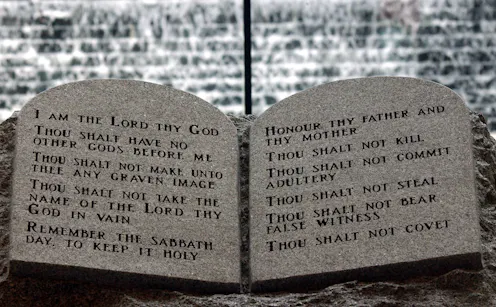
The Supreme Court’s approach toward religion in schools has been shifting, adding to uncertainty about legislation such as Louisiana’s.

The conclave system may seem dramatic, but it was developed after centuries of outside interference and looting.
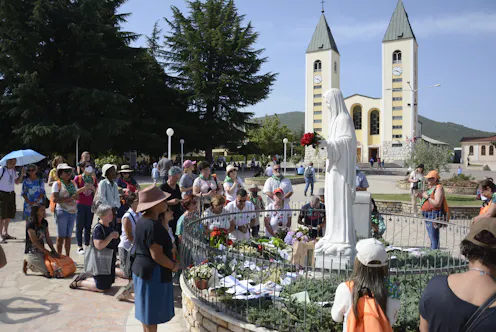
The Vatican has said that the pilgrimage to Medjugorje, a small town in Bosnia-Herzegovina, can yield ‘spiritual benefits’ but refrained from calling the apparitions genuinely supernatural.

Many followers of the New Apostolic Reformation − a Christian religious movement − claim they receive divine guidance in reconstructing modern society based on Christian spiritual beliefs.
Intellectual humility means being open to new ideas and other points of view – and for leaders, it can be a delicate balancing act.

The ancient classical texts of Hinduism taught that every age and stage of life need not be lived as a breathless race. They proposed living according to one’s natural capabilities.

If we considered people on the other side of a disagreement as not ‘evil’ but ‘mistaken’ or ‘ill-informed,’ it might create more room for dialogue, writes a scholar of mindfulness.
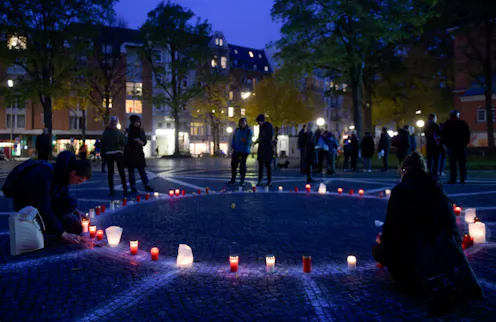
Questions about how to represent German Jews, past and present, have complicated plans to rebuild the destroyed temple.
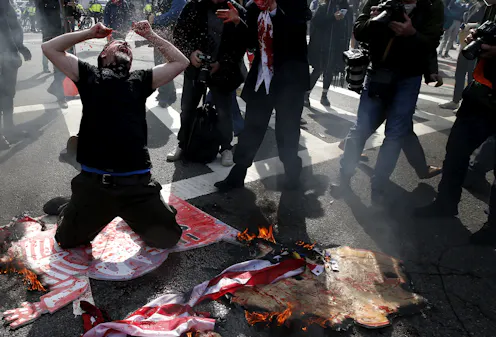
Mexican philosophers have a word for the peculiar anxiety you may be feeling: ‘zozobra,’ a dizziness that arises from social disintegration.
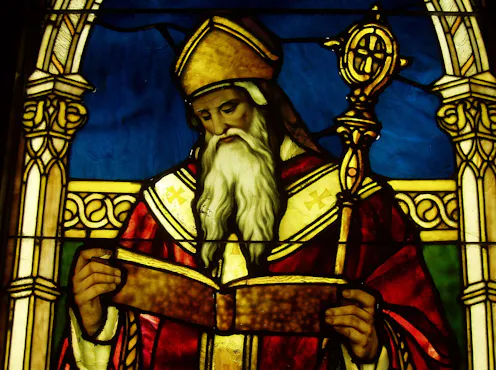
Augustine had divisive opinions – and didn’t mind sharing them. But his writing also has lessons about talking to people who don’t see eye to eye.

Workers from minority religious traditions in the US tend to be more affected by restrictions about bringing up faith at the office.

The ‘Courage Tour,’ a religio-political rally, is going around battleground states. It is focused on defeating Democrats, but also on defeating ‘demonic forces.’

From the 19th to 20th century, Native children were physically removed from their homes and put into boarding schools. A scholar asks if that was genocide.
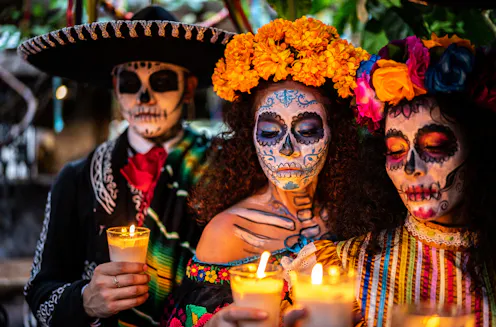
The Aztecs deliberated on how to continue their traditions and preserve their group identity following the Spanish invasion.
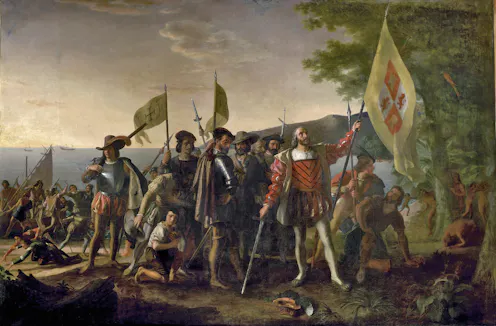
Claims about Columbus being Sephardic have bubbled up for decades. Early in the 20th century, some immigrant groups hoped proving ties to him would improve their own social standing.
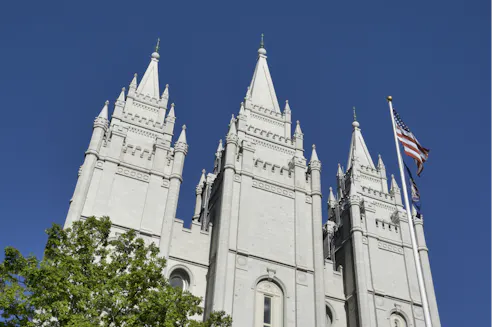
America holds a unique place in the faith’s teachings, but awareness of the church’s often precarious place in US culture has made it wary of mixing religion and state.
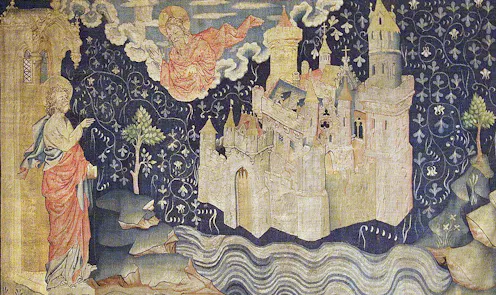
A biblical scholar traces how images of the ‘city of God’ have shaped American culture – especially when it comes to who should be allowed into the country.

On July 4, 1891, Oklahoman farmer Oscar Weber Bilby served his neighbors the very first hamburgers on buns.

In the mid-19th century, photographs with ghostlike figures became collectible amusements thanks to the invention of the stereoscope – a device that created three-dimensional optical illusions.