
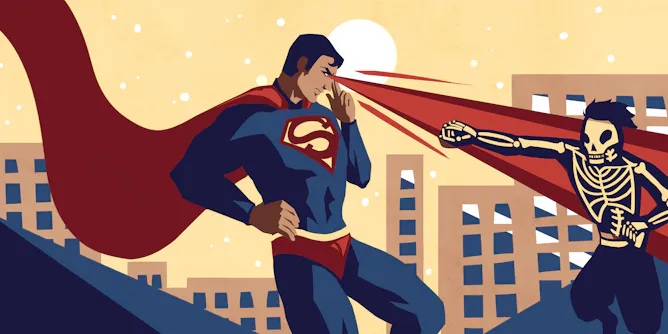
Human eyes don’t have x-ray vision. But we can use radiography machines to allow our eyes to see inside things the human eye cannot.
Articles on X-rays
Displaying 21 - 34 of 34 articles

X-rays are like light rays, but they can pass through more stuff. Some of the x-ray’s energy is blocked by bone, which is why you can see bones so clearly on x-ray scans.

Getting the right amount of radiation is a fine balance between therapy and harm. A common way to improve the benefit-to-cure ratio is to fire multiple beams at the tumour from different directions.
Reducing health-care waste relating to unnecessary tests has been a major priority for researchers, governments and health services for decades. But how do we change the behaviour of doctors?

Did your holiday gift list include radiation-shielding undies to protect your privates from cellphone radio waves? A radiation expert explains they’re unnecessary – your phone won’t affect your fertility.
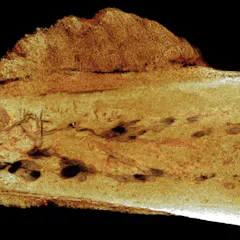
Cancer is not the modern disease many believe it to be. New fossil evidence from two South African caves suggests that its origins lie deep in prehistory.
CT scans deliver a hefty dose of ionising radiation. But the benefits outweigh the risks – most of the time.
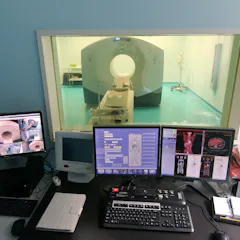
Pairing more powerful computers with increasingly sensitive scanners can yield many benefits in medicine and other fields.

The relentless pursuit of showy flowers for garden display – as seen at Chelsea Flower Show – has seen some odd uses of radiation and chemicals .
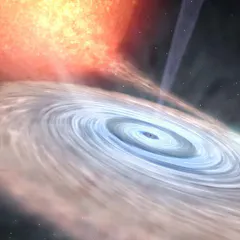
It was a rare and brief event, but powerful telescopes helped scientists get a glimpse of a black hole letting out a wind at 3,000km per second.
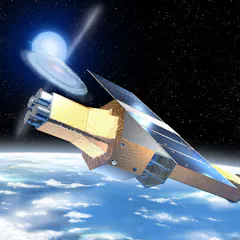
Astronomers were looking forward to the first high-res X-ray spectra from space, and all they would tell us about the cosmos. But unknown disaster seems to have befallen the Japanese satellite.
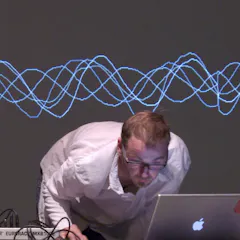
We find them at the beach, in every sound and light show, the miracle of wi-fi and now in the fabric of space-time itself. But what exactly is a wave?
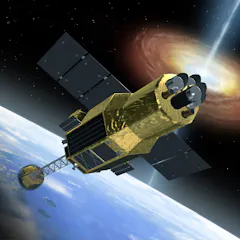
The universe looks very different with X-ray vision, revealing some of the most energetic interactions in our galaxy. Japan’s new Hitomi telescope will help us see these wonders.
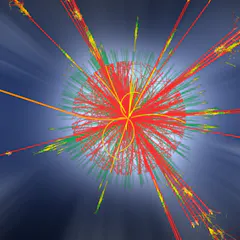
Big data is about processing large amounts of data. It is often associated with multiplicities of data. But the ability to generate data outpaces the ability to store it.
Top contributors
-

Author and Honorary Fellow, Centre for History and Philosophy of Science, University of Leeds
-
Professor of Astrophysics, University of Southampton
-
Postdoctoral Fellow, Nuclear Engineer, CSIRO
-
Timothy J. Jorgensen is a Friend of The Conversation.
Director of the Health Physics and Radiation Protection Graduate Program and Professor of Radiation Medicine, Georgetown University
-
Professor, Curtin Institute of Radio Astronomy, Curtin University
-
Director of Health Programs, BehaviourWorks Australia; Lead, Monash-McMaster Social Systems Evidence Collaboration, Monash Sustainable Development Institute, Monash University
-
Senior Lecturer Medical Imaging , CQUniversity Australia
-
Chair professor, University of Huddersfield
-
Associate Professor, Japan Aerospace Exploration Agency (JAXA)
-
Honorary senior lecturer, Australian National University
-
Professor of Physics, University of the Witwatersrand
-
Professor, Physics and Astronomy, McMaster University
-
PhD Candidate in Electronic Engineering, University of Surrey
-
Professor and NHMRC Australian Fellow, Medicine, University of Sydney
-
Associate Professor of Anthropology, Binghamton University, State University of New York