
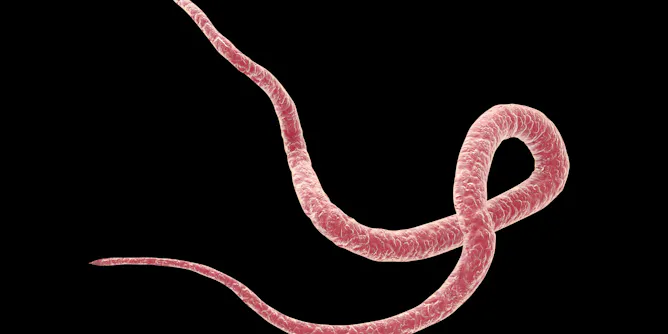
Parasites are not only a personal health problem – they are political too.
Articles on Worms
Displaying 41 - 60 of 66 articles

If you find yourself humming White Christmas this year don’t worry … you’re not alone – and the science of earworms suggests why.
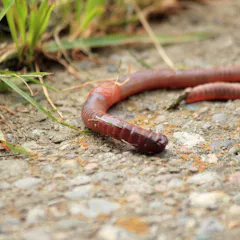
The short answer is no. But worms can use different parts of their body to do some of the jobs that our tongues do - like tasting and crushing food.
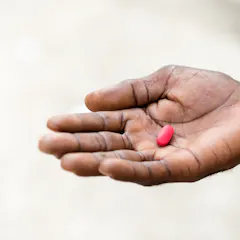
A cure for many tropical diseases was discovered 30 years ago this month. The drug is donated by its manufacturer. Why are we still dealing with neglected tropical diseases?

Despite being so small they can’t be seen with the naked eye, pathogens that cause human disease have greatly affected the way humans live for centuries.
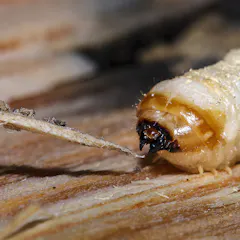
It’s thanks to decomposition brought about by beetles and fungi that we’re not all buried under dead organic matter.
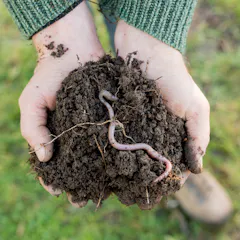
We focus on large, charismatic animals at the expense of these crucial ‘lowly creatures’.
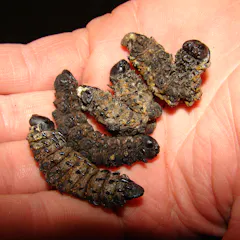
Insects have often been described with words like “disgusting” and the idea of eating them horrifies some people. But this needs to change as they can be an important food source.
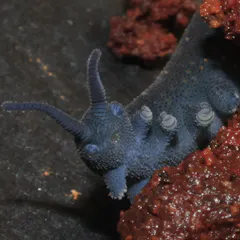
Were legs a quirk of genetic mutation rather than an evolutionary inevitability?
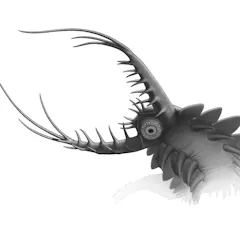
Uncovering the monsters of the prehistoric deep.

How can archivists properly preserve computer programs often written specifically to destroy data?
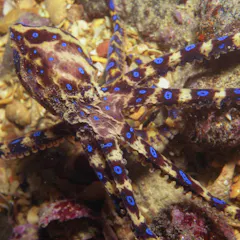
From stingers to swans, Australia’s oceans are full of (potentially) deadly wildlife.

There is much more than just parasitic features when it comes to nematodes: these tiny creatures are vital to ecosystems.

Tropical parasites have been moving up the world health agenda in recent years. They’re still a long way from the top, though.
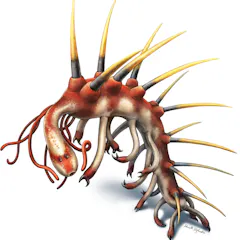
A microscopic set of teeth helped scientists realise they had been looking at fossils of Hallucigenia back to front.
Intestinal worms (or helminths) are multicellular parasites that live inside the gut. When mature, they can generally be seen with the naked eye. In developing countries with poor sanitation, the most…
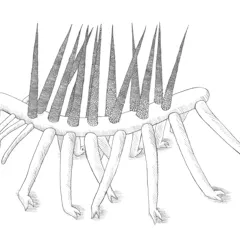
A bizarre 500-million-year-old “worm with legs” has finally found its rightful place on the evolutionary tree of life. Fossils of Hallucigenia look so odd that scientists couldn’t make head or tail of…
A molecule in parasitic worms could explain why some worm infections can treat a range of autoimmune diseases, including…
A species of catfish locates its prey by sensing tiny changes in seawater pH. John Caprio from Louisiana State University…
Many microscopic bugs and bacteria live on our skin and within our various nooks and crannies. Almost anywhere on (or even within) the human body can be home to these enterprising bugs. Bugs affect us…
Top contributors
-

Professeur, UMR ISYEB (Institut de Systématique, Évolution, Biodiversité), Muséum national d’histoire naturelle (MNHN)
-
Reader in Ecology, University of Lancashire
-
Adjunct Senior Research Fellow, James Cook University
-
Assistant Professor (Lecturer) in Palaeontology, Durham University
-
Honorary Professor, Federation University Australia
-
Associate Professor and Clinical Academic Gastroenterologist, Western Sydney University
-
Professor in Evolutionary Biology, Macquarie University
-
Senior Lecturer in Molecular Biology, University of Sydney
-
PhD Researcher in Environmental Science, King's College London
-
Senior Lecturer in Insect Diversity, Stellenbosch University
-
Professor of Evolutionary Biology and Science Engagement, University of East Anglia
-
Environmental Biologist, Institute of Environmental Sciences, Jagiellonian University
-
Professor of Veterinary Infectious Diseases, University of Liverpool and International Livestock Research Institute, Kenya, University of Liverpool
-
Research scientist, University of Cape Town
-
Senior Lecturer in Pharmaceutical Sciences, RMIT University