

International sport organizations must stop ignoring athletes’ data protection rights when regulating sport, including eligibility in the women’s category
Articles on World Anti-Doping Agency
Displaying 1 - 20 of 21 articles

Chelsea player Mykhailo Mudryk has been provisionally suspended for failing a doping test.
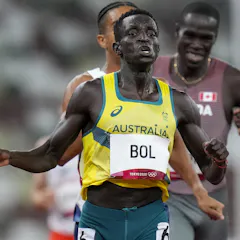
It’s important for all athletes, and for trust in the anti-doping system, that the validity of the EPO test and the interpretation of the analysis can be transparently relied on.
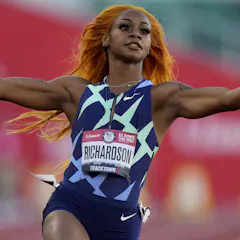
In the wake of debate about cannabis, performance-enhancing drugs and the Olympic Games, athlete-driven doping legislation is the way forward.
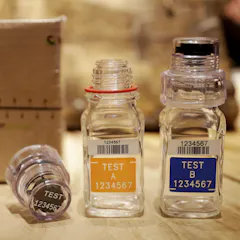
The decision by the World Anti-Doping Agency to lift its ban on Russia’s drug testing has set off another controversy about whether there will ever be a level playing field in the world of sports.

Doping controversy around British cycling and athletics is the latest sign that sports authorities need to do something drastic.
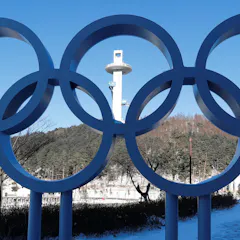
Doping scandals have dominated the build-up to the 2018 Pyeongchang Olympics.
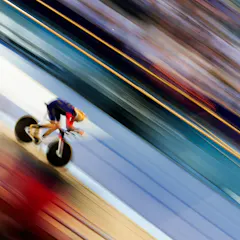
The Therapeutic Use Exemption system of banned medicines in sport creates more problems than it solves, is open to abuse and is simply unfair.

What do the concepts like ‘cheating’ and ‘performance enhancing’ mean to young African footballers?
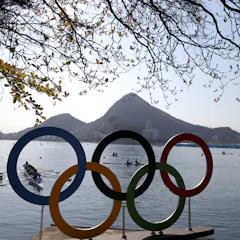
Doping simply gives athletes an advantage that can be compared to other forms of training regimes. So why the moral outrage?
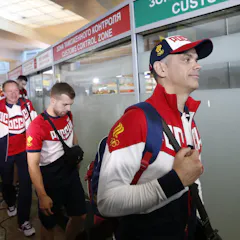
The IOC will allow Russian athletes to compete in Rio 2016 if they’ve been cleared by their respective international sporting federation of doping. Should other countries pull out of the games?
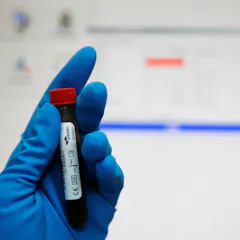
Only a better understanding of what drives doping can improve enforcement. To do so, we must break with the perception of doping as an individual or moral problem.
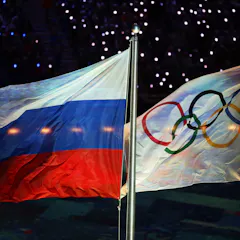
The International Olympic Committee will allow Russians wanting to compete in the Rio 2016 Olympics the chance to do so if they can prove they’re clean to their sports federation.
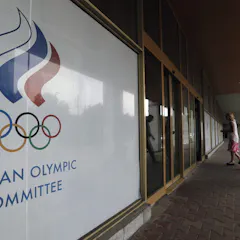
Where Russia broke the cardinal rule of doping – don’t get caught – the anti-doping regime has broken a cardinal rule of nature: don’t poke the Russian Bear.
The ban on Russian athletes at the Rio Olympics feels like a victory, but it masks an insular system which is spread too thin.

The International Association of Athletics Federations has upheld its ban on the Russian Athletic Federation from competing in the Rio 2016 Olympics.
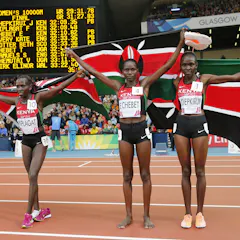
Banning Kenya from the Rio Olympics would raise questions about the overall inclusiveness of the Games and equality in global sporting opportunities.
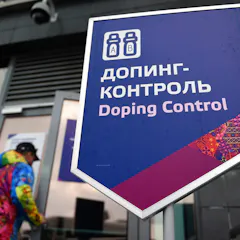
Having learned some hard lessons with the Essendon case, Australia should lead the way in developing a better approach to drug control and anti-doping in sport.
The world of sport has been rocked by the explosive allegations that surfaced over the weekend.
Drug testing has improved but athletes are finding new ways to get around the rules and the technology.
Top contributors
-

Senior Lecturer, Faculty of Health Sciences and Sport, University of Stirling
-
Head of School, Biosciences and Chemistry, Sheffield Hallam University
-
Adjunct Senior Lecturer, School of Business, UNSW-Canberra, UNSW
-
Professor of Sports Science, Aarhus University
-
Professor of Sports Law, Melbourne Law School, The University of Melbourne
-
Associate Professor of Sport Management, University of Technology Sydney
-
LSE Fellow in the Department of Philosophy, Logic and Scientific Method, London School of Economics and Political Science
-
Chen Su Lan Centennial Professor in Medical Ethics, National University of Singapore; Distinguished Visiting Professor in Law, University of Melbourne; Uehiro Chair in Practical Ethics, The University of Melbourne
-
Sociologue, directeur de recherche au CNRS (CSO), Sciences Po
-
Visiting Scholar, School of Business, CBR, UNSW
-
JD Candidate at Osgoode Hall Law School, York University, Canada
-
Professor of Sport Management, University of Florida
-
Adjunct Lecturer in Sports Law, University of Toronto
-
Associate Professor of Philosophy, Murdoch University
-
Director, International Centre for Olympic Studies, Western University