

As an employer, how will the Québec government’s duty to reasonably accommodate the needs of its employees conflict with its plan to ban religious symbols among some civil servants?
Articles on Workplace law
Displaying 41 - 60 of 60 articles

Ontario’s Conservative government, despite its “for the people” slogan, is repealing basic protections for the province’s most vulnerable workers.

MeToo drew attention to sexual harassment in the workplace. But we are still overlooking other forms of discrimination and the insidious impact of sexual harassment on women’s identities.

The way victimisation cases are interpreted by the courts often leaves employees defenceless and gives employers excessive managerial powers.
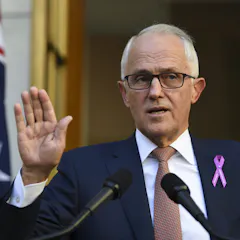
Banning relationships is likely to be ineffective and may result in disengagement, secrecy and resentment by employees of the encroachment of employment policies into genuinely private matters.

Secret payments in exchange for silence regarding work-related sexual abuse are usually tax-deductible. How about changing that?

What can be done to prevent employers from rejecting individuals based on concern about future illnesses? Currently, nothing.

Videos and other material from the ‘80s and '90s remind us that harassment isn’t about sex so much as discrimination, inequality and power.

With Neil Gorsuch’s appointment to the high court, conservatives regain their 5-4 majority, which will likely benefit employers over workers.

The escalating indifference with which Uber allegedly reacted to a software engineer’s harassment claims is the norm in the corporate world, where enforcing civil rights laws is seen as a tax on profits.
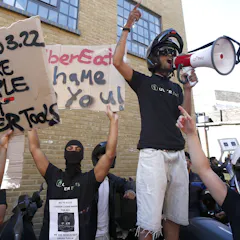
Gig workers need to be aware of their contract terms and band together in order to maintain their working rights and pay.

The franchise business model could be undermined by proposed laws which make franchisors and franchisees jointly responsible for wage underpayments.

The growing problem of pregnancy discrimination has received barely any attention on the campaign trail or among researchers, possibly because it disproportionately affects poor women.

Both the Coalition and Labor are aiming to combat worker exploitation with new policies and while this may be good news for workers, there are still some gaps.

7-Eleven’s decision to take charge of the compensation process for underpaid workers highlights the problems with voluntary commitments and underlines the need for increased legal accountability.

Workplace democracy is declining, but the idea that this is the fault solely of unions or employers is misguided. Widespread reform is needed.

To what extent would the ABCC and Registered Organisations bills actually deal with union corruption or criminality if passed?

One in five government employees are experiencing or observing workplace cyberbullying, a study shows.

Franchisors exercise a lot of control over their franchisees, but it’s a different story when it comes to store workers.

Australia’s law could be tightened up to better define the responsibility for labour hire workers.
Top contributors
-

Professor of Law, University of Oregon
-
Associate Professor of Workplace and Business Law, UTS Business School, University of Technology Sydney
-
Distinguished Professor of Workplace Law, RMIT University
-
Associate Professor, Director of the Centre for Employment and Labour Relations Law, The University of Melbourne
-
Senior Lecturer, Graduate School of Business and Law, RMIT University
-
Professor Emerita, Law, University of Sydney
-
Professor of Labour Law, University of Sydney
-
Professor in Human Resource Management and Employee Relations, Swinburne University of Technology
-
Lecturer in Occupational Health and Safety, Te Herenga Waka — Victoria University of Wellington
-
Professor and Director, Franchising Centre, Griffith University
-
Associate Professor, Faculty of Law, University of Technology Sydney
-
Sessional Academic
-
Venable Professor of Law, University of Baltimore
-
PhD Candidate and Research Fellow, Centre for Employment and Labour Relations Law, The University of Melbourne
-
Lecturer in Criminology and Criminal Justice, Griffith University
