

Karina Gould’s parental leave is similar to that of many Canadians. Yet there are key differences, and they offer lessons on how parental leave could be redesigned to help more Canadian parents.
Articles on Working mothers
Displaying 1 - 20 of 33 articles

With dads being the primary earners in many heterosexual households, it was often the mother who gave up work to manage extra work at home during the pandemic. But what about heterosexual households where the mother was the primary earner?

Being a mom can be heartbreaking, empowering, scary, fulfilling and everything in between.

Childcare subsidies give mothers the choice to work and help reduce the earnings gap between mothers and fathers. In time, it may lead to greater acceptance of working mothers for future generations.

New research suggests parenthood strengthens a ‘traditional’ approach to home life.
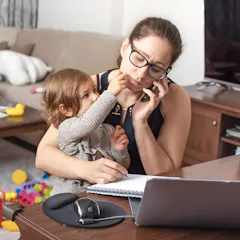
The Way to Work scheme will increase the pressure of benefits sanctions, which is particularly damaging for women and mothers.

Working from home and performing multiple roles leads to constant guilt, which has personal health consequences for women academics.

The idea that children suffer from going to childcare and having mothers who work is outdated nonsense – and the research backs it up.

East Germany strongly encouraged mothers to participate in the labour market full-time, whereas West Germany propagated a more tradition male breadwinner model.

COVID-19 has spotlighted structural injustice inherent in child care in Canada. Organizational leaders have a responsibility to work together, with child care stakeholders, to redress this injustice.

Modest changes to Australia’s paid parental provision can help address the gender gap in unpaid and paid work between mothers and fathers.

For US parents, the health, economic and social crisis the COVID-19 pandemic brought about is compounded by the difficult if not impossible task of working, caring for and educating kids.

The Covid-19 pandemic has hit women hard, in particular amplifying gender gaps. Yet women have also proved that their contributions – on the front lines and leadership positions – are invaluable.

When families need to spend more time and money taking care of their kids on weekdays, it can take a toll on careers – especially for women.

Most mothers want some continuity with their pre-maternal identity, to feel a sense of meaningful contribution to their society, and to enjoy their relationships with their children.
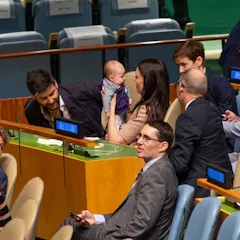
The media interest in the New Zealand leader, who gave birth this summer, is an illustration of the difficulties faced by women who choose to pursue a career without sacrificing their lives as mothers.

Research suggests that government spending on very young children is a good investment.

New research shows just how key grandparents are to childcare.

Employers must do more to support breastfeeding mothers who return to work.

When it comes to children’s well-being and development, it’s not whether a woman works or not that matters but how she makes her choices work for her family.
Top contributors
-

Professor of Sociology and Founding Director of The Future of Work Lab, Podcast at MissPerceived, The University of Melbourne
-
Associate Professor Leeds University Business School, University of Leeds
-
Executive Director, Australian Housing and Urban Research Institute
-
Professor of Human Sciences and Psychology; Faculty Associate of the Crane Center for Early Childhood Research and Policy, The Ohio State University
-
Lecturer in Quantitative Social Policy, University of Edinburgh
-
Senior Lecturer in HRM, Adelaide University
-
Lecturer in Sociology, University of Cologne
-
Lecturer, University of Southampton
-
Reader in Human Development and Education Policy, University of Strathclyde
-
Postdoctoral fellow, African Population and Health Research Center
-
Associate Professor of Human Sciences and Sociology, The Ohio State University
-
Professor of Critical Social and Health Psychology, Keele University
-
Professor of Work and Organisation, Brunel University of London
-
Senior Lecturer in Early Childhood Education, Mount Kenya University
-
Senior Lecturer at York Business School, York St John University