

Many early stories praise her work ethic and devotion. But with Mrs. Claus usually hitting the North Pole’s glass ceiling, some writers started to push back.
Articles on Women's rights
Displaying 121 - 140 of 340 articles
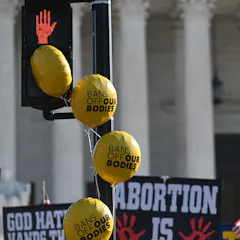
Arguments in a case that could fundamentally alter a woman’s right to abortion were heard at the Supreme Court. Justices’ questions suggest that Roe v. Wade is on shaky ground.

Violent performance is the Taliban’s language. If we view them as savage, backward or misogynistic, the opportunity to learn how to face them is missed.
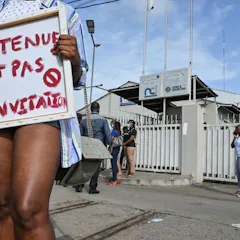
The practice of blaming and stigmatising rape survivors has devastating consequences. It silences them and protects rapists. It discourages survivors from accessing healthcare and pursuing justice.
Police officers are tasked with summarising accounts of violent incidents. And the language they use is extremely important.
Shari’a, most certainly, is not just a tool of violent radicals with a particular set of ideas about sexual morality and gender relations.
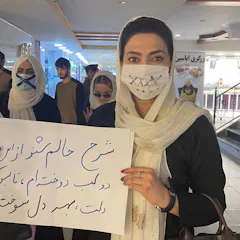
Two Afghan women scholars write about how Afghan women’s groups have been fighting for human rights, both now and historically.
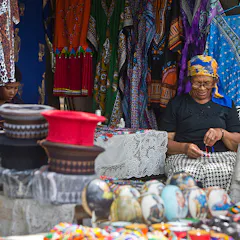
South Africa has a huge gender gap in terms of policies and interventions that would help women entrepreneurs.
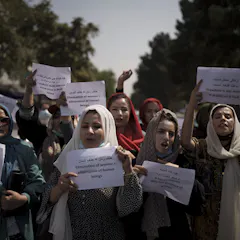
How can we reconcile competing claims that colonialism of any kind is detrimental with the view that Afghanistan has been failed by the West?
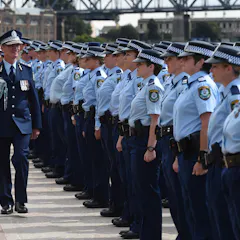
Establishing specialist women’s police stations has been suggested as a solution to violence against women in Australia. However research does not cover racial and gender inclusion in this policing.

Ancient Christian and Jewish texts threatened women with hellfire if they stepped out of line – and those terrifying visions still resonate in U.S. society today.
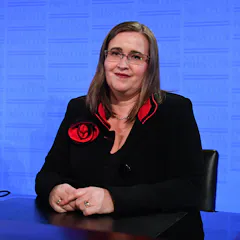
Kate Jenkins on the women’s agenda
Michelle Grattan discusses the Respect@Work report, and National Summit on Women's Safety with Sex Discrimination Commissioner Kate Jenkins
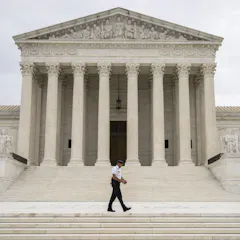
The Supreme Court declined to rule on a Texas law that bans all abortions after six weeks of pregnancy. However, abortion and contraception were quite common among pre-modern Christians.
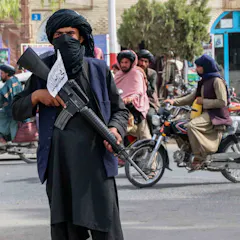
Culture change has been slow and difficult but the will to make life better for Afghan women was there. Now a big question mark hangs over their future.
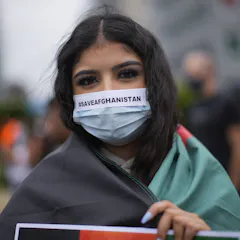
The Taliban’s recent conquest of Kabul signifies their seizure of power. This threatens the rights of girls, women and sexual minorities to freedom from harm and access to opportunities.
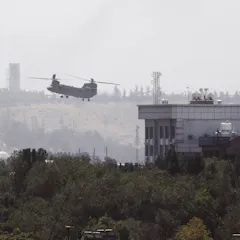
The Taliban ‘expect a complete handover of power.’ Experts explain who the Taliban are, what life is like under their rule and how the US may bear responsibility for Afghanistan’s collapse.
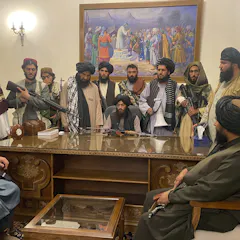
Emboldened by success in Afghanistan, the Taliban is now ordering religious leaders to provide them with lists of girls over the age of 15 to enter into ‘marriages’ to Taliban fighters.
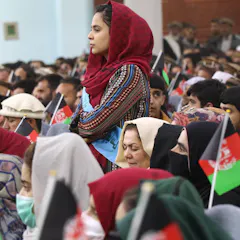
Burqas and male chaperones for women were features of the Taliban’s extremist rule of Afghanistan in the 1990s. Those policies are now back in some districts controlled by these Islamic militants.
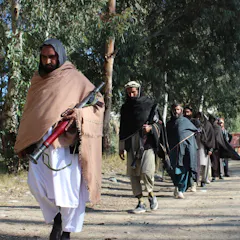
Two decades have passed since the US invasion of Afghanistan toppled the Taliban’s Islamic extremist regime. Despite efforts to update its image, the group still holds hard-line views.
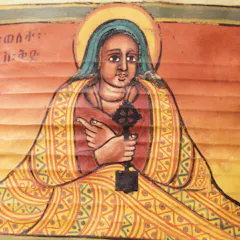
Abortion and contraception were quite common among premodern Christians, who also celebrated women’s celibacy as superior to marriage and childbearing.
Top contributors
-

Associate Professor of International Relations and Women's, Gender, and Sexuality Studies, Stanford University
-
Associate Professor, Faculty of Law, Centre for Human Rights and Legal Pluralism, McGill University
-
Professor of Anthropology, Emerita, Concordia University
-
Sciences Po
-
Director, Center for Afghanistan Studies, University of Nebraska Omaha
-
Senior Lecturer, School of Social Sciences, Nottingham Trent University
-
Professorial Fellow, University of Canberra
-
Professor of Law, University of Bristol
-
Professor, Université Sidi Mohammed Ben Abdellah
-
Ph.D. Candidate, University of Arizona
-
Lecturer in Human Geography, University of Exeter
-
Senior Lecturer in Sociology, Aston University
-
Regents Professor of History, University of Montana
-
Assistant Professor of Religious Studies, Scripps College
-
Senior Lecturer in Politics, University of Liverpool