
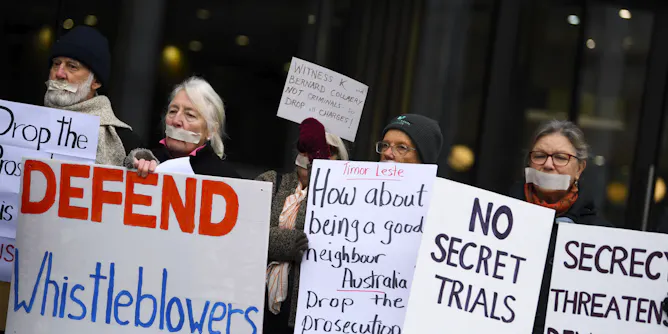
Recent developments in Australian whistleblowing cases have shown how critical it is to reform our laws - which are far from world standard.
Articles on witness k
Displaying all articles
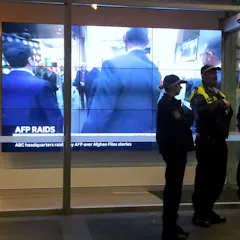
Australia’s press freedom problems have been acknowledged by both the Morrison and Albanese governments. However, we’re yet to see any actual law reform to support public interest journalism.
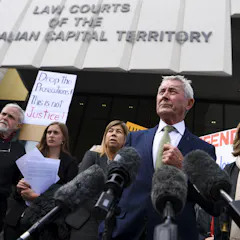
The prosecution was a scandal and should never have been commenced. It was a direct assault upon freedom of political communication, and it intimidated whistleblowers.

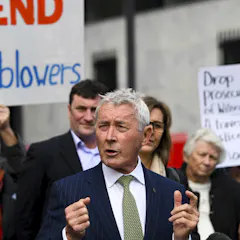
The Albanese government has acted quickly to abandon the prosecution of Bernard Collaery, who was charged in relation to the leaking of information about Australia’s alleged spying in Timor-Leste.
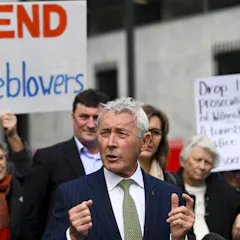
The lawyer and his client, Witness K, are accused of disclosing information related to a covert ASIS spying operation. These are the legal issues that are likely to be raised at trial.
The purpose of the NSIA is to protect national security information from being disclosed in courts. But this can undermine a defendant’s ability to argue his or her innocence.
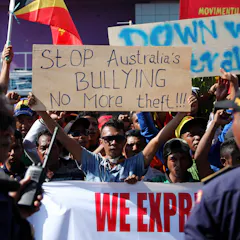
Since Timor-Leste’s independence, relations with Australia have been undermined by contentious negotiations over oil and gas fields. But a new maritime border may mean brighter days ahead.
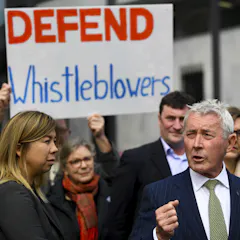
Australian laws make it inevitable for whistleblowers to be charged whenever national security might be involved, even when the information is in the public interest.

The prosecution wants a closed trial, while the defence wants to keep secret only what’s necessary to protect Australia’s national security.

Prosecuting whistleblowers has the potential to further shake public confidence in Australia’s criminal justice system.
Top contributors
-

Allan Myers Chair of Law/Professor of Law, Australian Catholic University
-
Professor of Public Policy & Law, Centre for Governance & Public Policy, Griffith University
-
Professor, Politics & International Relations, Swinburne University of Technology
-
Professorial Fellow, University of Canberra
-
Professor, School of Regulation and Global Governance, Australian National University
-
Associate Professor, Griffith Criminology Institute, Griffith University
-
Associate Professor, TC Beirne School of Law, The University of Queensland
-
Associate Professor, Melbourne Law School, The University of Melbourne
-
Professor, International and Political Studies, UNSW