
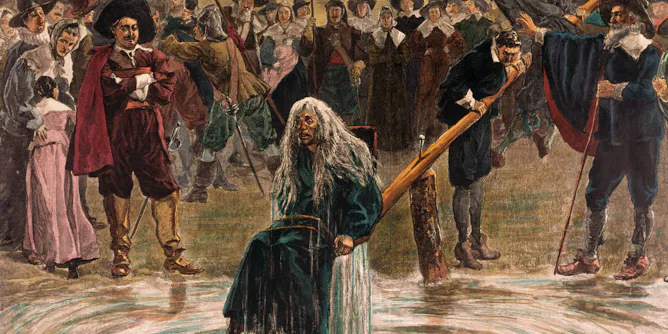
Good Witch, an investigation of Europe and North America’s infamous witch hunts, is good on historical empathy, but too hard on men in general.
Articles on Witch trials
Displaying all articles

Who bears responsibility when false information leads to real harm?

Witch-hunts have not been consigned to the history books. An alarming number of witchcraft-related deaths are still happening each year across nearly every continent.
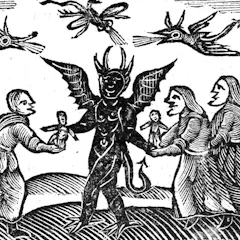
Only five witches were executed in Wales, while thousands were sentenced to death in Scotland and England.

The iconic image of a witch on a broomstick has apocryphal origins. But whether they could actually fly didn’t stop Christian society from persecuting them.
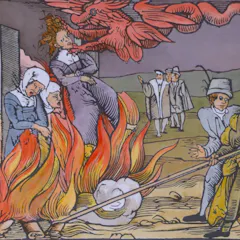
Witchcraft is an enduring source of fascination but also prone to popular misconceptions.
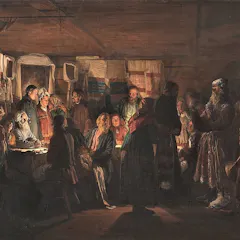
The idea of a ‘witch’ was usually female in Western Europe, but not so in Orthodox Russia – partly because of the period’s rigid social hierarchies.
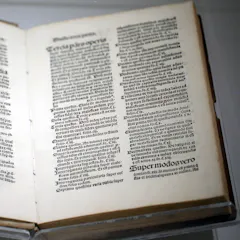
Witch trials relied on a medieval text called the “Malleus Maleficarum” – a book this reference librarian can hold in her hands.

Despite opposition from the early church, dance was an integral part of Christian devotion for many centuries before falling out of favor.
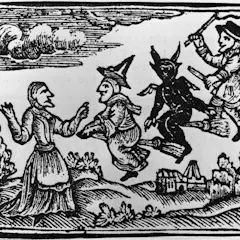
The idea of organized satanic witchcraft was invented in 15th-century Europe by church and state authorities, who at first had a hard time convincing regular folks it was real.
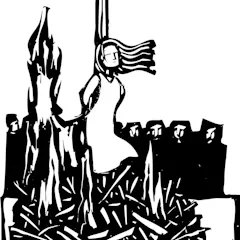
Powerful men often proclaim baseless accusations to be a ‘witch hunt.’ But American witch trials have always targeted a persecuted minority: women.
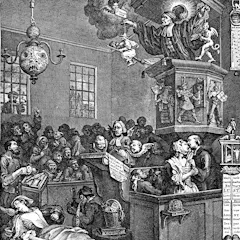
An antiquated Canadian law against magic and witchcraft is about to be repealed. A close look at its history reveals that it is far less superstitious than it appears.
Top contributors
-

Professor of History, Iowa State University
-
Visiting Scholar, School of Religion, USC Dornsife College of Letters, Arts and Sciences
-
Principal Lecturer in History, University of South Wales
-
Sessional Academic, The University of Queensland
-
Scholarly Communications Librarian, Excelsior University
-
PhD Candidate, Languages and Literature, Aberystwyth University
-
Professor of History, University of Michigan
-
Professor of English, UMass Lowell
-
Whitehead Associate Professor of Critical Thought and Associate Professor of Philosophy, Wellesley College
-
Associate Professor of History, University of Saskatchewan
-
Casual Academic, School of Humanities, Creative Industries and Social Sciences, University of Newcastle