

South Africa’s government of national unity forged after the 2024 elections refutes the claim that there are two antagonistic political camps.
Articles on White monopoly capital
Displaying all articles
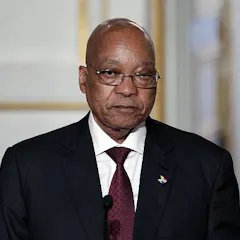
Jacob Zuma claims that his new political home, the Umkhonto we Sizwe Party, is the authentic ANC, not the one led by President Cyril Ramaphosa.
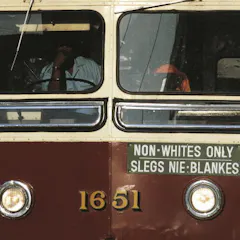
Critics of the 1994 political settlement largely hail from the black middle class, even though it has been one the principal beneficiaries of South Africa’s social democracy.
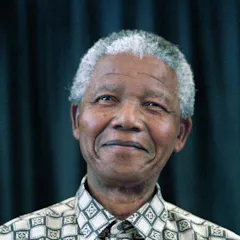
There is never going to be a final assessment of Mandela’s legacy. How it is regarded will continue to change, depending on the destination South Africa travels to.
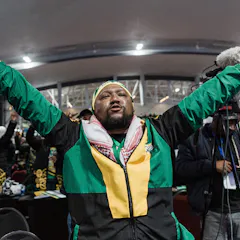
Despite its vagueness, the RET has become central to the contemporary ANC. It is destined to remain a powerful bloc within the party, and a constant constraint on Ramaphosa leadership.
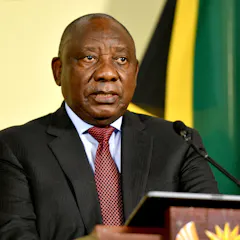
The ANC has been using multiple tactics to fend off the looming calamity of not having Ramaphosa as its president, and that of the country, in the clear absence of a credible candidate to replace him.
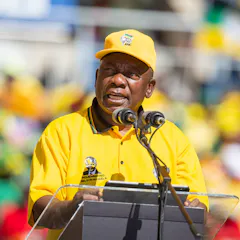
Ramaphosa’s rise to power in 2018 offered South Africans hope that he would end corruption. Indeed, he made promises to do so. But he has met with resistance, especially within the ANC.

Metaphors are not used for their own sake in politics, but as part of a strategy to persuade a particular audience to accept a point of view, and act accordingly
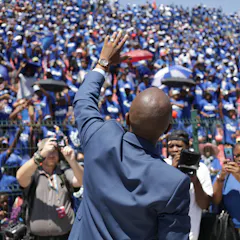
There is a huge divide between what is important right now and what the election is likely to be about.
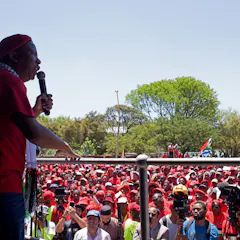
The Economic Freedom Fighters’ strategy of painting President Ramaphosa and his allies as corrupt is unlikely to succeed.

Disinformation in Africa often takes the form of extreme speech inciting violence and spreading racist, misogynous, xenophobic messages.

The only reason journalists will mourn the demise of TV news station ANN7 will be the loss of jobs.

South African business can beat back the toxic ‘white monopoly capital’ title by doing things differently and not by shouting from roof tops.

South Africa’s governing ANC has always seen economic growth as the driving force for change. This was wishful thinking as the damage done by apartheid will take far more to undo.
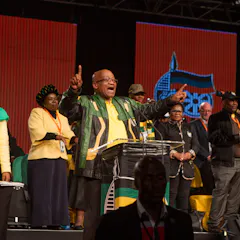
South Africa’s governing ANC appears to have lost claim to being a leader of society. This is clear from the outcome of its policy conference.

The policy conference of South Africa’s governing ANC will be remembered for a party in disarray, plagued with internal dissent.
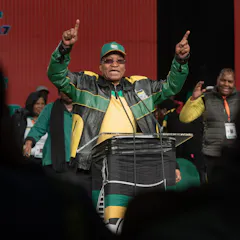
Policy conferences of South Africa’s governing ANC have been about economic policy matters. But more recently organisational renewal has also dominated, as the party loses support.

The debate about white monopoly capital in post-apartheid South Africa is good for the country’s politics but it tends to come with bad sociology.
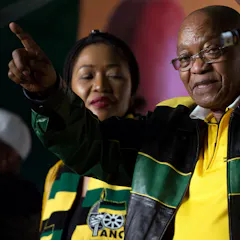
The populism politics adopted by South Africa’s ruling party, African National Congress, mask a strategy to deflect attention from the party’s policy failures and to hide its many scandals.
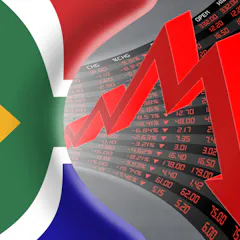
The rising talk about ‘white monopoly capital’ as an obstacle to economic inclusion in South Africa is a red herring.
Top contributors
-

Professor of Sociology, University of the Witwatersrand
-
Visiting Professor and Professor Emeritus, University of the Witwatersrand
-
Professor of Political Studies, University of Johannesburg
-
Post Doctoral Researcher, Graduate School of Business (GSB), University of Cape Town
-
Associate professor, University of Cape Town
-
Professor of Urban Governance, University of the Witwatersrand
-
Professor of Economics and Public Finance, School of Governance, University of the Witwatersrand
-
Professor in Political Science, University of South Africa
-
Professor of English linguistics, University of Amsterdam
-
Lecturer in Afrikaans linguistics, University of Pretoria
-
Professor of Public Affairs, Tshwane University of Technology
-
Professor and Chair, Department of Journalism, Stellenbosch University
-
Caxton Professor of Journalism, University of the Witwatersrand
-
Lecturer in Journalism and Global Communication, University of Sheffield; Independent Social Research Foundation