
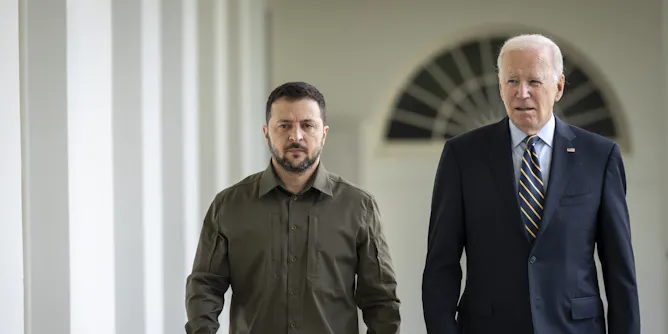
Post-9/11 international cooperation on weapons proliferation is giving way to a fractured regime dominated by ideology.
Articles on Weapons control
Displaying all articles
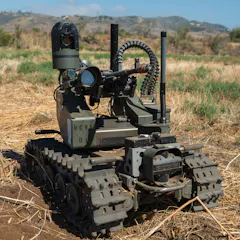
A standard element of international humanitarian law since 1899 should guide countries as they consider banning lethal autonomous weapons systems.

The Campaign Against Killer Robots has launched a terrifying film showing why lethal drones need to be banned.
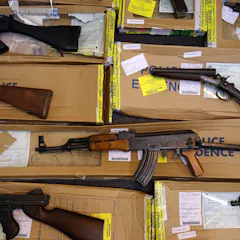
Given the strict laws governing access to and types of gun allowable in the UK, how do guns get into the hands of criminals?
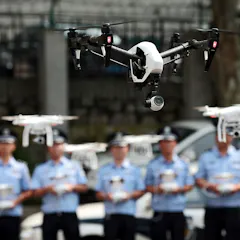
Arming police drones could lead to less human error and fewer deaths, but it opens up other possibilities that need careful attention.
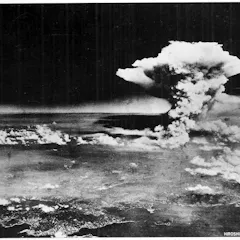
Today’s nuclear arsenals are so powerful that dropping a Hiroshima-size bomb every two hours for 70 years would not exhaust their destructive capacity. The global disarmament regime is broken.
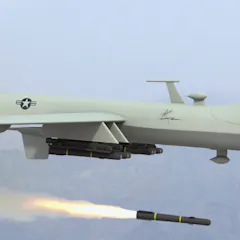
The debate over whether lethal autonomous weapon systems (LAWS) – often called ‘killer robots’ – should be banned continues, although it’s far from settled.
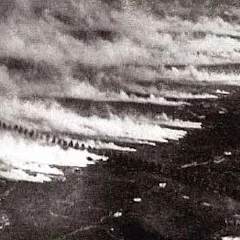
A century since chlorine gas was used at Ypres, beginning the era of chemical weapons, controlling lethal agents is harder than ever.

Should future wars be fought by autonomous systems? Or do they pose such a threat that they should be banned? These issues are being debated this week by diplomats from around the world.
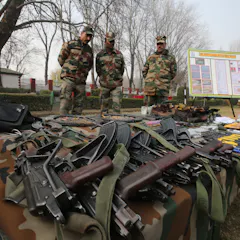
On February 23, Trinidad and Tobago will host the first preparatory meeting of the recently adopted Arms Trade Treaty (ATT) – the first real international mechanism to stem the spread of weapons across…

Two odd facts. First, the United Nations General Assembly has declared today, September 26, the International Day for the Total Elimination of Nuclear Weapons. You might yawn. Why bother? That’s never…
Top contributors
-

PhD in machine ethics, University of Canterbury
-
Honorary Principal Fellow, School of Population and Global Health, The University of Melbourne
-
Emeritus Professor of Chemistry, University of St Andrews
-
Reader, Politics and International Relations Group, Leeds Beckett University
-
PhD Student in International Studies
-
Reader in Security, University of Leicester
-
Professor of Applied Ethics and Director, Security and Risk Research, University of Portsmouth
-
Completed PhD with the focus on 'Criminal armourers and illegal firearm supply in England and Wales', University of Brighton
-
Lecturer on Law and Associate Director of Armed Conflict and Civilian Protection, International Human Rights Clinic, Harvard Law School, Harvard University
-
Research Fellow at Project on International Security, Commerce and Economic Statecraft, University at Albany, State University of New York
-
Senior Research Associate, Nautilus Institute, and Honorary Professor in the School of Political and Social Studies, The University of Melbourne