
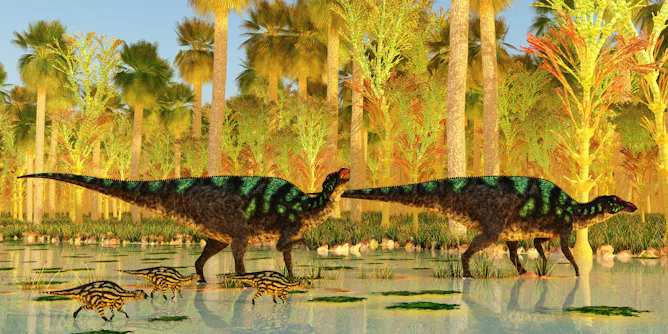
Small holes in baby dinosaur bones add to the growing mass of evidence that the ancient creatures were warm-blooded and highly active.
Articles on Warm-bloodedness
Displaying all articles

By learning what parts of the brain are crucial for imagination to work, neuroscientists can look back over hundreds of millions of years of evolution to figure out when it first emerged.
Our research is countering some previous ideas about what factors might slow down ageing. Further study could help us create targeted treatments in humans too.

‘Normal’ body temperature varies from person to person by age, time of day, where it’s measured, and even menstrual cycle. External conditions also influence your thermometer reading.

When you’re warm and cozy inside, it can be natural to wonder if the animals you see outside your window this winter are doing OK. Don’t worry – they’re doing better out there than you would.
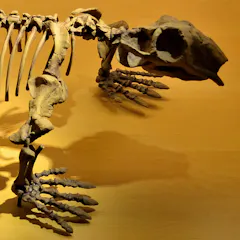
Climate was the main factor that triggered the evolution of warm-bloodedness in mammals and the subsequent mammalian evolutionary success.
Top contributors
-

Research Assistant Professor in Wildlife Ecology and Conservation, University of Florida
-
Postdoctoral researcher, Analytical, Environmental and Geo- Chemistry, Vrije Universiteit Brussel
-
Professor Emeritus of Physiology, Adelaide University
-
Flinders University
-
Associate Professor of Exercise Physiology, Mississippi State University
-
Professor of Neuroscience, Boston University