
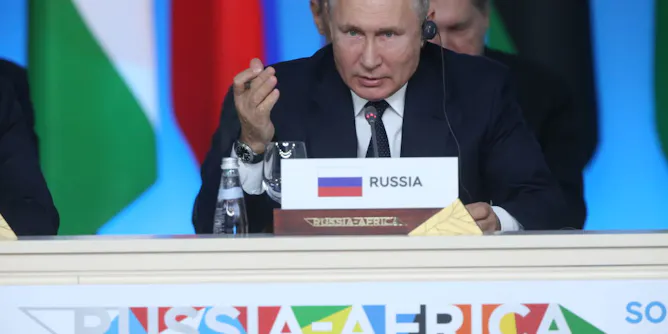
The Russia-Africa summit has obvious benefits for Moscow: it conveys a perception of normalcy and the tacit approval of African elites.
Articles on Wagner Group
Displaying 41 - 60 of 81 articles

The new ECOWAS chairman must focus on strengthening democracy and security in west Africa.
Machinations over the march on Moscow are continuing.

Russian authorities have given no legitimate justification for dropping criminal cases against rebel troops – undermining both President Vladimir Putin and the legal system.

The revolt by Russian mercenary leader Yevgeny Prigozhin and his troops put the US in an unusual situation with Russian leader Vladimir Putin.
China has provided Russia with economic support during the war in Ukraine. But Beijing may be concerned over recent events in Moscow.
Euphoria in the West about the short-lived revolt by the Wagner Group hasn’t yet resulted in military gains for Ukraine.
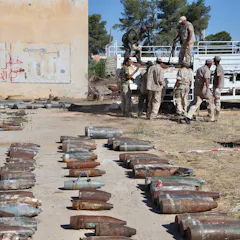
The Wagner rebellion in Russia has implications for African countries that depend on mercenaries and non-state armed groups for security.
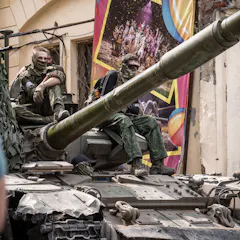
A historian explains how Russian President Vladimir Putin, weakened by a short-lived mutiny, might find a path to peace with Ukraine.
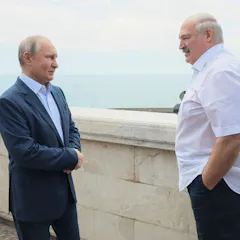
For the past few years Alexander Lukashenko has had to depend on Moscow’s help to keep him in power. Now he appears to have returned the favour.
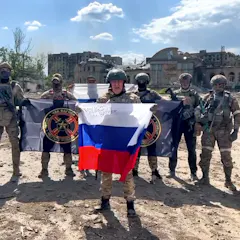
Putin has ignored his own role in the transformation of Prigozhin from a convicted criminal into a formidable political force.
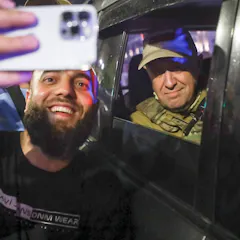
The Russian president has been severely wounded by this open show of defiance. It remains to be seen whether Ukraine can take advantage of this weakness.
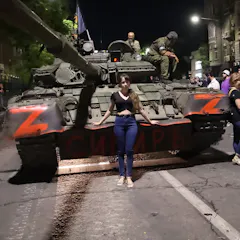
Signs of discontent among Russian nationalists and Wagner had been growing before a column of paramilitaries began an aborted march on Moscow.
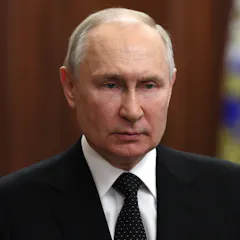
Perhaps the gravest concern for Putin: having for years encouraged the Kremlin’s powerful elites to compete for his favour, he’s now given them a powerful reason to unite against him.
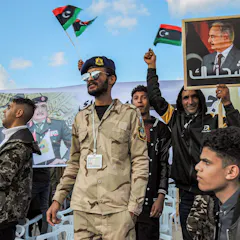
The African Union (AU) and responsible African governments are likely to grow to resent the Wagner Group’s presence and regret their failure to oppose it.
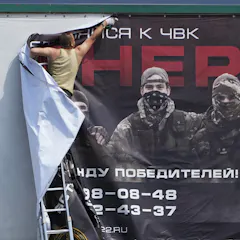
If Vladimir Putin can shift blame for a failed war in Ukraine onto Wagner Group forces as they engage in an armed rebellion on Russian territory, it could provide him an escape hatch from Ukraine.
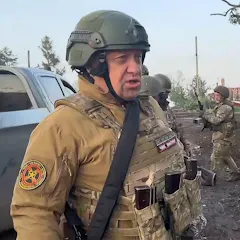
Russian forces in Ukraine have been deeply divided. The Kremlin is attempting to remedy that, but the signs are not good.
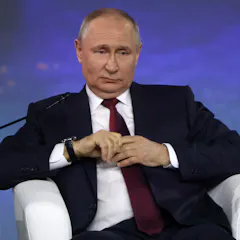
Putin was put on the defensive during an increasingly rare Q&A over the war’s progress. Meanwhile, disquiet among potential rivals is growing.
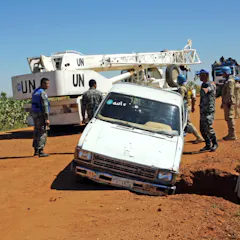
China’s involvement in Sudan is more financial than military, and favours stability.
Both Russia and Ukraine are using paramilitary forces in their enduring conflict. But employing such forces poses serious risks for both countries.
Top contributors
-

Associate Professor and Edward and Emily McWhinney Professor in International Relations, Simon Fraser University
-
Associate professor in Politics and International Relations, Leeds Beckett University
-
Leverhulme Early Career Research Fellow, Aston University
-
Affiliate Lecturer, King's College London
-
Assistant Professor of National Security Affairs in the College of Distance Education, US Naval War College
-
Associate Professor (Adj), Griffith Asia Institute; and Fellow, Strategic and Defence Studies Centre, Australian National University
-
Professor of International Security, University of Birmingham
-
Director of Research, Africa Center for Strategic Studies, University of Maryland
-
Research Fellow in the Department of Politics and Public Policy, University of Waikato
-
Research Fellow, Obafemi Awolowo University, Regional Coordinator, Institute for Security Studies
-
PhD Candidate and Tutor in the School of History, Anthropology, Philosophy and Politics, Queen's University Belfast
-
Professor of Government, Wesleyan University
-
Lecturer-researcher, Université des sciences juridiques et politiques de Bamako
-
Professor of Practice in International Relations, USC Dornsife College of Letters, Arts and Sciences
-
Lecturer in Political Economy of Violence, Conflict and Development, SOAS, University of London