
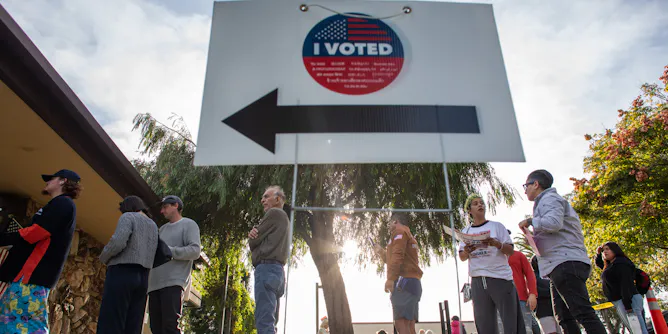
The House has passed a bill to require proof of citizenship for voting. Although it likely won’t become law, the bill raises constitutional questions.
Articles on Voting system
Displaying 1 - 20 of 28 articles

The Constitution does not grant Congress authority to set voter-eligibility requirements in federal elections.

An investigation reveals e-voting software used by numerous large-scale organisations isn’t as anonymous or secure as claimed.
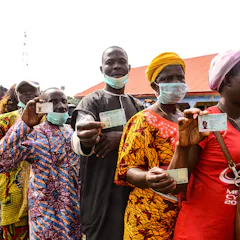
A digital tool to help citizens know the candidates better has been developed for Nigeria’s 2023 elections.

The chaos in Brazil’s capital, along with the Jan. 6, 2021, insurrection in the US, demonstrate that there is a key human factor in election integrity.
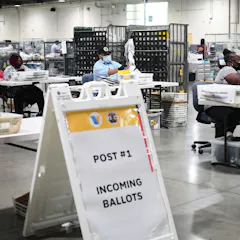
Thirty-six states have adopted new voting laws since the 2020 election. But it’s not yet clear if these laws will actually affect voter turnout in the 2022 midterms.
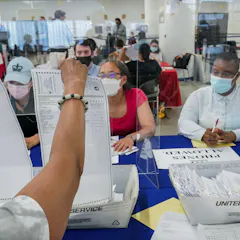
It may be new to Americans, but ranked-choice voting has a long history, and it is spreading rapidly across the U.S.
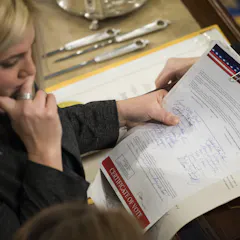
Mathematically speaking, the Electoral College is built to virtually ensure narrow victories, making it very susceptible to manipulation and disinformation.
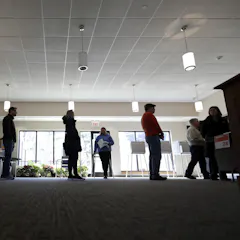
Most states have rules that could preserve the integrity of an election while also allowing social distancing.
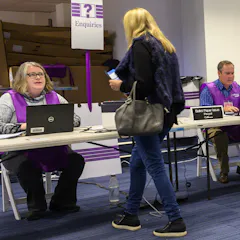
Many of the problems the US has with its election processes and outcomes are avoidable and don’t happen in countries with different voting laws. Australia is a great example.
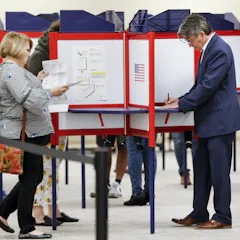
Randomly selecting citizens to take turns governing offers the promise of reinvigorating struggling democracies, making them more responsive to citizen needs and preferences.
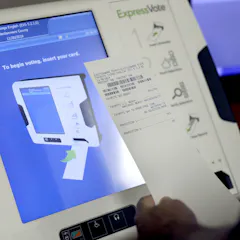
As millions in federal dollars flow to states to protect elections, what should the money help pay for?
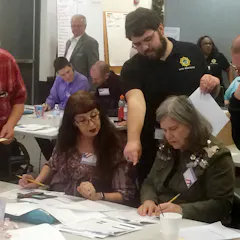
The best way to protect elections is to plan and prepare for an audit of the results after the votes are cast.
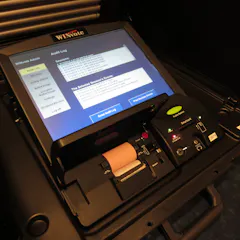
Where problems arose, voting was generally able to keep going smoothly. But those failures serve as a warning of how bad things could get if we don’t replace our voting machines soon.

Not voting can have serious consequences regarding the kind of society we end up living in. Disengagement can mean a lowering of quality of life.

There’s something about seeing the ballot process take place – the vote, the count – that inspires confidence. That wouldn’t be the same with any electronic voting system.
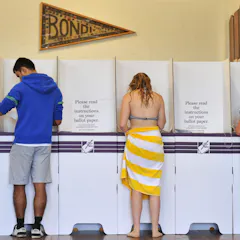
The majority of Australians approve of compulsory voting – and have done so for decades. The nay-sayers continue to be a minority.
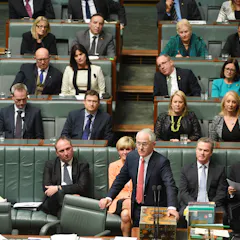
At federal elections, voters must cast a preference for all candidates in their lower house seat. Failure to do so, or failure to give an ordinal list of preferences, renders the ballot informal.
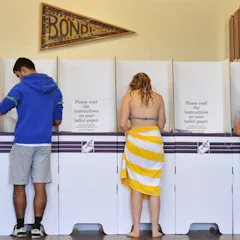
A growing number of people are pre-polling, or voting before election day. This has significant implications for the parties in terms of rolling out policy and voter engagement.
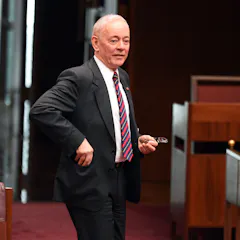
The High Court regarded none of Bob Day’s arguments in his challenge to Senate voting reforms as having any merit.
Top contributors
-

Law Professor in Constitutional Law, Criminal Law, Election Law, University of Memphis
-
Assistant Professor of Law, Quinnipiac University
-
Adjunct Associate Professor, College of Engineering and Computer Science, Australian National University
-
Lecturer in Politics, University of the Sunshine Coast
-
Researcher, Oklahoma State University
-
Voting Rights Researcher, Democracy Project, Brennan Center for Justice, New York University
-
Lecturer in Software Engineering, Monash University
-
Deputy Director, Democracy Program, Brennan Center for Justice, New York University
-
Associate Professor in Politics and International Relations, School of Social Sciences, Monash University
-
Honorary Senior Lecturer, Institute of Local Government Studies, University of Birmingham
-
Professor of Politics, Adelaide University
-
Lecturer, Public Policy and Political Communications, The University of Melbourne
-
Senior Lecturer in Philosophy and Education; Curriculum Director, UQ Critical Thinking Project, The University of Queensland
-
Senior Lecturer, School of Political and Social Inquiry, Monash University
-
Professor Emerita in Constitutional Law, University of Sydney