

An investigation reveals e-voting software used by numerous large-scale organisations isn’t as anonymous or secure as claimed.
Articles on e-voting
Displaying 1 - 20 of 27 articles
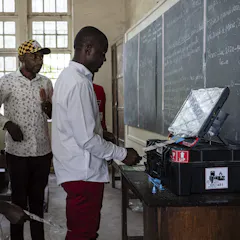
Digital technologies can help more people to participate in building their countries’ democracies.

Americans can look to Estonia for lessons on how online voting systems can improve election integrity.

To boost inclusivity among its ranks, the House of Commons needs parliamentary reform of its voting procedures to allow electronic online voting, or e-voting, for its members.
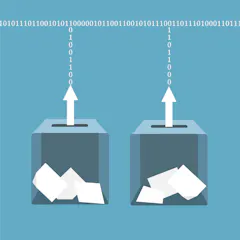
Blockchain technology can address some weaknesses in voting systems, but not all of them – and it opens new potential vulnerabilities, too.

More than ten years since blockchains were developed, their usefulness is only just being discovered.
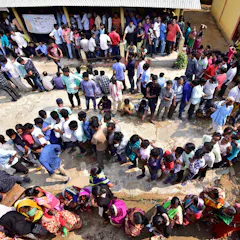
Explaining the equipment and the process by which hundreds of millions of ballots are collected and counted in India.
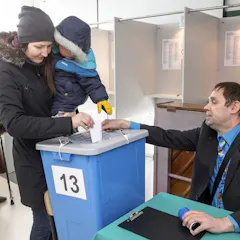
An Estonian cybersecurity leader explains how her country defends itself, its society and its elections from Russian interference.

The stability and integrity of democratic society are too important to be relegated to inherently flawed computer systems that are vulnerable to malfunctions and malicious attacks.
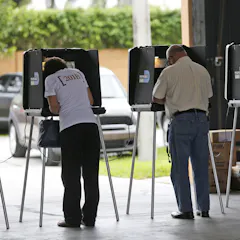
Ensuring the integrity of democratic elections from hackers and electronic tampering, and boosting public confidence in democracy, isn’t very difficult, nor expensive.
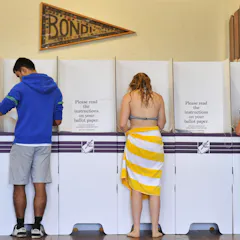
Australia has one of the most secure electoral systems imaginable thanks to paper ballots. Cybersecurity experts caution against e-voting.

Russian government agents allegedly penetrated US state and county election databases. Scholars of election security offer insight and recommendations about what to do now.

Researchers reveal the ways the US election system is under threat – only one of which has anything to do with Russia.

African democracies are embracing electronic voting far more confidently than the West.
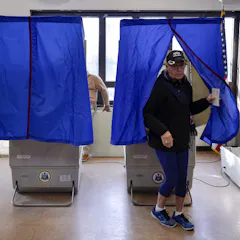
Elections worldwide are becoming increasingly dependent on technology. But, typically, the electronic systems adopted suffer from weak transparency and scrutiny even when the outcome is challenged.
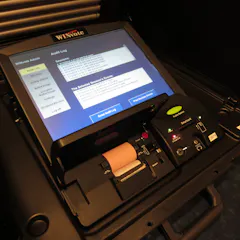
Where problems arose, voting was generally able to keep going smoothly. But those failures serve as a warning of how bad things could get if we don’t replace our voting machines soon.

While voter fraud - despite recent allegations - is rare, how do we ensure the ballots we cast are counted accurately? If so, how? Our experts offer background and insight.
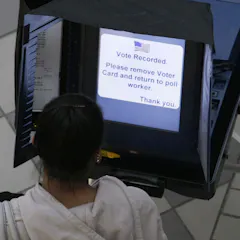
With the DNC email leak and Trump calling on Russia to hack Clinton’s emails, concern about foreign meddling in the 2016 presidential election process is rising. Is e-voting the next cyber battleground?

There’s something about seeing the ballot process take place – the vote, the count – that inspires confidence. That wouldn’t be the same with any electronic voting system.
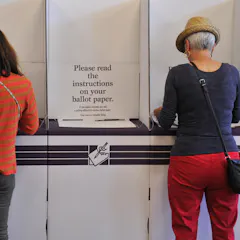
Despite years of research, nobody knows how to provide evidence of an accurate result while keeping individual e-votes private.
Top contributors
-

Adjunct Associate Professor, College of Engineering and Computer Science, Australian National University
-
Research associate in Computer Security, University of Birmingham
-
Deputy Director, Democracy Program, Brennan Center for Justice, New York University
-
Voting Rights Researcher, Democracy Project, Brennan Center for Justice, New York University
-
Professor of Computer Security, University of Birmingham
-
Lecturer in Software Engineering, Monash University
-
Director, University of Michigan Center for Computer Security and Society; Morris Wellman Faculty Development Assistant Professor of Computer Science and Engineering, University of Michigan
-
Professor in Computer Security, Cybercrime, and Cyberwar, UNSW
-
Professor of World Politics, SOAS, University of London
-
Professor of Computing, University of Surrey
-
Teaching Professor of Computer Science and Electrical Engineering, and Associate Director, UMBC Cybersecurity Institute, University of Maryland, Baltimore County
-
Professor, ANU College of Engineering and Computer Science, Australian National University
-
Associate Director, Initiative For Cryptocurrencies and Contracts (IC3); Assistant Prof. of Electrical Engineering, Technion - Israel Institute of Technology
-
Professor of Management, University of North Carolina – Greensboro
-
Visiting Fellow, UNSW