

The success of the metaverse – whether people use it or not – will rely heavily on the environments that are created.
Articles on Virtual reality
Displaying 61 - 80 of 213 articles
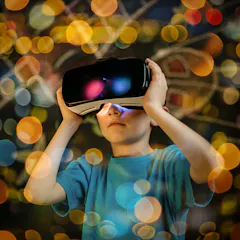
A recent BBC investigation into the app VRChat has prompted concerns about children’s safety in virtual spaces.

That impossibly beautiful model on Instagram might be just that. CGI influencers are already on social media, and Meta’s commercial interest means it shouldn’t be in charge of the ethical guidelines.

Activision’s big titles have led the way in getting us used to virtual worlds. Making them VR will be a gamechanger.
Many people are talking about this coming virtual world, but many others would rather stay where they are.

For the metaverse to work, people need to own their virtual bodies and possessions and be able to spend money. The same cryptographic technology behind bitcoin will make that possible.
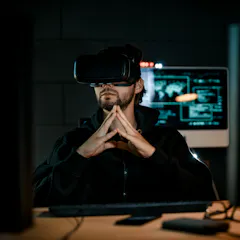
People may think of the metaverse as virtual, but the harm terrorists and extremists could do is very real.

Supply chain issues, emergency science, social distancing requirements and a lot more free time offered both challenges and opportunities for research scientists.

Museums allow us to delve deep into the past with eye-catching displays of artefacts, ancient textiles, high-quality images and short films that narrate how our ancestors lived.
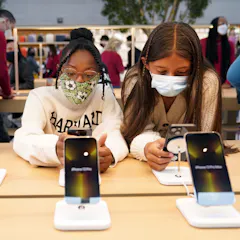
New research shows people experience the ‘endowment effect’ of valuing an object more when they can touch it, even in virtual settings.

‘Nottopia’ began as a fantastical virtual island, and has since become a floating castle in the sky.

Facebook’s rebranding as Meta is an attempt to reposition the company as poised to move into virtual reality networks.
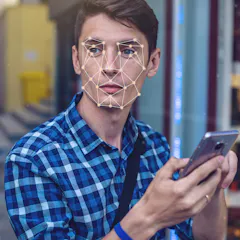
The commitment applies to the social network, but not necessarily to the metaverse.

This (virtual) reality is still probably many years away.

Stay-at-home and quarantining orders have led to increasing isolation. Virtual reality may help alleviate some of the negative feelings of isolation, and this has potential implications for space travel.

Facebook’s parent company is now called Meta, as part if its move to embrace the metaverse - the blurring of the online and real worlds via virtual and augmented reality technologies.

Virtual reality could help patients with a history of sexual trauma, intimacy-related fears and anxiety.
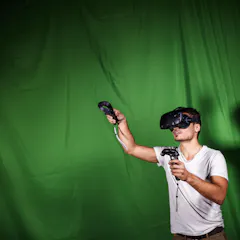
A French trial will use virtual reality headsets to trigger empathy in perpetrators. But previous research findings suggest we need to be sceptical of claims about what the technology can do.

Empathy is an important factor in getting people to act on environmental issues. Virtual reality can bring oceans closer to home for those who can’t experience the wealth of marine ecosystems.
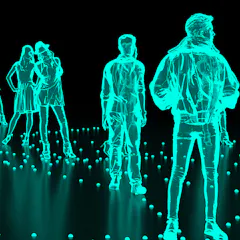
It could be the first steps towards a Star Trek-style holodeck.
Top contributors
-

Researcher in Virtual Reality, Auckland University of Technology
-
Professor in Human-Computer Interaction, ARC Future Fellow, University of Sydney
-
Senior Lecturer in Digital Cultures, Australian Research Council DECRA Fellow, University of Sydney
-
Adjunct Senior Lecturer, Applied Ethics and CyberSecurity, Griffith University
-
Professor of Creative and Cultural Industries, University of Nottingham
-
Senior Lecturer in Digital Marketing, University of the West of Scotland
-
Professor of Screen Media, King's College London
-
Chair in Interactive Multimedia Systems, University of Birmingham
-
Professor of Management, University of North Carolina – Greensboro
-
Senior Lecturer in Media Studies, University of Portsmouth
-
Senior Lecturer in Communication, Deakin University
-
Professor & Director, Hub for Apple Platform Innovation (HAPI), School of Computing Technologies, RMIT University
-
Professor of Anthropology, University of California, Irvine
-
Assistant Professor, Northumbria University, Newcastle
-
Professor of Virtual Heritage and Interactive History, Adelaide University