
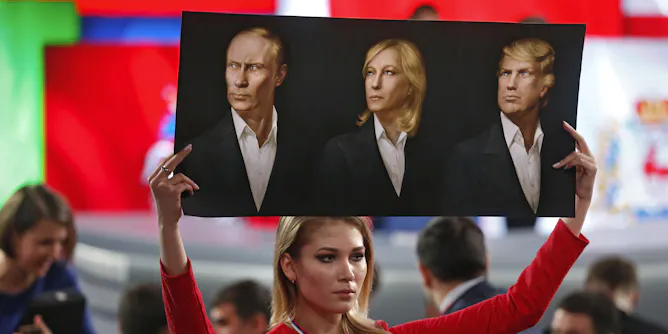
Research shows that Europe’s far right has deep ideological and practical ties to Putin’s Russia.
Articles on Viktor Orbán
Displaying 61 - 80 of 122 articles
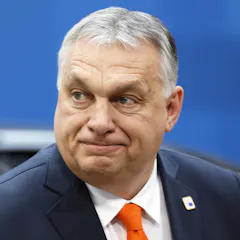
A united opposition may be a winning strategy in some elections, but not for the United for Hungary coalition.
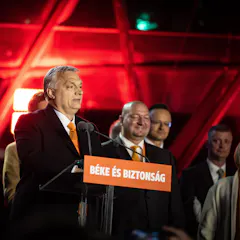
A fractured opposition helped deliver a parliamentary super majority to Europe’s longest serving leader despite position on Ukraine.
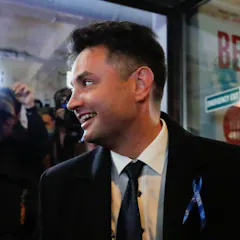
The surprise winner of the opposition primaries does not align himself with any political party.
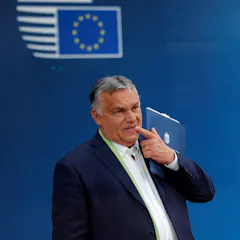
Viktor Orban has once again flouted EU values with a new law on sharing material that ‘promotes homosexuality’.

As Slovenia takes over the rotating EU Council presidency, other member states should not let Janez Janša follow in Hungary’s authoritarian footsteps.
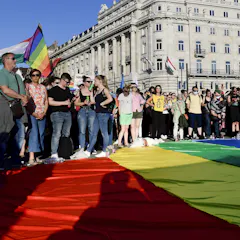
A new anti-LGBTQ+ law in Hungary is populist Prime Minister Viktor Orbán’s tactic for securing support ahead of elections.
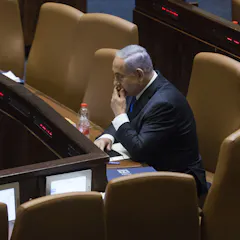
Benjamin Netanyahu wasn’t ousted just for typical political reasons, such as other politicians’ ambitions or grievances. He was thrown out because he was seen as a threat to democracy.
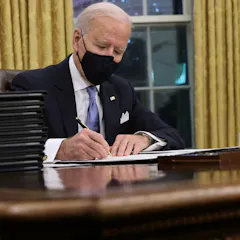
The new US administration has talked about setting up an alliance of democracies. For the time being, the project seems vague. Yet such an alliance is necessary.

Trump is reminiscent of strongmen like Hungary’s Viktor Orbán and Turkey’s Recep Tayyip Erdogan. A good portion of the electorate like what he’s selling anyway. That’s a bitter pill for the U.S.
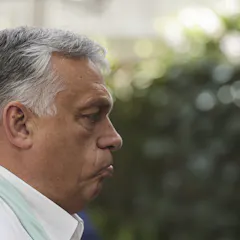
Fighting populism requires us to recognise its embeddedness in business elites. Viktor Orbán’s regime is a case in point.

Most populists are only against the system, they aren’t for anything in particular, as Donald Trump’s presidency and Brexit proves. A progressive wave will soon be upon us in response.

‘Dystopia’ is a term that’s gained popularity during the coronavirus pandemic. But it’s not a synonym for ‘a bad time,’ and a government’s poor handling of a crisis does not constitute dystopia.

The health crisis is pushing governments to try to control the movement of people, but migrants continue to arrive in EU reception centres, which are currently experiencing a crisis of tragic proportions.
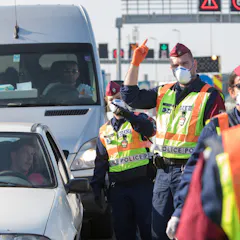
National emergencies allow for the purest expressions of sovereign power, testing the government’s commitment to human rights. Some leaders are failing the coronavirus test, experts say.
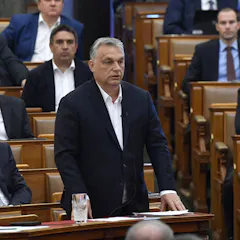
The government now has the power to do whatever it deems necessary to manage the crisis, effectively for an unlimited period of time.
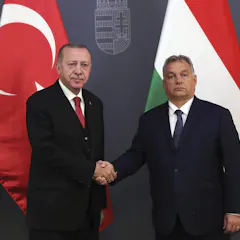
Today’s autocrats rarely use brute force to wrest control. A human rights and international law scholar details the modern authoritarian’s latest methods to grab and hold power.
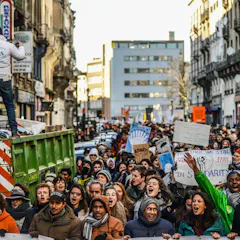
The 2015 reception crisis had a profound impact on civil society in Europe. A significant set of attitudes and practices emerged that give a sense of what political participation means today.
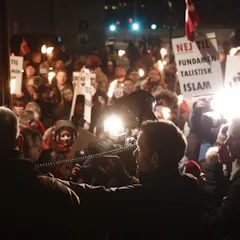
The perception of an immigrant threat in Europe is often thought to be driven by rising numbers of asylum seekers, but research indicates that political and media discourses are often the driving factor.
Populism and nationalism are two concepts that go together today. Isolationist proposals, Euroscepticism and a definition of nation against the “enemy” are three of its main ingredients.
Top contributors
-

Professor in International Politics, Glasgow Caledonian University
-
Professor of International Security, University of Birmingham
-
Professor of History, University of Michigan
-
Assistant researcher, University of Sydney
-
Professor of comparitive politics, Georgetown University; Independent Social Research Foundation
-
Professor of Practice in Diplomacy, Fletcher School of Law & Diplomacy, Tufts University
-
Professor in the Department of Government, University of Essex
-
Associate Professor of Political Science and Global Studies, Boise State University
-
Professor of Political Science, Penn State
-
Cultural and Political Sociologist, Université de Liège
-
Senior Lecturer in Czech Studies, University of Glasgow
-
Rosalinde and Arthur Gilbert Foundation Professor of Israel Studies, University of California, Los Angeles
-
Dennis Altman is a Friend of The Conversation.
Vice Chancellor's Fellow and Professorial Fellow, Institute for Human Security and Social Change, La Trobe University
-
Professor of Politics, University of Sydney
-
Professor of Gender Studies, Central European University