
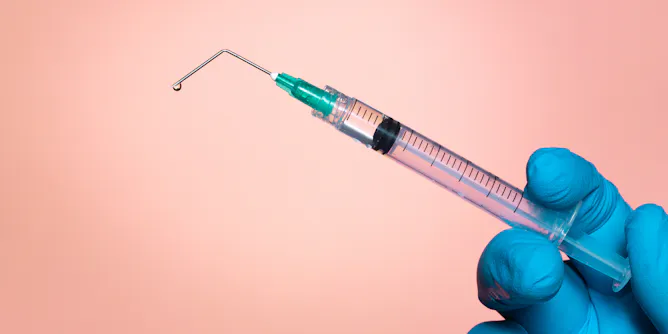
The 40-year-old ‘vaccine court’ relies on scientific evidence to determine whether a person experienced harm from a routine vaccination.
Articles on Vaccine manufacturing
Displaying all articles
Africa has come a long way, in the post-COVID era, in boosting the morale around local production investments among local and foreign companies. But more is needed.
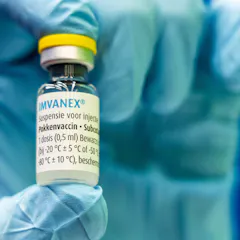
Countries have to weigh up the cost of vaccinating everybody versus the cost of treating the disease.
Chronic weaknesses in our global vaccine manufacturing and distribution systems may broadly be to blame.

Boosters and vaccinating children mean we’re relying on two pharmaceutical companies to supply Australia’s COVID vaccines. That needs to change.
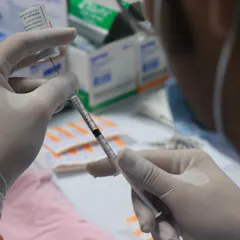
Before the COVID pandemic, efforts to address the challenge of limited vaccine production on the continent yielded little success.

We’re reliant on overseas supply - and the many moving parts of delivery. Each of those parts require staff on the ground – and many workers in this system are likely being affected by Omicron.

The new omicron variant of coronavirus has a number of mutations that may require manufacturers to update vaccines. The unique attributes of mRNA vaccines make updating them fast and easy.
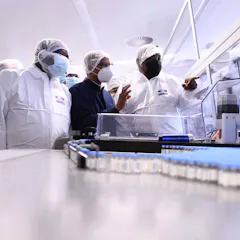
Vaccine manufacturing doesn’t come cheap. It depends heavily on support from developed countries. It also requires much more than relaxing intellectual property rights and a desire for vaccine equity.
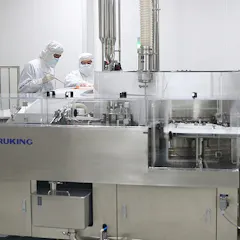
Local companies in Africa would find it very challenging to be cost-competitive in the longer run when the current worldwide scarcity of COVID-19 vaccines is overcome.
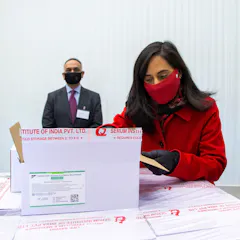
Despite some public virtue signalling, the Canadian government is not doing all it can to improve global access to COVID-19 vaccines. Canada has yet to announce its position on the WTO patent waiver.
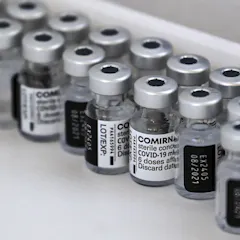
Skyrocketing demand coupled with shortages of vital components is leading to bottlenecks in the supply chain of Pfizer’s and other mRNA vaccines.

Vaccine manufacturing is complex, with lots of potential points for errors. But it also has extensive quality control checks and approvals.

While some of the authorised COVID-19 vaccines are grown, others are built.
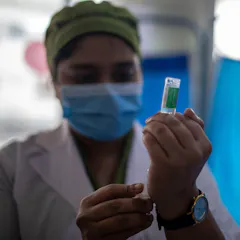
Plus new research on why China is closing down coal-fired power stations. Listen to episode 3 of The Conversation Weekly.
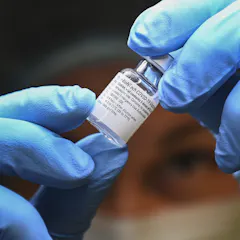
Behind Canada’s current COVID-19 vaccine shortage is a decades-long tale of unheeded warnings, missed opportunities and dismantled resources that was never going to end well.
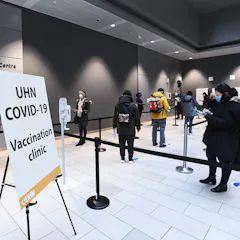
Rollout of COVID-19 vaccines has begun. But getting the jab doesn’t mean abandoning masks, distancing and handwashing. Here’s why the current preventive measures must continue post-vaccine.
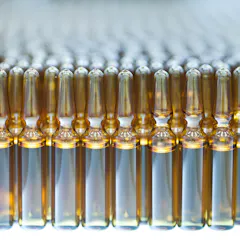
Manufacturing one of the world’s most important vaccines will have several benefits for South Africa.
Top contributors
-

Senior Lecturer in Biochemistry and Cell Biology, University College Cork
-
Associate professor, Department of Family and Community Medicine, University of Toronto; York University, Canada; University of Sydney
-
Associate Professor and ARC Future Fellow, The University of Western Australia
-
Professor of Technology Management, University of Pretoria
-
Part-time lecturer at the Global Health & Social Medicine, Harvard University, and Lecturer at the School of Public Health, College of Health Sciences, University of Liberia
-
Professor Emeritus of Immunology, University of Ghana
-
Professor and Canada Research Chair in Industrial and Applied Mathematics, York University, Canada
-
Senior Research Officer & Co-Director, Vaccines For Africa Initiative, Faculty of Health Sciences, University of Cape Town
-
Bernard T. Ferrari Professor of Business, Johns Hopkins University
-
Professor, Chemistry, UNSW
-
Professor and Distinguished Research Chair, Globalization and Health Equity, L’Université d’Ottawa/University of Ottawa
-
Professor, Biology, York University, Canada
-
Professor of International Business, Ivey Business School, Western University
-
Associate Professor in Biomedical Technology, University of Southampton
-
Professor in Vaccinology, Institute of Infectious Disease and Molecular Medicine, University of Cape Town