
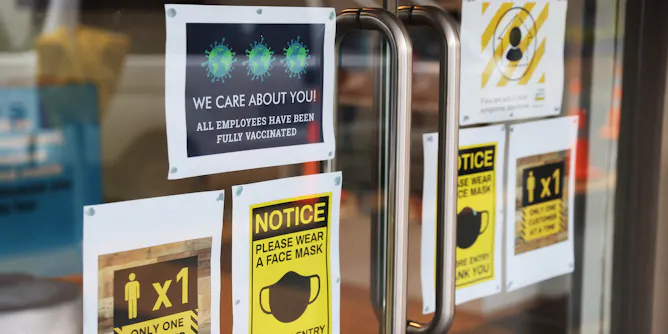
Court challenges over vaccine mandate exemptions have so far failed. But with fundamental human rights at the centre of the government’s emergency powers, is it time for purpose-built new law?
Articles on Vaccine mandates
Displaying 61 - 80 of 87 articles
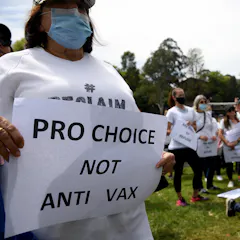
The anti-vax movement is no longer fuelled purely by fears about vaccines and harmful side-effects – there are other forces at play.

Singapore will start charging people who choose not to be vaccinated for any COVID-related hospital care. While Australia’s hospitals are also under pressure, we shouldn’t follow suit.

With vaccine mandates kicking in next Monday, the Teaching Council code of professional responsibility offers a guide to handling staffroom divides – if it’s used with care.

The reasons have a lot to do with the nature of unions as representative of workers’ views, as well as the importance of protecting their right to bargain.

A recent survey reveals only limited employee support for workplace vaccine mandates, underlining how challenging the policy will be for lawmakers and employers.

The decisions of medical health-care professionals like doctors and nurse practitioners are more legally significant than ever before since they are determining vaccination exemptions.

Public health experts know that schools are likely sites for the spread of disease, and laws tying school attendance to vaccination go back to the 1800s.

Victoria has mandated COVID vaccinations for an estimated 1.25 million workers. Employment law expert Giuseppe Carabetta explains the legalities.

Some people feel uneasy about sharing their COVID vaccination status and cite their right to privacy. The law defines when and how information can be collected and when public health trumps privacy.
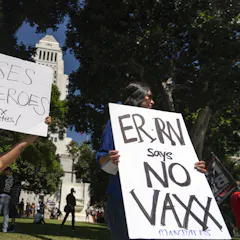
While the vast majority of health workers are prepared to accept COVID vaccinations, we need to make sure the concerns of the minority are heard and don’t compromise safety.
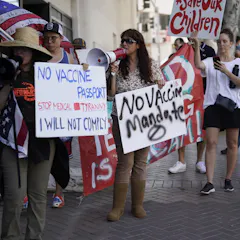
While surveys have shown a large share of unvaccinated workers threatening to quit over a mandate, the reality is few actually do.
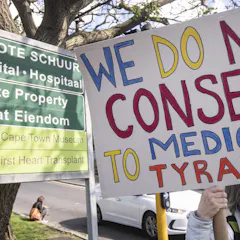
The core of the objections, whether they are about vaccinations, lockdowns, social distancing, or mask wearing, seems to concern an apparent erosion of personal liberty.
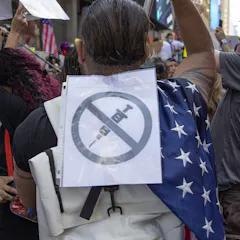
People tend to stick with their stated beliefs. But here’s how external forces like vaccine mandates can push people to do something they don’t want to do – and provide some face-saving cover.
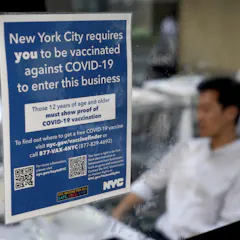
If staff enforce the rules, they risk harassment and lost tips. But if they overlook unsafe behaviour, they risk further COVID transmission.
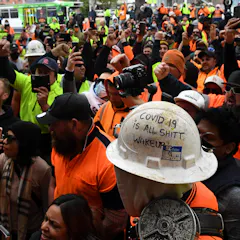
Even if the construction union wanted to oppose the government’s vaccine mandate, there’s not a lot it could do.

Unions are encouraging all workers to be vaccinated, but not through employment mandates. Instead, they support bodily autonomy, workers’ rights, fairness and democracy.

Plenty of groups are offering religious exemptions to COVID-19 vaccine mandates, but their legal basis isn’t as rock-solid as that might suggest.

Mandatory COVID-19 vaccination in Nigeria cannot be by oral proclamation, but must be based on legislation or regulation on public health and safety.
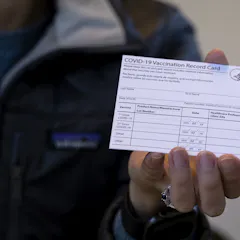
People who forge their own vaccine cards, or buy forged cards, are already facing legal problems, including criminal charges.
Top contributors
-

Professor, School of Population Health, UNSW
-
Professor, School of Social Sciences, The University of Western Australia
-
Associate Professor of Workplace and Business Law, UTS Business School, University of Technology Sydney
-
Chen Su Lan Centennial Professor in Medical Ethics, National University of Singapore; Distinguished Visiting Professor in Law, University of Melbourne; Uehiro Chair in Practical Ethics, The University of Melbourne
-
Professor, School of Public Policy and Administration, York University, Canada
-
Consultant Neonatologist and Professor of Ethics, University of Oxford
-
Professor of Political Science, University of Calgary
-
Professor of Law, University of Waikato
-
Assistant Professor of Epidemiology and Biostatistics, University of Illinois Chicago
-
Professor of Law, University of Waikato
-
Director of Research and Policy at The Dor Foundation and Associate Professor of Politics at Deakin University, Deakin University
-
Professor, Melbourne Law School, The University of Melbourne
-
Professor of Paediatrics and vaccinologist, Royal Childrens Hospital, University of Melbourne and Murdoch Childrens Research Institute (MCRI); Associate Dean International, University of Melbourne, Murdoch Children's Research Institute
-
Research Fellow in Applied Moral Philosophy, University of Oxford
-
Senior Lecturer in Police Studies, University of Tasmania