
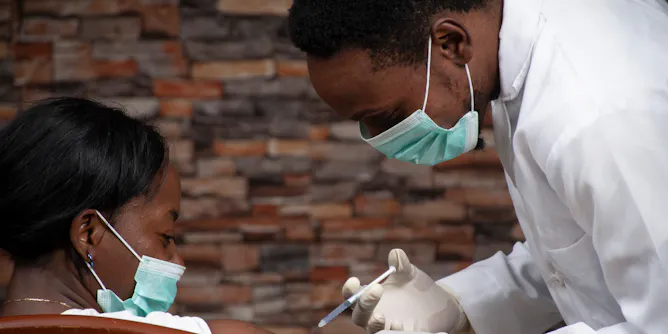
Only 15.8% of the population in low-income countries is double-dosed. Vaccine hoarding by high income countries is to blame.
Articles on Vaccine distribution
Displaying 1 - 20 of 27 articles

An inhaled COVID-19 vaccine would go directly to where the body would use it: the mucosal surface of the airways. This could mean less waste and more benefit, lower costs and reduced side-effects.

We’re reliant on overseas supply - and the many moving parts of delivery. Each of those parts require staff on the ground – and many workers in this system are likely being affected by Omicron.
COVAX, the global vaccine distribution initiative, is well behind its goal of delivering 2 billion doses this year due to under-investment, vaccine nationalism and export restrictions.
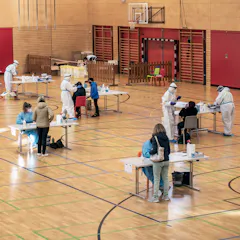
We’ll need mass vaccination hubs and expanded GP vaccination clinics to deliver jabs to millions of Australians.
From today, around 1,000 clinics around the country can begin vaccinating eligible Australians.
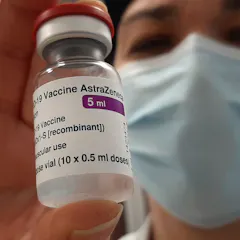
Italy’s decision to block export of AstraZeneca vaccines to Australia will likely not impact our vaccine roll-out. But vaccine scarcity is a looming problem in other parts of the world.

Fair global agreements, home-grown vaccines and sharing extra doses with poorer nations are all needed if we’re to ever emerge from this pandemic.
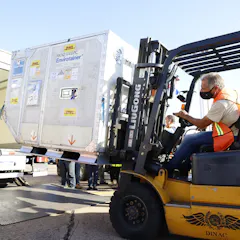
The global vaccine rollout has not been free from geopolitical rivalries and point-scoring.

The clock starts ticking once the vaccine leaves the freezer. Here’s what to expect.

The Oxford/AstraZeneca vaccine is the second COVID shot to be approved in Australia, and it’s likely Australians will start receiving it next month.

People with disabilities are overlooked for COVID-19 vaccine distribution and triage protocols. We need to make this group a priority and address issues that put them at risk.

Vaccine hesitancy will not go away fast. In fact, there are parallels in the physical world to how quickly or slowly an object returns to its normal state.

From designing vaccine supply chains to improving PPE to rebuilding trust, systematically bringing engineering knowhow to public health problems could make a huge difference.
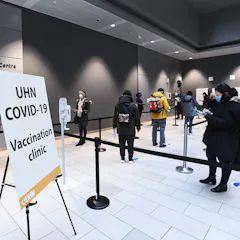
Rollout of COVID-19 vaccines has begun. But getting the jab doesn’t mean abandoning masks, distancing and handwashing. Here’s why the current preventive measures must continue post-vaccine.
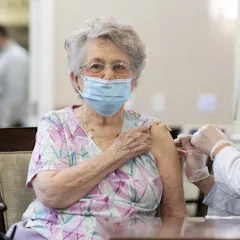
West Virginia’s success holds some important lessons for other states and the rest of the COVID-19 vaccine rollout.

With reports emerging of vaccine wastage across the world, medical supply chain experts explain why that’s to be expected.
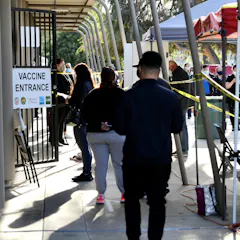
With vaccine shortages looming, experts are debating whether it is important to receive two doses or whether it’s better to give one dose to more people and give a second when the supply is better.
The shipment of goods to suppliers has become technologically sophisticated. Delays in getting out the COVID-19 vaccine to people show that the breakdowns come down to something more basic.

So far, the only COVID-19 vaccines authorized for use need to be kept frozen. But there are many places in the world that can’t support a cold supply chain.
Top contributors
-

Professor of Public Health, La Trobe University
-
Professor of Health Service Operations, School of Pharmacy & Medical Sciences, University of Bradford
-
Deputy Director of the HUMLOG (Humanitarian Logistics and Supply Chain Management Research) Institute, Hanken School of Economics
-
Bernard T. Ferrari Professor of Business, Johns Hopkins University
-
Professor, Biology, York University, Canada
-
Research Fellow, UNSW
-
Research associate, Warren Alpert Medical School, Brown University, Brown University
-
Medical Lead, Royal Prince Alfred Hospital COVID Vaccination Clinic, Sydney Local Health District, Boden Professor of Human Nutrition, School of Life and Environmental Sciences, University of Sydney
-
Director, Centre for Big Data Research in Health, UNSW
-
Professor, The Children's Hospital at Westmead Clinical School and Sydney Infectious Diseases Institute, University of Sydney
-
Professor of Supply Chain Management, University of California, Los Angeles
-
Associate professor, University of Sydney
-
Senior Research Fellow, South Western Sydney Clinical School, UNSW
-
Professor in Global Development, SOAS, University of London
-
General Practitioner, PhD Candidate, Bond University