
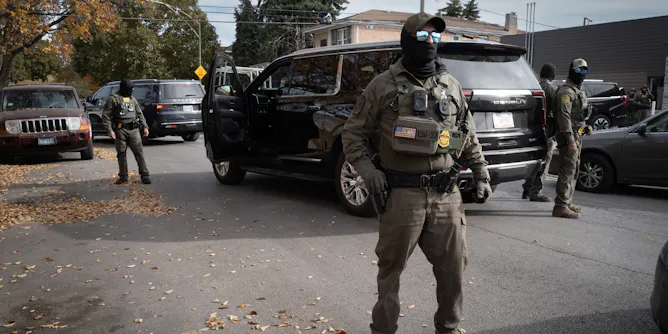
District courts have dismissed the administration’s efforts to detain virtually all undocumented immigrants without a bond hearing while they await deportation proceedings.
Articles on US law
Displaying 21 - 40 of 100 articles
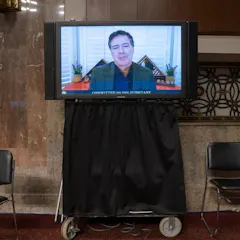
The dismissals do not mean that these prosecutions are over.
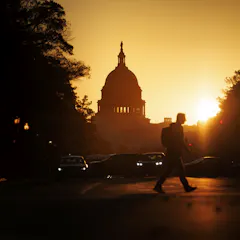
House speakers have had the power to determine when the oath is administered, and courts have been reluctant to weigh in on that influence.
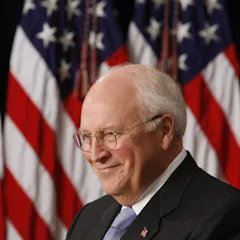
Cheney thought that Congress went too far after Watergate in reining in the presidency. Now Trump and the Supreme Court are embracing Cheney’s views on executive power.

The former FBI director’s indictment breaks a principle that has protected American democracy for 50 years.
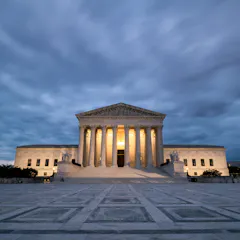
Recent rulings indicate that the high court is leaning toward expanding the type of presidential power that is more emblematic of dictatorship than democracy.

Free speech is not absolute, nor does the Constitution protect only speech Americans like.
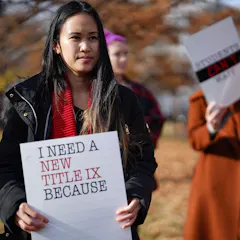
Recent changes to the federal law that bans sexual discrimination in education could make life tougher for students who experience sexual assault or harassment.
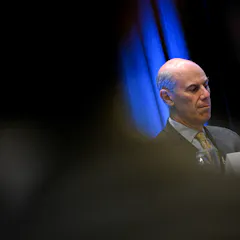
A federal court stopped contempt proceedings against Trump administration lawyers, but they may still have to respond to charges in states where they are licensed to practice law.
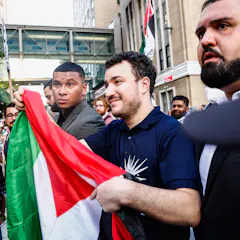
A 1952 law that President Harry S. Truman opposed, calling it a step backward, now underpins many actions by the Trump administration against noncitizens in the US.
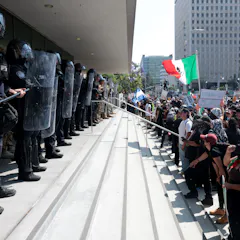
American troops may be used inside the country, but it is an extraordinary exercise of authority to deploy them domestically, says an expert on the domestic role of the military.
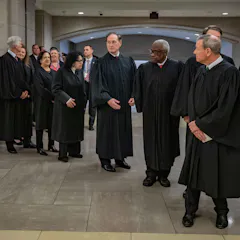
Public trust in the US legal system and the rule of law could be undermined further by recent events.
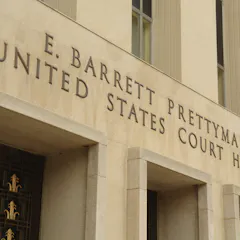
Political leaders in El Salvador, the Philippines and Israel, among other places, have also positioned judges as the enemy of the people.

Habeas corpus – a Latin phrase meaning ‘you shall have the body’ – protects any person, whether citizen or not, from being illegally confined. It’s a crucial element of US law.

The Constitution does not grant Congress authority to set voter-eligibility requirements in federal elections.
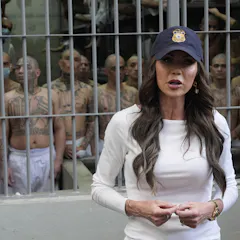
A scholar explains why the Trump administration’s actions may violate the constitution.
The problem goes beyond the political leanings of judges to the speed of change and the administration’s apparent willingness to ignore court rulings it dislikes.
Many of Trump’s executive orders mirror plans laid out in Project 2025, a conservative policy plan developed in part by the Heritage Foundation.
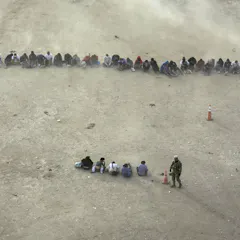
The president has vast authority over the armed forces, but using them to secure the border would quickly unleash legal chaos, say lawyers.

Since the earliest days of the nation, any person born on US soil is a US citizen. A new Supreme Court ruling limits judges’ ability to block Trump’s order.
Top contributors
-

William Nelson Cromwell Professor of Jurisprudence and Political Science, Amherst College
-
Associate Dean for Research and Intellectual Life, Albany Law School
-
Professor of American Civics, University of Tennessee
-
Professor of Law and Director of the Center for Professional Ethics, Case Western Reserve University
-
Associate Professor of American History and Politics, University of East Anglia
-
Professor of Political Science, Concordia University
-
Professor of Law, University of Dayton
-
Associate Professor of Political Science, Oklahoma State University
-
Associate Professor of Law, Arizona State University
-
Assistant Professor of Law, Quinnipiac University
-
Senior Lecturer in Law, Graduate School of Business and Law, RMIT University, RMIT University
-
Senior Lecturer/Associate Professor, Department of Government, University of Essex
-
Researcher, Othering & Belonging Institute, University of California, Berkeley
-
Professor & Director, Jeff Bleich Centre for Democracy and Disruptive Technologies, Flinders University
-
Professor of Law, Wayne State University