

The term refers to a power whose military capabilities are approaching that of the dominant power. But for the US, seeing China this way comes with big risks.
Articles on US foreign policy
Displaying 41 - 60 of 491 articles
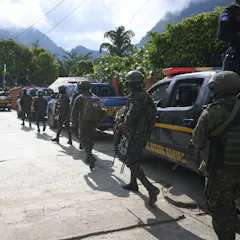
In the US, political consensus portrays the fentanyl crisis as a border problem but military action is unlikely to solve the issue.
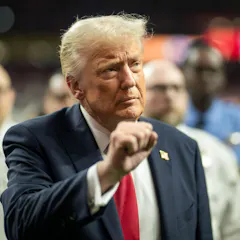
Donald Trump appears to react quickly and emotionallly to foreign policy decisions, a psychologist explains why that could be.

While Israel and Iran have agreed to a ceasefire after 12 days of airstrikes, it isn’t clear what specific measures, if any, the countries might agree to in order to keep the peace.
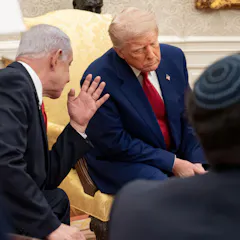
Donald Trump’s Maga supporters are not naturally in favour of US involvement in Iran. Many have criticised Trump for considering it.
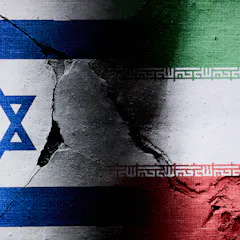
All 3 nations have sunk costs and made promises that make it harder to find an off-ramp from conflict.
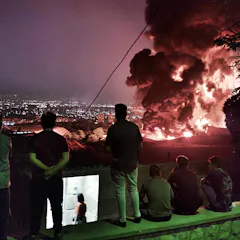
Some major events in the history of US-Iran relations highlight differences between the countries’ views, but others have presented real opportunities for reconciliation.
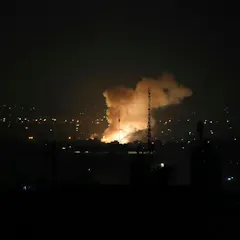
The timing of Israel’s air strikes suggest to some that the US influence over Benjamin Netanyahu has weakened.
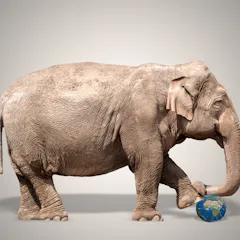
From Athens to the British Empire and on to the US – dominant powers have used might and consent to exert influence.
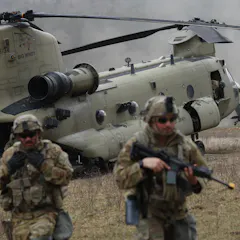
The Trump administration has signaled that its support for NATO countries might not be absolute. This worries European observers, who have long looked to the US for military leadership.
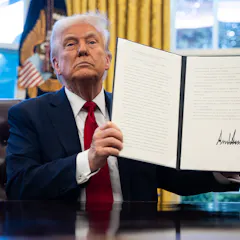
Donald Trump’s aggressive foreign policy is being cast as necessary for national security. This ensures he’ll encounter little pushback from Congress or the courts.
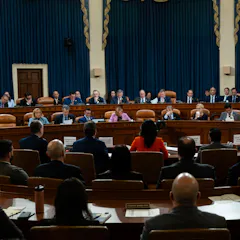
Government officials with classified information clearance typically have a range of secure ways they can view or discuss classified information.

Trump’s brand of American nationalism ignores the fact other countries also have national aspirations – and are willing to fight back.
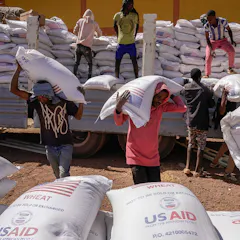
USAID started in the 1960s as a way to offset the spread of communism. Since then, it has had various other soft-power benefits for the US.

Just weeks into his second term, Donald Trump has made huge decisions that have caused ripple effects around the world. And he shows no sign of stopping.
Rather than clarifying American foreign policy, the term has long been used to tar critics or obfuscate legitimate international affairs questions.
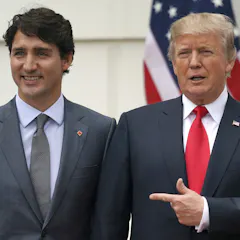
Trump is not the first American leader to dream of northern expansion. History suggests these designs reveal simmering divisions inside the United States.
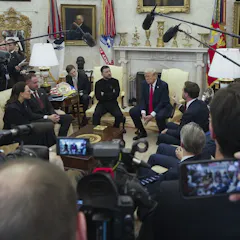
A fractious meeting in Washington has left Ukrainians wondering what will become of relations with the US.

Trump’s angry outburst at Ukrainian President Volodymyr Zelenskyy illustrated why authoritarians are lousy dealmakers, particularly when autocratic instincts are exacerbated by toxic masculinity.

Donald Trump’s threat to take back control of the Panama Canal harks back to decades of US intervention in Latin America.
Top contributors
-

Professor in The Division of Global Affairs and The Department of Political Science, Rutgers University - Newark
-
Professor of International Politics, Clinton Institute, University College Dublin
-
Professor in the Department of Government, University of Essex
-
Professor of International Relations, Royal Holloway, University of London
-
Adjunct Professor, Australia-China Relations Institute, University of Technology Sydney
-
Professor of Political Science, Boise State University
-
Emeritus Professor of International Relations, La Trobe University
-
Professor in International Politics, City St George's, University of London
-
Professor of Political Science, University at Buffalo
-
Professor of Political Science, Kansas State University
-
Professor of Political Science, Macalester College
-
Professor of the Practice of Political Science and International Relations, USC Dornsife College of Letters, Arts and Sciences
-
Professor of Peace Studies, University of Bradford
-
Tony Walker AM is a Friend of The Conversation.
Director, La Trobe University
-
Associate Professor in American and International Politics, University of Birmingham