

Central banks have been signalling that rate rises are going to get more aggressive again, but can the economy actually take it?
Articles on US Federal Reserve
Displaying 101 - 120 of 287 articles
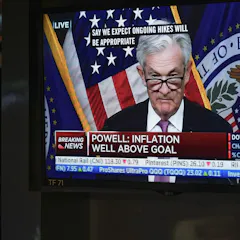
The Fed lifted its benchmark interest rate just 0.25 percentage point following a series of much more aggressive rate hikes in 2022.

The US spent $232 billion paying interest on the national debt in the first quarter of 2023 as the Fed jacked up borrowing costs.

The rising cost of living doesn’t hit all Americans equally. Yet the benchmark figure for charting the rising cost of living excludes people in rural areas.

Price inflation has hit countries differently, but most central banks and governments are concerned about the rising cost of living in 2023.

Central banks are raising interest rates to tame inflation, but 2023 will increasingly turn a technical decision into a political challenge.
Although many say the economic outlook for next year appears bleak, there is room for optimism.
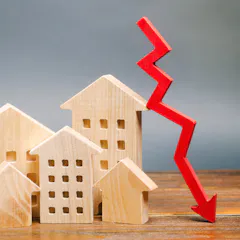
The cost of borrowing for a home has fallen in recent months, despite repeated increases of the benchmark interest rate. An economist explains the seeming paradox.
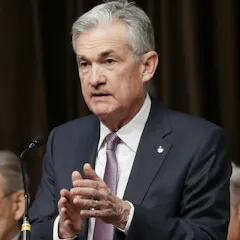
Central bankers are set to slow down their rate hikes.

The Fed is waging war to get inflation down to its preferred level of around 2%. An economist explains what’s so special about that number.

Usually when jobs and wages are rising, it’s a good thing, but right now they may signal higher odds of a nasty recession – and Americans aren’t ready for it.

With 30-year fixed rates hitting a 20-year high of 7%, a finance scholar explains where these life-altering loans originated.
The Fed is also beginning to reduce its massive balance sheet, which is beginning to cause disruptions in the $24 trillion Treasury market.

Men were significantly less likely to express confidence in the Federal Reserve and optimism about the economy when monetary policy information came from a woman versus a man.

Many voters say inflation is the issue that matters to them most as they head to the polls. The problem is, the people they choose can’t do much about it.

At the right moment, Australia’s Reserve Bank would be wise to stop taking its lead from the US – holding interest rates here steady, even if they’re still rising overseas.

The Fed’s recent rate hikes are contributing to higher prices and growing recession risks around the world, yet there are good reasons why the US central bank has to keep its focus domestic.

The reality is that the US Federal Reserve has decided price rises must be addressed by raising interest rates. African countries have no choice by to follow suite.

Inflation remained near a 40-year high due to a jump in the cost of food and shelter. But that might not mean the Federal Reserve will get more aggressive when it comes to monetary policy.
Biden’s plan would provide up to $10,000 in relief for individuals who earn less than $125,000 a year, and $20,000 for Pell Grant recipients.
Top contributors
-

Scientia Professor of Economics, UNSW
-
Associate Professor of Finance, Mississippi State University
-
Professor of Economics, University of Nebraska Omaha
-
Associate Professor of Business, Boston University
-
Professor of Political Science, Michigan State University
-
Professor of Finance and Distinguished Professor of Applied Investments, Appalachian State University
-
Associate Professor of Economics, Pace University
-
Visiting Faculty in Economics, Emory University
-
Professor of Finance and Fred T. Tattersall Excellence in Finance Research Chair, West Virginia University
-
Assistant Professor of Economics, Clark University
-
Visiting Fellow, Crawford School of Public Policy, Australian National University
-
Director, Center for Tax and Budget Policy at the Baker Institute, Rice University
-
Professor of International Economic Affairs at The Fletcher School, Tufts University
-
Senior Lecturer in Economics, The Open University
-
Professor of Management, Co-Director of the MIT Sloan Institute for Work and Employment Research, MIT Sloan School of Management