
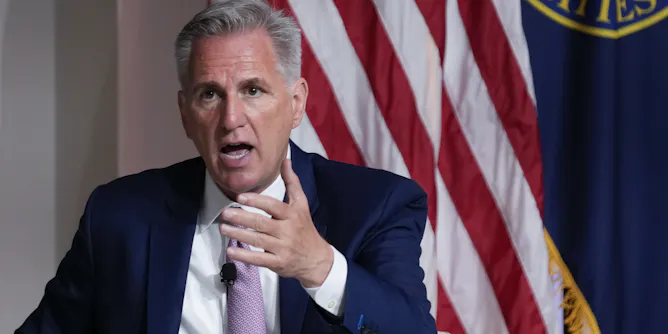
House Speaker Kevin McCarthy agreed to raise the debt ceiling – and avoid an unprecedented US default – but only if Democrats agree to freeze spending and agree to several other demands.
Articles on US economy
Displaying 121 - 140 of 359 articles
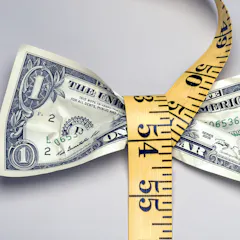
The Fed’s campaign of rate hikes is showing more signs of having the intended effect of slowing the economy – but that may be bad news for those who lose their jobs or have a harder time finding one.
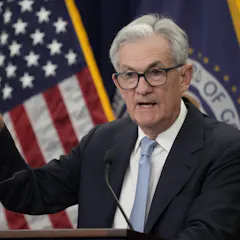
The Fed’s decision to raise rates is likely to put more pressure on regional banks, which will make it harder to avoid a recession.

The Fed raised rates by a quarter-point – less aggressive than had been expected before the current banking crisis, but signaling inflation is still its focus.
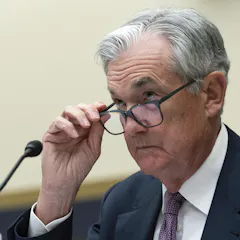
The latest consumer prices report shows cost of living is still rising far above the Fed’s target. But don’t expect monetary policymakers to aggressively hike rates.
The collapse of a US bank is the latest crisis for central banks to deal with. But rather than being saviours of the global economy, what if they are actually a big part of the problem?
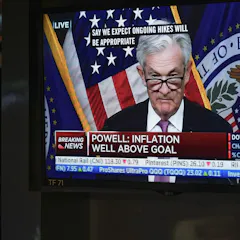
The Fed lifted its benchmark interest rate just 0.25 percentage point following a series of much more aggressive rate hikes in 2022.

The US spent $232 billion paying interest on the national debt in the first quarter of 2023 as the Fed jacked up borrowing costs.

The rising cost of living doesn’t hit all Americans equally. Yet the benchmark figure for charting the rising cost of living excludes people in rural areas.

A drop in gas prices helped tame inflation in December 2022. But grocery prices and housing costs continued to rise.

Americans are saving just over $2 of every $100 in disposable income after setting aside historically high amounts of cash during the pandemic.
Although many say the economic outlook for next year appears bleak, there is room for optimism.
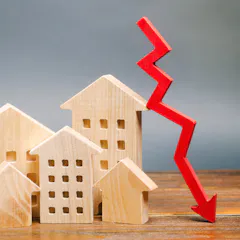
The cost of borrowing for a home has fallen in recent months, despite repeated increases of the benchmark interest rate. An economist explains the seeming paradox.

The Fed is waging war to get inflation down to its preferred level of around 2%. An economist explains what’s so special about that number.
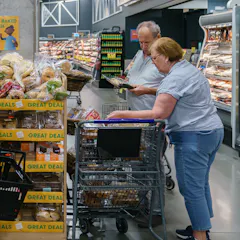
Inflation, abortion and state of US democracy rank among the top issues facing voters before the midterm elections, regardless of race, ethnicity or party affiliation.
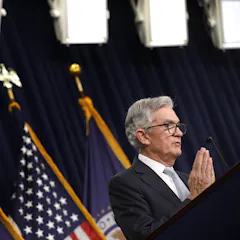
The Fed is also beginning to reduce its massive balance sheet, which is beginning to cause disruptions in the $24 trillion Treasury market.
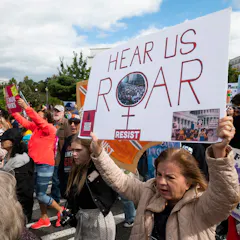
Americans voters are angry about everything from abortion to inflation. While anger is good for voter turnout, it’s ultimately bad for solving problems in a democracy.

President Joe Biden’s suggestion that the COVID-19 pandemic is over has led to a backlash among some experts who suggest the comment is premature – and counterproductive.

The Fed’s recent rate hikes are contributing to higher prices and growing recession risks around the world, yet there are good reasons why the US central bank has to keep its focus domestic.
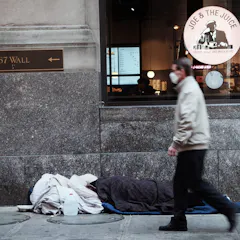
The US economy shrank for a second straight quarter. While some call that a recession or a strong sign of one, a financial economist explains why the term probably doesn’t yet apply.
Top contributors
-

Associate Professor of Business, Boston University
-
Part-Time Professor of Economics, The New School
-
Associate Professor of Finance, Mississippi State University
-
Election Analyst (Psephologist) at The Conversation; and Honorary Associate, School of Mathematics and Statistics, The University of Melbourne
-
Scientia Professor of Economics, UNSW
-
Professor of International Relations, Australian National University
-
Professor of Economics, University of Nebraska Omaha
-
Associate Professor of Political Science, Georgia State University
-
Professor, Department of Government, University of Essex
-
Visiting Faculty in Economics, Emory University
-
Assistant Professor of Economics, University of California, Merced
-
Associate Professor of Economics, University of South Carolina
-
Associate Professor of Economics, Pace University
-
Assistant Professor, Miller Center, University of Virginia, and US Studies Centre, University of Sydney
-
Professor of Finance and Distinguished Professor of Applied Investments, Appalachian State University