

The 2020 census and congressional apportionment have dominated the headlines in recent months. What could it all mean for the average American voter?
Articles on US Census Bureau
Displaying 21 - 39 of 39 articles

Demographers have figured out a simple and effective way to estimate the number of unauthorized immigrants – even without information on citizenship.

In the US, poverty is measured by income level. But that measure misses many other aspects of poverty – like unemployment, poor health and a lack of health insurance.

In 2010, approximately 1 million children under the age of 5 were not counted in the census. That meant less state funding for critical services like Early Head Start and SNAP.

For the first time in decades, the 2020 census will include a question asking whether or not each counted person is a citizen. On April 23, the Supreme Court will hear arguments on this idea.
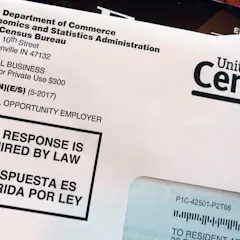
If undocumented immigrants choose not to fill out the questionnaire, then the official population of several states would deflate, costing them House seats and federal funding.

The government collects reams of economic data that are vital to the functioning of companies, policymakers and even families.

Around 1 in 8 Americans was poor in 2017. That doesn’t compare well to other developed nations.
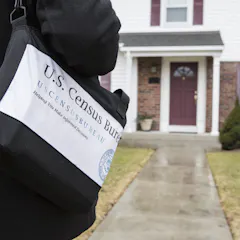
More than two dozen states and cities are suing over a controversial new citizenship question.
Researchers analyze social media data to gain useful insights into modern society and culture. But it’s important to protect users’ privacy. How can both ends meet?

Most people think of entrepreneurship as a young person’s game. But the highest-growth firms in the US come from entrepreneurs who are 45 years old.

The 2020 census will count same-sex couples across the US. A broader count of the LGBT population would be even better.

Is asking people about race or sexuality a prerequisite for social justice – or a tool of discrimination?

Asian-Americans are extremely diverse. Fear of giving the government personal data may make it more difficult to provide the right educational, health care and other services to specific populations.
The upcoming census, like many before it, will boil complex information on race, ethnicity and ancestry into just two questions. That leaves a lot of important information out of the data.
The Department of Justice wants to add a citizenship question to the next census. That could mess up the Census Bureau’s data and damage public trust in the system.
John Thompson was more than just another Washington bean counter. His resignation may affect which party controls Congress after 2020.
How can we possibly know how many millions of people are living in the U.S. illegally? Demographers have actually refined a simple formula that’s worked pretty well since the 1970s.

A new study has found that second-generation immigrant kids have a unique advantage over first-generation or even third-generation immigrants.
Top contributors
-

Distinguished Professor of Sociology and Demography, Penn State
-
Adjunct Professor of Mathematics, Prince George's Community College
-
Professor Emeritus of Law and Adjunct Professor of Political Science, Case Western Reserve University
-
Assistant Professor of Asian Pacific American Studies, Arizona State University
-
Professor of Sociology, Columbia University
-
Associate Professor of Geography, University of Tennessee
-
Assistant Professor, HEC Montréal
-
Associate Professor of Business, Boston University
-
PhD Candidate in Management, Massachusetts Institute of Technology (MIT)
-
Professor of Economics, Fordham University
-
Research Associate, Idaho Policy Institute, Boise State University
-
Director and Co-founder, Institute for the Study of "Race" & Social Justice and Professor of Sociology, University of New Mexico
-
Postdoctoral fellow, University of Washington
-
Adjunct Professor of Politics and Director of Think Again, University of Virginia
-
Part-Time Professor of Economics, The New School