

The pandemic has shown us the need for widespread security.
Articles on Universal basic income (UBI)
Displaying 21 - 40 of 68 articles
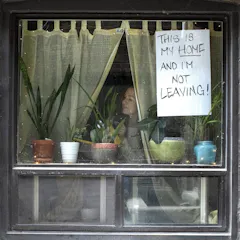
CERB was a lifeline but no paradise, highlighting the struggles of social assistance recipients to get by on much less.

Despite evidence that cash payments can help improve well-being, they have limitations as well, according to a development economist.
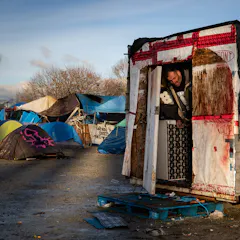
Adopting a universal basic income requires a fundamental restructuring of the existing social safety net in Canada, and would not necessarily conquer income inequality and poverty.
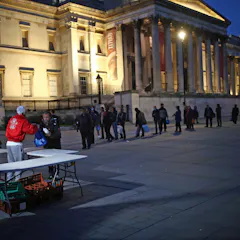
The hardship of the pandemic has exposed the extreme nature of a policy the prime minister didn’t even appear to know about.
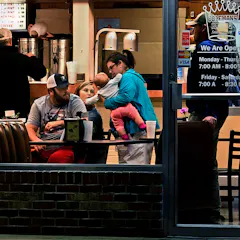
A new federal antipoverty program for both rural and urban areas is part of the solution, but the power of Big Ag, lack of internet and struggling towns need attention, too.
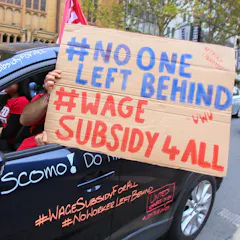
The inadequacy of the Newstart payment was recognised long before the pandemic. We shouldn’t go back to it.
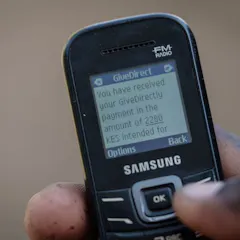
Most people who received some money experienced less hunger, sickness and depression, both before and after Kenya imposed restrictions in the pandemic.

Unconditional emergency assistance for the world’s poorest could be funded by temporarily freezing debt repayments.

Social psychiatry has fallen from favour. It’s time to revisit it.
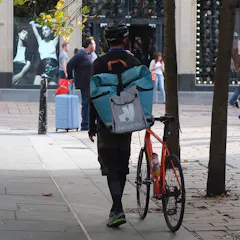
To achieve universal basic income, changes would be needed in terms of public and political support. Could the Covid-19 pandemic turn the tide?
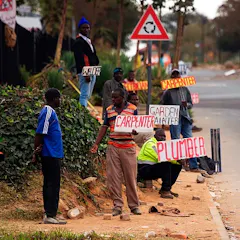
Economic distress was the norm for many before the coronavirus outbreak. The pandemic is an opportunity to provide an economically secure future for all.
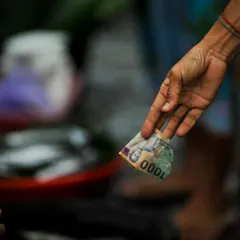
In emergencies, time is a currency. If the government fails to deliver basic income to the people, the consequences could be catastrophic.

Mental health experts have called for universal basic income as far back as 1969.

Lockdown throws our relationship with work into the spotlight.

We believe a basic income should be a right, but it should be underpinned by a principle of reciprocity - people must contribute to society in return.

A universal basic income could provide financially precarious people with the money they need. And it would keep money flowing through the financial system.

An economist specializing in inequality explains how a basic income guarantee is just what low-wage workers and the economy need.
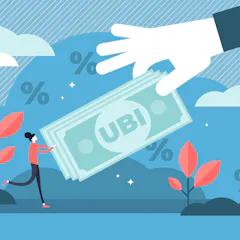
Short-term schemes make it difficult to assess, but nine basic income-style programmes from Canada to Iran reveal some fascinating outcomes.
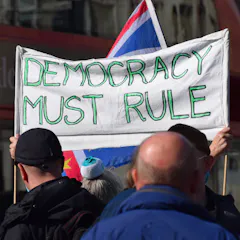
Unlike older visions of economic democracy which started with class or the collective, the starting point now should be the individual
Top contributors
-

Lecturer (Assistant Professor), King's College London
-
Lecturer in Management, Employment and Organisation, Cardiff University
-
Professor in Health History, University of Strathclyde
-
Dean of Programs, EM Lyon Business School
-
Professorial Fellow, University of Canberra
-
Examination Fellow in Law, All Souls College, University of Oxford
-
Adjunct Senior Lecturer, Applied Ethics and CyberSecurity, Griffith University
-
Subject Convenor, Centre for Advancing Journalism, The University of Melbourne
-
Lecturer in Literature, Australian Catholic University
-
Associate professor in Sociology, University of the West of England
-
Senior Lecturer in Social Policy, Curtin University
-
Research fellow in politics and sociology, University of Oxford
-
Professorial Associate in the Centre for Public Policy, The University of Melbourne
-
Principal Lecturer in Finance, Cardiff Metropolitan University
-
Finance Lecturer, Cardiff Metropolitan University