
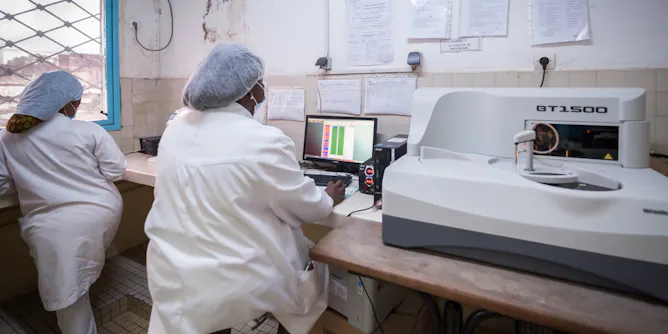
Kenya’s health financing law change suggests conditions for reform can be strategically built.
Articles on UHC
Displaying 1 - 20 of 23 articles
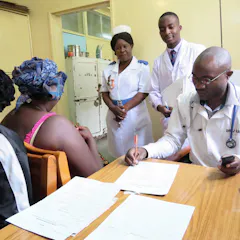
In 2019 Zambia introduced a National Health Insurance Scheme to help more people access healthcare and move the country closer to universal health coverage.

The NHI bill aims to ensure that all South Africans have access to quality healthcare services.
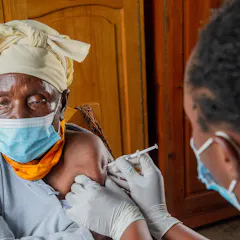
Rwanda has built a healthcare delivery system on primary healthcare with individuals and communities at the centre.

Addressing the noncommunicable disease pandemic can also mitigate challenges facing people living with HIV and complement efforts against TB.
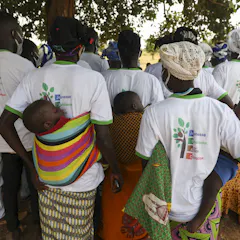
Burkina Faso is one of the poorest countries in the world. Financial barriers still prevent many families from getting the health services they need.

Removal of user fees or full subsidisation of insurance premiums doesn’t fully eliminate financial access barriers.

The higher pace of demographic ageing and the noncommunicable diseases that come with it call for new management approaches.

South Africa faces high levels of noncommunicable diseases such as diabetes and hypertension. The NHI is likely to battle to cope with treating large numbers of sick people.
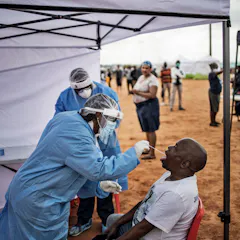
There is hard and persistent work that needs to be planned for, like a kind of ongoing rehabilitation process, to realise the dream of one health system for all South Africans.

A crisis like COVID-19 demands that professional barriers be broken.
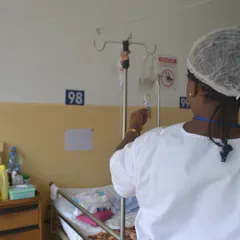
Ghana’s lack of a palliative care policy is posing a significant challenge to effective healthcare for cancer patients.

The entire premise of effective competition is that purchasing of health services should be based on value - a combination of price and quality.

Less than 1 in 10 people living with a mental health condition in South Africa receive the care that they need.

The UN’s global health policy related to universal health coverage should be grounded in primary health care – with meaningful benchmarks to ensure patient participation.
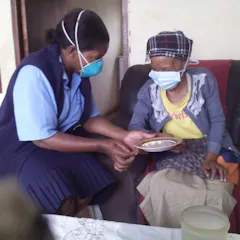
Top-down reforms like those proposed in the NHI Bill need to be complemented by a bottom-up process of health system strengthening.

South Africa’s planned NHI has no equivalent in any setting in the world. It’s deeply flawed on a number of fronts.

Health systems are generally structured around nation-states. Migration, especially across national borders, therefore leads to challenges.

Excluding international migrants from the public health care system can result in a population wide risk.
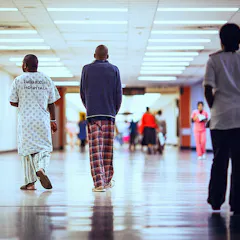
South Africa’s health care needs to be reformed so that everyone has access regardless of affordability or location.
Top contributors
-

Senior Lecturer, Department of Global Health, Stellenbosch University
-
Director Rural Health Advocacy Project, University of the Witwatersrand
-
Senior lecturer in the Division of Emergency Medicine, University of Cape Town
-
Health systems researcher, University of Ghana
-
Health Economist, KEMRI Wellcome Trust Research Programme
-
Professor, University of the Western Cape
-
Associate Professor in Biomedical Engineering, Head of Medical Devices Lab, University of Cape Town
-
Researcher and PhD candidate, Aix-Marseille Université (AMU)
-
Chair of Social Security Systems Administration and Management Studies, Adjunct Professor in the School of Governance, University of the Witwatersrand
-
Sasha Frade is a PhD student, as well as an Associate Lecturer, in the Demography and Population Studies, University of the Witwatersrand
-
Health Economist in the Alan J. Flisher Centre for Public Mental Health, University of Cape Town
-
Lecturer, Palliative Care, Lancaster University
-
Professor of Global Mental Health and Development, Centre for Global Mental Health, Health Service and Population Research Department, Institute of Psychiatry, Psychology and Neuroscience, King’s College London, University of Cape Town
-
Associate Research Scientist, African Population and Health Research Center
-
Professor of Public Health and DST/NRF Research Chair., University of the Witwatersrand