
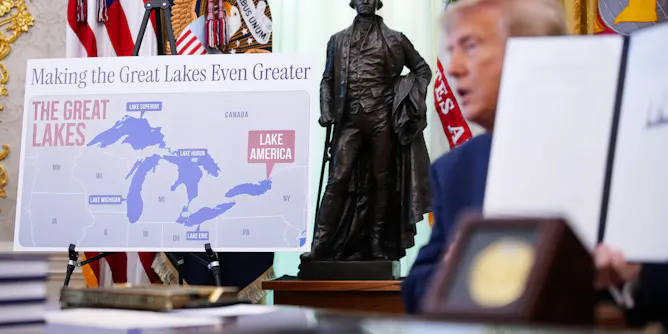
A geographer explains the politics and procedures behind renaming American places.
Articles on Trump trade war
Displaying 1 - 20 of 40 articles
As the US winds back some of its highest tariff threats, Australia should see a small benefit.

Chinese products that would have gone to the American market might be diverted to developing countries such as Nigeria.
Joining us from Washington DC is Warwick McKibbin, an internationally renowned economic modeller from the ANU whose services are now in high demand.

The escalating trade war is creating serious risks for the international development of AI.
China and the US both lose from a tariff war, and global economic activity will decline. But New Zealand’s existing free trade agreements should cushion the blows.

As the US imposes more tariffs, a global backlash is brewing – from subtle trade barriers to strategic countermeasures targeting red-state industries.

If trade deals can’t be struck in the 90-day tariffs pause, what are the best ways for countries to respond?
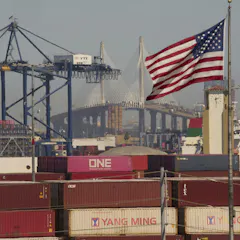
Trump’s tariffs have redirected billions of dollars in exports originally bound for the U.S. to other markets.

Donald Trump says he is a big fan of oil and gas. His actions may not be of great interest to the industry. And the results may not be what he says he wants.
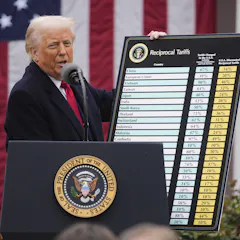
Canada must stand in solidarity with the international community to exert collective pressure on the U.S. A co-ordinated global response could compel Trump to reconsider his unilateral trade policies.

The major parties say they won’t use the PBS as a bargaining chip in US tariff negotiations. They also need to resist pressure to slow down access to generic drugs.

To calculate its ‘reciprocal tariffs’, the Trump administration has opted for a crude formula with no basis in trade theory. We are all going to pay the price.
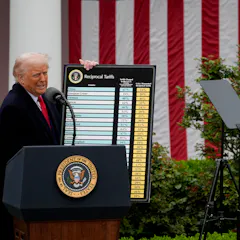
You owe us. Why Trump thinks it’s payback time.

Foreign investment thrives on stability. Trump’s tariffs − and the current climate of uncertainty − could drive capital away.
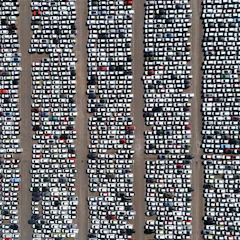
The only way to win a trade war is to avoid it in the first place.

Philosopher Richard Rorty can help us understand the delicate balance between being a good patriot and a bad patriot.

Canadian citizens can use the consumer marketplace as a way of influencing the outcome of the trade war.

Canada’s decision to retaliate was not just about responding in kind; it was a strategic move aimed at pressuring key U.S. export industries.
Development economist Jostein Hauge talks to The Conversation Weekly podcast about the winners and losers from tariffs and protectionism.
Top contributors
-

Associate Professor of Political Science, Georgia State University
-
Scientia Professor of Economics, UNSW
-
Professorial Fellow, University of Canberra
-
Professor of Economics, University of Minnesota Duluth
-
Professor of Economics, University of Georgia
-
Visitor to Senior Combination Room, St. Edmunds College, University of Cambridge
-
Tony Walker AM is a Friend of The Conversation.
Director, La Trobe University
-
Chair in Agricultural Marketing, Trade and Policy, The Ohio State University
-
Associate Professor of Applied Economics and Management, Cornell University
-
Professor, McCourt School of Public Policy, Georgetown University
-
Professor of Technology Management, University of Pretoria
-
Assistant Professor of Economics, University of California, Merced
-
Associate Professor of Economics, Kedge Business School
-
Professor of Economic Geography, Vassar College
-
Doctoral Researcher in Politics, University of Surrey