
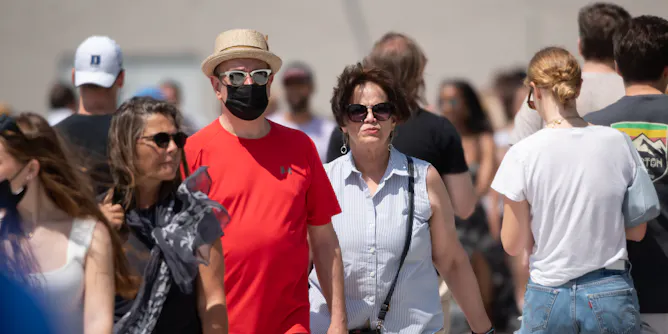
The COVID-19 vaccines are a smash success. But that doesn’t mean they keep every vaccinated person completely free of the coronavirus.
Articles on Transmission
Displaying 21 - 40 of 44 articles
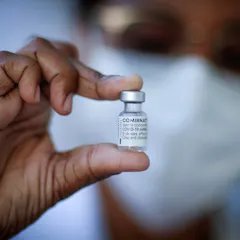
Vaccination is likely to substantially reduce virus transmission by reducing the pool of people who become infected, and reducing virus levels in people who do get infected.
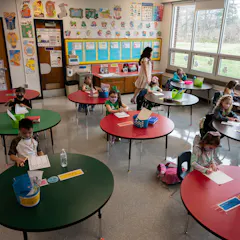
In-person learning can safely resume as long as schools take steps to mitigate the spread of COVID-19.
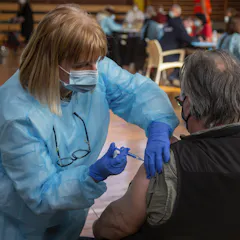
You’ve been vaccinated; can you now safely see your friends and family? New research hints that vaccinated people may be less likely to transmit the coronavirus, but they are not 100% in the clear.
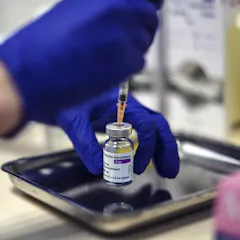
The Oxford/AstraZeneca vaccine is the second COVID shot to be approved in Australia, and it’s likely Australians will start receiving it next month.
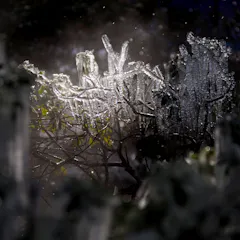
Heat waves, droughts and deep freezes can all strain the electric grid, leading utilities to impose rolling blackouts. Climate change is likely to make these events more common.
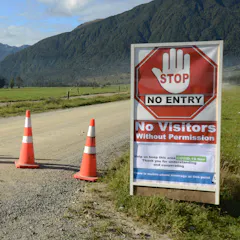
A variant with a higher transmission rate is much more dangerous than one with just a higher fatality rate.
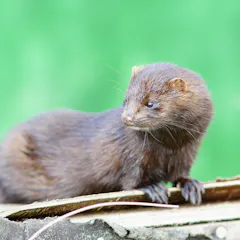
COVID-19 has been found in pets, zoo animals and in a wild mink in Utah. Monitoring wildlife for COVID-19 is important for animals and humans, both of whom face risks from a jumping virus.
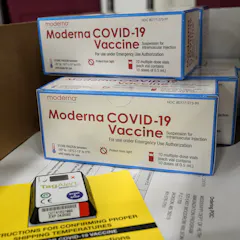
Researchers say around 70% of the US needs to get the coronavirus vaccine to stop the pandemic. But questions around the vaccines and regional differences add some uncertainty to that estimate.
COVID-19 and holiday family gatherings are not a good pair. But taking the right precautions before, during and after the family gets together can greatly reduce coronavirus risk this holiday season.
A designated coronavirus hospital would relieve pressure on the state’s health-care system and minimise the spread of the virus, but there are a few things to consider.
Labor has pledged to create a A$20 billion corporation to upgrade Australia’s energy transmission system. So what’s this all about?

Our video shows aerosol emissions from singing a simple scale. No wonder singing in a choir can be risky.
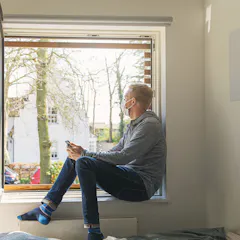
Good ventilation can reduce the risk of catching coronavirus. An environmental engineer explains how to know if enough outside air is getting into a room and what to do if ventilation is bad.
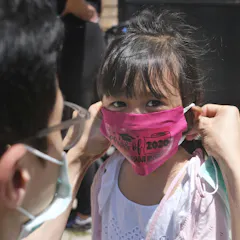
Research shows that children can become infected with the coronavirus and spread it to others. Though rare, some kids do become severely ill and a few have died from COVID-19.
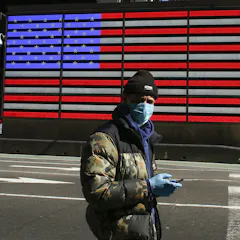
The recent spike in new coronavirus cases in the US is not due to a second wave, but simply the virus moving into new populations or surging in places that opened up too soon.
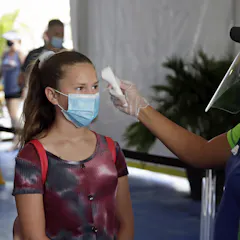
There is a lot of confusion and concern around asymptomatic spread of SARS-C0V-2. An infectious disease expert explains how many people are asymptomatic and how they can spread the virus.

People are turning to quarantine bubbles as a way to see friends and family while limiting the risk from the coronavirus. Research shows that this can work, but it’s not easy to be in a quaranteam.
Pathogens typically face a trade-off between virulence and transmission. But that’s not the case with SARS-CoV-2.

SARS-CoV-2 can be spread through the air. But just how much of a factor that is has been hard to determine. Recent evidence suggests it is common, posing problems as public places begin to reopen.
Top contributors
-

Professor of Public Health, American University
-
Professor of Mechanical Engineering, University of Colorado Boulder
-
Associate Professor, Epidemiology, Deakin University
-
Director of Energy Studies, University of Florida
-
Postdoctoral Infectious Disease Researcher, Tufts University
-
Research Scholar, Ralph O’Connor Sustainable Energy Institute, Johns Hopkins University
-
Professor, School of Mechanical and Manufacturing Engineering, UNSW
-
Senior Fellow in Energy and Climate Change, Grattan Institute
-
Chair of Veterinary Public Health and Food Safety, University of Sydney
-
Adjunct professor, Te Herenga Waka — Victoria University of Wellington
-
Senior Associate Dean of Research and Professor of Epidemiology, The Ohio State University
-
Professor of Veterinary Epidemiology, Michigan State University
-
Fellow and Senior Research Associate, Renewable & Sustainable Energy Institute, University of Colorado Boulder
-
Professor of Global Biosecurity, NHMRC L3 Research Fellow, Head, Biosecurity Program, Kirby Institute, UNSW
-
PhD Candidate, Disease Ecology Lab and Global Ecology Lab, University of Sydney