

Multilingual teaching was a challenge under emergency remote learning conditions: computer systems weren’t adapted to indigenous languages.
Articles on Translation
Displaying 41 - 60 of 94 articles
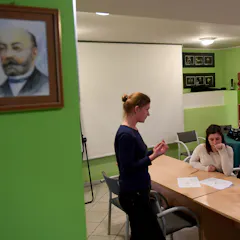
Created in Europe during a time of intercultural struggle and strife, Esperanto was meant as a communication tool to spread peace among the people of the world. Its speakers are still at it.

Three generations in a Syrian town: The English-to-Arabic translator of the novel that was a finalist for the prestigious International Prize for Arab Fiction discusses the sweeping historical novel.
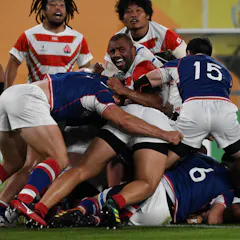
A project to identify rugby’s technical terms aims to make the international game easier to play, ref and watch for everyone, regardless of their native tongue.
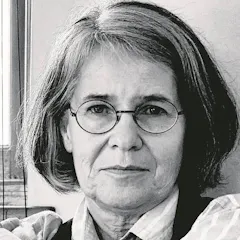
The famous writer turns 70 this year. She is driven by how South Africans see and hear one another.

Can translation software that uses artificial intelligence to automatically translate texts ever replace human beings?

Babylonians were quite formal in their written records, so working out how to be chatty in their long-dead language was an exciting challenge.

A new survey of Australia’s international book rights sales finds children’s books are most popular with overseas buyers but adult fiction is catching up.
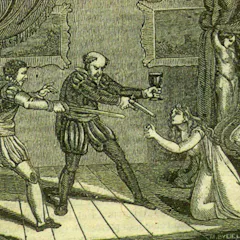
A story about male violence and a damsel in distress, it is based on a true crime

Subtitles need to be read quickly and dubbing needs to match lips. It’s not an easy feat.
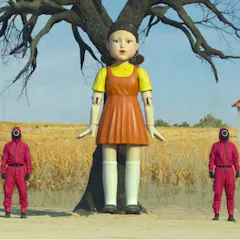
As the popularity of Squid Game continues to grow globally, there have been debates over the quality of the English subtitle translation - but critics are missing important context.

Natural language coding means that people won’t need to learn specialized coding languages to write programs or design websites. But large corporations will control the means of translation.

There is something beautiful about African languages carrying science, fictionalised of course, into imagined futures.
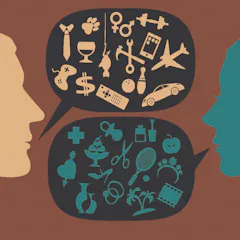
Even the Oxford English Dictionary contains traces of sexism – it’s little wonder that our translation tools do too.

Misunderstanding disaster warnings can have catastrophic consequences for people who don’t speak the language used for emergency communications.
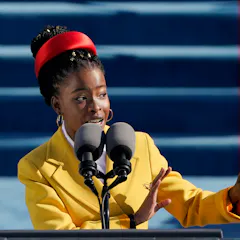
If humans only translate what it is familiar to them, something essential is lost. The art of translation requires the permission to transcend borders and make mistakes.
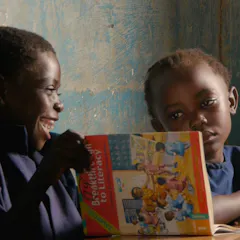
The documentary resulted in the creation of an active translation network.
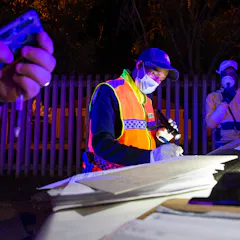
Police officers are also not, and are not expected to be, sworn translators or interpreters. This has serious implications for justice.
Most of the accused in criminal cases in South Africa would not be able to understand the record of their court proceedings.

In a world of people striving for more public professional recognition, interpreters try to remain invisible.
Top contributors
-

Professor of French and Comparative Literature, Queen Mary University of London
-
Associate Professor of French and Translation, University of Exeter
-
Tutor/Lecturer in English Literature, Dublin City University
-
Postdoctoral Research Associate, Centre for the Humanities and Social Change, University of Cambridge
-
Lecturer in Anglophone Literatures and Cultures, University of Aberdeen
-
AHRC-Techne PhD Candidate, Art and Design History, Kingston University
-
Senior Research Associate in the Machine Intelligence Laboratory, Department of Engineering, University of Cambridge
-
Full Professor of Translation Psychology and Wellbeing, The Open University
-
Postdoctoral research fellow (Forensic Linguistics/ Language and Law), University of the Western Cape
-
Senior Lecturer in Translation and Interpreting at Macquarie University, Macquarie University
-
Professor of African Language Studies, University of the Western Cape
-
Assistant Professor of Translation & Transcultural Studies, University of Warwick
-
Director:Language Centre, Stellenbosch University
-
Professor of Philosophy and Intellectual History
-
Paul Braterman is a Friend of The Conversation.
Hon. Research Fellow; Professor Emeritus in Chemistry, University of Glasgow