
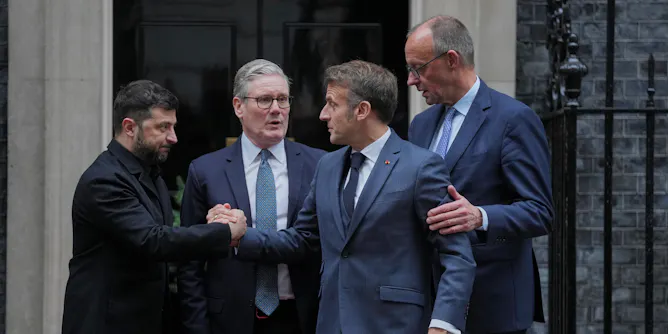
Just war theory, a centuries-old field of ethics, deals with how and when to start conflicts. It can also guide decisions about how and when to end them.
Articles on Transitional justice
Displaying all articles
Transitional justice contributed greatly to the peace which Sierra Leone has experienced in the last two decades.
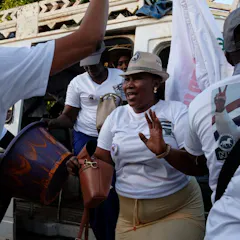
Temporary measures such as legislative gender quotas can increase women’s access to political participation.

The aim of transitional justice is to usher in a peaceful society after mass atrocity, periods of systemic human rights violations and violent authoritarian regimes. It should be a Canadian priority.

Sudan’s new government came to power after a people-driven process to oust former President Omar al-Bashir. It must be careful to place ordinary Sudanese at the centre of the reforms process.
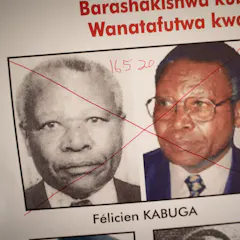
Given the contested success of transitional justice in Rwanda, the arrest showcases the mixed record of international justice.
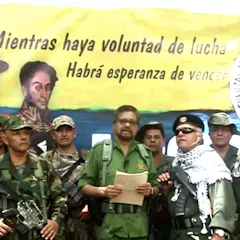
Dissidents in Colombia’s FARC guerrillas are threatening to renew armed struggle three years after signing a landmark peace deal. Here, experts explain the history of Colombia’s fragile peace process.
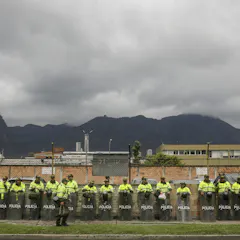
Colombia’s new president opposes the 2016 peace deal with the FARC guerrillas. As trust between the government and militants erodes, at least 1,700 former insurgents have returned to armed struggle.
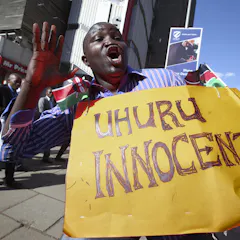
As transitional justice efforts have become more widespread, their mandates have also become increasingly ambitious.
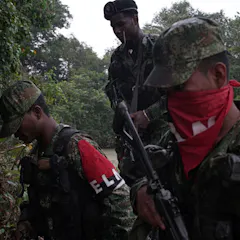
A court decision securing last year’s peace deal and a new ceasefire have invigorated Colombia’s peace process, but there are plenty of ways it could still go wrong.
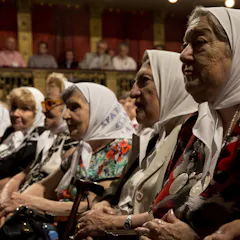
Argentineans are determined to not forgive or forget the criminals who killed or disappeared more than 30,000 people.
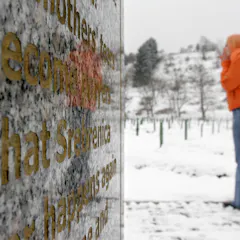
How long does it take to make peace? Decades after the end of the Bosnian war, just one in six residents felt that country had reached reconciliation.
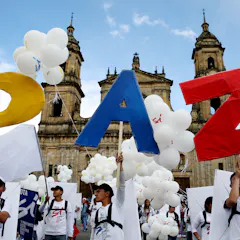
Colombia’s deal with the FARC means third parties implicated in international crimes could at last face justice.
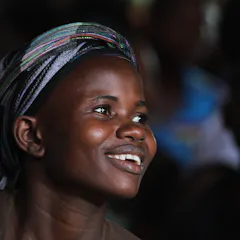
How are we to understand why people in different parts of the world continue to demand and participate in transitional justice institutions and processes in spite of the shortcomings?
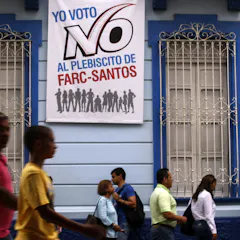
Given their chance to ratify a deal to end a 60-year war, less than 40% of Colombians voted – and they threw it out.
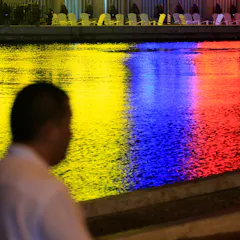
As Colombians head to the polls for the October 2 referendum to permanently end the country’s civil war, everything from grief and hope to partisan politics will factor into their decision.
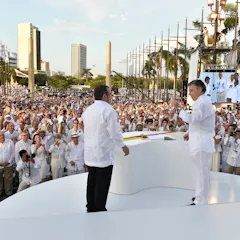
The peace accords signed by the FARC and the Colombian govenment on September 26 are momentous, but they’re only the beginning of the path to peace.
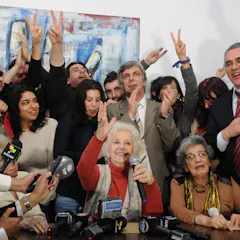
For 36 years, Estela Barnes de Carlotto, one of Argentina’s leading human rights campaigners, has searched tirelessly for her missing grandson. On August 5, she announced that he had finally been found…
Top contributors
-

Political Science Profesor, Torcuato di Tella University
-
Honorary Research Associate, Department of Political and International Studies, Rhodes University
-
Post-Doctoral Researcher, University of Sussex
-
Professor of Law, University of Essex
-
Associate Professor, Universidad de los Andes
-
Professor of Law, Queen's University Belfast
-
Senior Lecturer, School of Law and Director of the Essex Transitional Justice Network, University of Essex
-
Lecturer and Teacher, Department of Politics and International Relations, Cardiff University
-
Reader in Human Rights, Goldsmiths, University of London
-
Professor of International and Comparative Politics, Saint Louis University – Madrid
-
Professor of Comparative Politics, University of Warwick
-
Assistant Professor, Department of Political Studies, University of Saskatchewan
-
Associate Professor, Political Science, Colgate University
-
Associate Professor International Law, Roskilde University
-
Early Career Researcher in Peace and Conflict Studies, Flinders University