
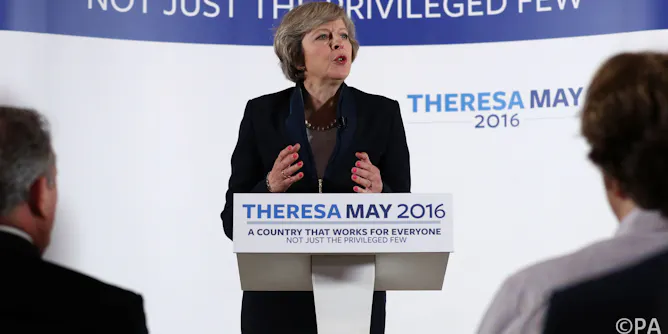
The new prime minister has suggested putting employee representatives on company boards. But how serious is she about the idea?
Articles on Trade unions
Displaying 101 - 120 of 159 articles
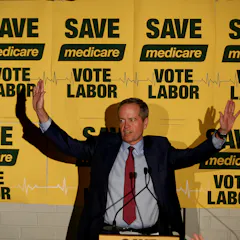
The idea of hitting voters with a powerful message on election day is just the culmination of three trends in Australian campaign communication that have been brewing for decades.

Malcolm Turnbull is using Victoria’s long-running enterprise bargaining dispute between the CFA and firefighters’ union to highlight the Liberals’ credentials to challenge union militancy.
The ACTU’s main election campaign focus is to target 28 marginal Coalition seats, including 11 in NSW and six in Queensland: the key battleground states.
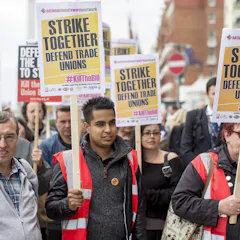
The bulk of Britain’s unions are campaigning to stay in the European Union – but they’ll be hard pressed to secure workers’ rights.
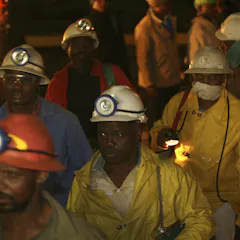
When sociologists, driven by their value commitments, go beyond the relative comfort of the classroom and engage with organisations outside the university, they dirty their hands.

The story of the Builders Labourers Federation campaigns that saved historic locations and green spaces in the 1970s still speaks to contemporary Australians’ concerns about urban development.

In an increasingly individualised workplace, unions can no longer rely on organising tactics to survive. Instead, they need to undertake a major “rebranding”.

The Fair Work Act delivers a much more peculiar system of collective bargaining than many realise. It has outcomes that contradict the hopes and fears of both sides of the IR debate.
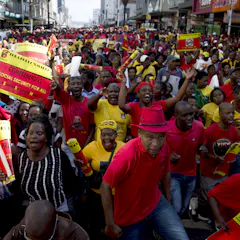
South African labour unions have shown themselves to be effective in translating the prescripts of the law into benefits for their members. This is particularly true in the public sector.
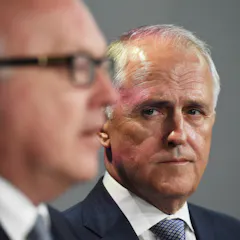
Unions may well feel justifiably aggrieved by the findings – and impact – of the trade union royal commission, but there are nonetheless lessons to be learnt from them.
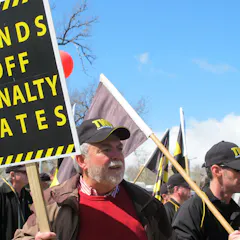
While trade unions still exert some influence on the ALP, it is nowhere near as much as it once was.

Female workers are now more highly unionised than their male colleagues, but unions still have a long way to go to reflect that shift.

Even though union membership has dropped to just 15%, unions still have an important role to play in ensuring that workers have meaningful input into how their workplaces are run.
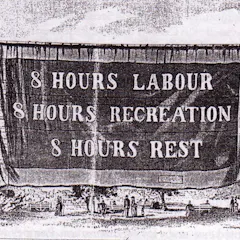
A diminishing membership base, changes to labour and industry and heightened political attention has left the once-powerful trade union movement flailing.

Workplace democracy is declining, but the idea that this is the fault solely of unions or employers is misguided. Widespread reform is needed.

To what extent would the ABCC and Registered Organisations bills actually deal with union corruption or criminality if passed?
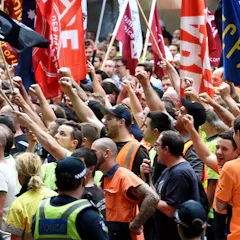
With union membership at just 15% of the workforce and declining, trade unions are looking at new ways to build their membership bases.
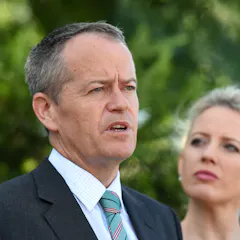
Bill Shorten should be praying those pesky crossbenchers give in to Malcolm Turnbull and pass the government’s industrial legislation.
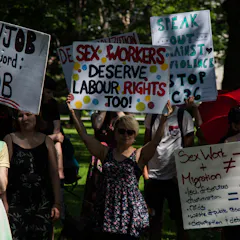
It’s been more than 40 years since a French sex workers strike kicked off a lively global human rights movement, but their legacy lives on.
Top contributors
-

Professorial Fellow, University of Canberra
-
Affiliate Research Associate, School of Political and Social Sciences, University of Glasgow
-
Associate Tutor, University of Surrey
-
Distinguished Reserach Professor, Southern Centre for Inequality Studies, University of the Witwatersrand
-
Associate Professor of Employment Relations, GEM
-
Senior lecturer, University of Edinburgh
-
Distinguished Professor of Workplace Law, RMIT University
-
Emeritus Professor, Macquarie University
-
Laurie Carmichael Distinguished Research Fellow at the Centre for Future Work, Melbourne; and Professor Emeritus, Griffith Business School, Griffith University
-
Lecturer in Politics, Edge Hill University
-
Principal Lecturer (Learning and Teaching), Teesside University
-
Professor of Work and Labour Market Policy, University of Sydney
-
Economist and Director, Centre for Future Work, Australia Institute; Honorary Professor of Political Economy, University of Sydney
-
Professor of Work and Employment Relations, University of Leeds
-
Professor of Work and Employment, University of Glasgow