
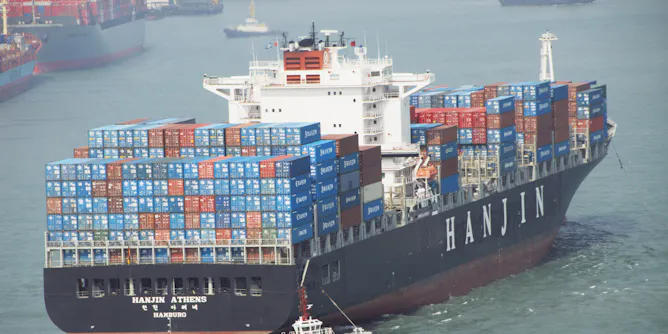
The global external shocks require a total rethink, repurpose and reform of the process of globalisation.
Articles on Trade
Displaying 221 - 240 of 776 articles

The start of the hajj is reigniting debates around its commercialization, but pilgrimages are also a time for seeking business opportunities, writes a scholar of Islam.
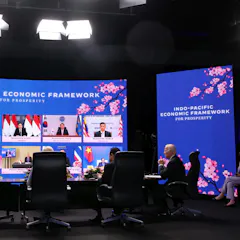
For years, New Zealand has tried to separate its economic dependency on China from its pro-Western strategic alliances. The new Indo-Pacific Economic Framework tests that balancing act even more.
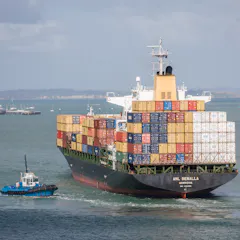
Russia’s war has had an unexpected impact on global trade patterns, raising the price on goods but weakening currencies. What’s behind this unexpected blip?

The fear that borrowers’ strategic assets are at risk from Chinese banks continues to fail the test of evidence.
As long as industrial policies in Nigeria are introduced only as a crisis response, import restrictions will continue to be their focus.

Modelling suggests Australia would lose half of its export income and one fifth of its jobs if a new “bamboo curtain” cut the economies of China, Russia and like-minded nations off from the West.
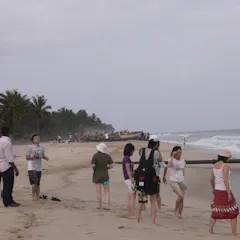
Opportunities for social mobility, rather than simply economic incentives, have generated emigration from China to countries like Ghana.
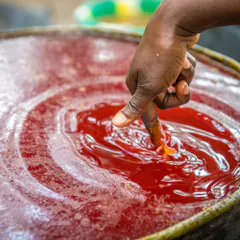
Palm oil is one of the 21st century’s most contentious agricultural commodities, but its relationship with humans goes back thousands of years.
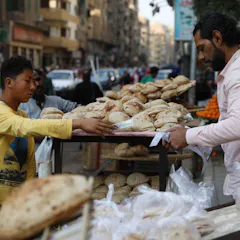
Egypt is already feeling the impact of the war, which has led to recent cancellation of tenders due to lack of offers, in particular from Ukraine and Russia.
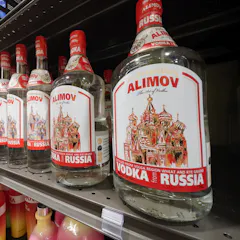
The US, Japan and other wealthy G-7 nations plan to remove Russia’s status as a most-favored nation. A trade expert explains what that term means and what might happen next.

In the short term, the war is causing energy prices to soar and prompting fears of famine in some countries. In the long term, it could remake the modern global supply chain.
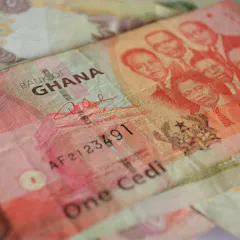
The Ghanaian currency is facing structural hurdles.
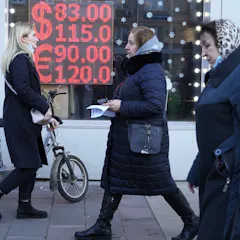
As the world rightfully fears for the Ukrainian people, we must not turn a blind eye to Russians who are also Putin’s victims and will suffer the most from economic sanctions.

The brief 2022 US ban on avocado imports from Mexico underscored the risks of being so heavily reliant on a product that comes from one region in one country.
Research suggests that two factors are most important when making decisions on how businesses should respond to the U.S.-China trade war: location and supply chain dependence, and technology.
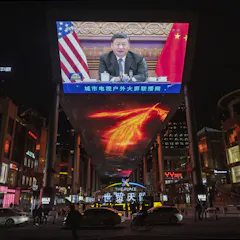
In the past, the lack of a succession plan for China has led to political unrest in the country. If it happens again, it will also affect the world.

Rhino horn consumers have a strong preference for wild rhino horn.
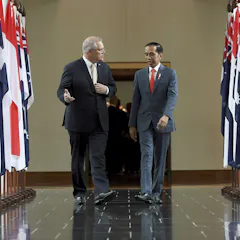
A truly mature relationship requires high levels of public participation and awareness, and this is what needs work with our northern neighbour.
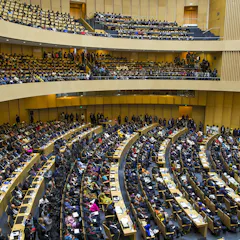
African countries are struggling to implement the African Union’s protocol on free movement four years after its ratification.
Top contributors
-

Professorial Fellow, University of Canberra
-
Associate Professor of Political Science, Georgia State University
-
Assistant Professor of Economics, University of California, Merced
-
Professor of Economics, University of Minnesota Duluth
-
Distinguished Professor, Arthur J. Gosnell Professor of Economics, & Head, Department of Sustainability, Rochester Institute of Technology
-
Tony Walker AM is a Friend of The Conversation.
Director, La Trobe University
-
Lecturer of international trade law, Monash Business School, Monash University
-
Associate Professor of Agri-Food Trade and Policy, University of Guelph
-
Professor, and Executive Director: Institute for International Trade, and Director of the Jean Monnet Centre of Trade and Environment, Adelaide University
-
Director and Professor, Australia-China Relations Institute (UTS:ACRI), University of Technology Sydney
-
Senior Lecturer in International Relations, University of Bath
-
Adjunct Professor in Animal Welfare, Curtin University
-
Senior Lecturer in EU and International Economic Law, Queen's University Belfast
-
Reader in Economics, University of Sussex Business School, University of Sussex
-
Professor of Law and Director of the UOW Transnational Law and Policy Centre, University of Wollongong