

More housing supply doesn’t mean lower prices. If policy-makers want to make homes more affordable, they must tackle developers who drive up prices and consider taxing capital gains on homes.
Articles on Toronto
Displaying 81 - 100 of 153 articles
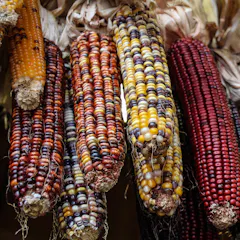
Our food systems are failing to feed all of us.
In this episode of Don’t Call Me Resilient, we pick apart what is broken and ways to fix it with two women who battle food injustice.
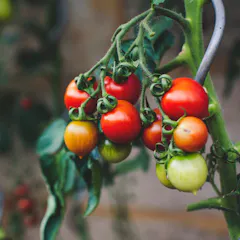
The COVID-19 pandemic has highlighted the problem of food insecurity for many people, especially racialized and Indigenous households.
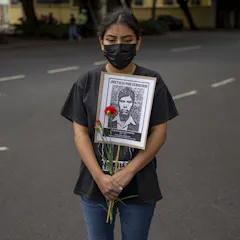
Canadians of Central American descent choose to heal and respond to ongoing trauma with care and community.
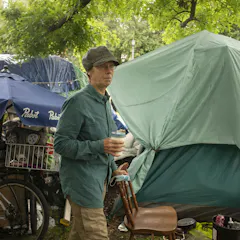
As we push for a real solution — an increase in housing supply and related supports — the encampment evictions must stop. We need to make encampments unnecessary.

Some of the worst risks of earthquakes are in a zone running from the Great Lakes to the St. Lawrence River that includes major cities like Toronto, Ottawa and Québec City.
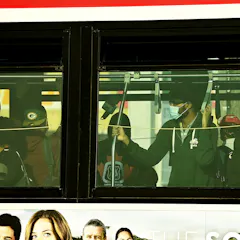
Increasing even part-time remote work disrupts public transit revenue. Agencies need to adapt fare structures and business models to meet the changing work market.

Park policy must reimagine parks as more than a contributor to property value and consider how they can be used as community resources.
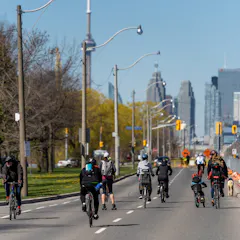
ActiveTO and programs like it across the country create more urban public space for exercising and can remove a major barrier to physical activity: lack of open and safe space.
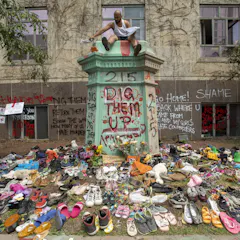
The suburban-built environment whitewashes the violence and theft on which Canada is built.

Hotspot neighbourhoods with greater COVID-19 risk exposure continued to have higher infection rates even when they achieved vaccination levels equal to lower-risk neighbourhoods.

Our research suggests that incel discussion boards are surprisingly diverse. Despite this diversity, we find that incels are united by their hatred of women.

When public art pairs artistic expression with community engagement, it can honour the diverse communities that share public spaces and spur important conversations.
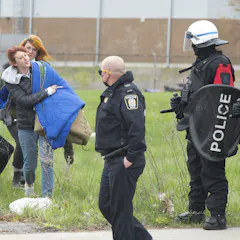
A key component in any planning around encampments is the voice of people with lived experience. It is clear the go-to response of policing is not working.

Large Canadian cities, usually major tourist destinations, have have experienced drastic declines in tourists and tourism spending while some regional hotspots have been overwhelmed with visitors.

The need to transfer 2,500 COVID-19 patients around Ontario, and bring in extra doctors from other provinces, exposes two fallacies about Canada’s health-care system.

This Mother’s Day reflect on why mainstream media doesn’t recognize racialized women-led resistance movements as feminism. On the 12th anniversary of the Gardiner protest, let’s centre Tamil mothers.
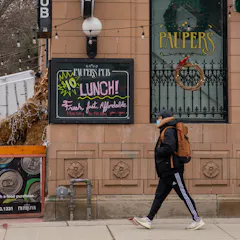
A new report looks at how the ongoing coronavirus pandemic is changing Toronto’s patterns.

As the third wave ravages Ontario, there is public confusion and mistrust. Premier Ford’s flip-flops on restrictions indicate not just poor risk communications, but the lack of an informed plan.
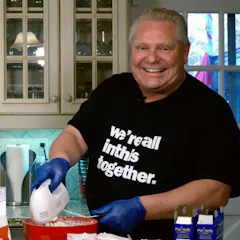
COVID-19 has shown us that we are not “all in this together” despite what politicians may want us to think.
Top contributors
-

Associate Professor of Disaster and Emergency Management, York University, Canada
-
Associate Professor, Global Management Studies, Toronto Metropolitan University
-
PhD Candidate, Socio-Legal Studies, York University, Canada
-
Associate Profesor, School of Planning, University of Waterloo
-
PhD Candidate, Political Science, Western University
-
Associate Professor, Faculty of Education, Wilfrid Laurier University
-
Associate Professor of Political Science, Brock University
-
PhD Candidate, Social Justice Education, Ontario Institute for Studies in Education, University of Toronto
-
Research Associate, School of Social Work, Toronto Metropolitan University
-
President, Food Secure Canada
-
Associate Professor of Real Estate, University of Guelph
-
Professor, Environmental and Urban Change, York University, Canada
-
Associate Professor, Law, University of Victoria
-
Assistant Professor, Faculty of Land and Food Systems, University of British Columbia
-
Associate Professor, Sociology, Brock University