

Teachers get paid a decent starting salary but they soon fall behind other professionals the longer they stay in the job.
Articles on Three charts on
Displaying 1 - 20 of 31 articles

In 2015, the federal government contributed A$47.2 billion (42%) to education. State, territory and local governments spent A$39.1 billion (35%) and A$25.5 billion (23%) came from private sources.

A recent Productivity Commission report showed the demand driven system of university funding didn’t increase participation rates for Indigenous students. But our analysis actually shows the opposite.

Cyclists account for one in five hospitalisations for transport-related injures in Australia. And around 38 cyclists are killed each year.

Around 35% of Australians have tried marijuana at some point in their life, and 11% have tried ecstasy. Most people who try drugs do so for a short period in their lives – mostly in their 20s.

All three groups are over-represented in the alleged offender population, with Sudan born offenders to a higher degree. But the vast majority of crime is committed by Australian born offenders.

Tasmania’s digital inclusion increased dramatically and more than the national average from 2017 to 2018. This change is underpinned by a doubling of access to NBN in Tasmania in that period.
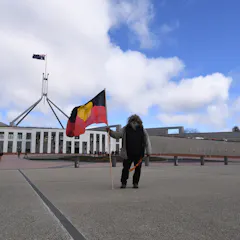
What may appear to be slow progress or steady outcomes for the whole Indigenous population may be masking worsening results.
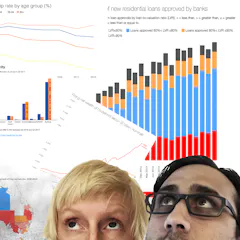
Here in the business and economy team at The Conversation, we love charts. This year we’ve made plenty of good ones with academics.
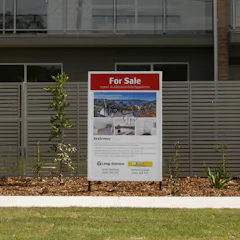
Rising housing costs are hurting low-income Australians the most. The gap in home ownership between rich and poor is widening, house prices are rising fastest at the bottom and rental stress is rising.

Emotional and economic abuse in relationships are often intertwined as people who insult and shame their partners will also try to control their income and assets.
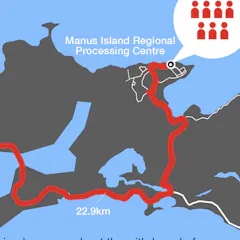
There are about 400-600 people in the now-defunct regional processing centre refusing to move to recently built transit centres in Lorengau – but these numbers shift daily.

The longer humanitarian migrants stay in Australia, the more likely it is that they will get a job.

Australia has the highest poverty rate in the OECD for people with a disability. The barriers to, and discrimination in, the workplace are part of the reason.

Australia is becoming wealthier, but much of that wealth remains concentrated in the hands of older generations.

Most Australians value science. But we do have some hesitations about the pace of scientific advances, and we’re not sure if scientists are prestigious or not.

Union membership continues to fall, particularly within industries that traditionally claim a strong union heritage.

While fewer people are gambling on the pokies, the amount of money lost per gambler has remained relatively constant over time.

While other cancer rates fall or remain static, liver cancer is on the rise. Here’s why we need to start paying attention.

When it comes to homicide rates, the outlook for Australia is positive with continued reduction in the homicide rate. However, challenges remain.
Top contributors
-

Deputy Program Director, Migration and Labour Markets, Grattan Institute
-
ARC DECRA Fellow, Australian National University
-
Adjunct Professor at the National Drug Research Institute (Melbourne based), Curtin University
-
Associate Professor in Criminal Justice and Criminology, Bond University
-
Professor of Health Equity, Stretton Health Equity, School of Public Health, Adelaide University
-
Senior Research Fellow in Health Equity, Flinders University
-
PhD Candidate, University of Technology Sydney
-
Research Director, Australian Council for Educational Research
-
Director of UWA Centre for Software Practice, The University of Western Australia
-
Professor of Economics and Public Policy, ANU College of Arts and Social Sciences, Australian National University
-
Professor of Economics, The University of Melbourne
-
ADVC Research College of Business and Law, RMIT University
-
Professor, Griffith Business School, Griffith University
-
Adjunct Professor, School of Psychology, Curtin University and College of Health and Medicine, Australian National University
-
Associate Professor, School of Law, Murdoch University