
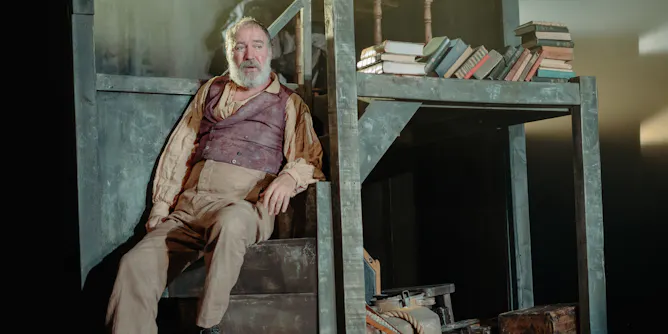
Translations by Brian Friel is an eternally relevant examination of the significance of the Irish language, the power of storytelling and the importance of history.
Articles on Theatre
Displaying 141 - 160 of 464 articles

Hamlet, the tormented prince of Denmark, embodies our own struggles: between reason and violence, courage and inaction. He is a modern character in an endlessly quotable play.

Drama is an engine of discovery as powerful as media reportage, - with the remarkable advantage of putting humans beings under the microscope, linking opinions to emotions.

In an extract from his book, Australia in 50 Plays, Julian Meyrick reflects on an under-appreciated contribution to Australian theatre by the poet Douglas Stewart.
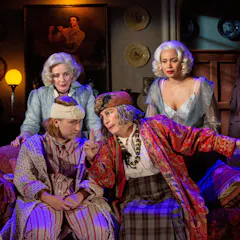
Theatre was one of the worst-hit industries during the height of the pandemic, but the need to adapt may have set an exciting groundwork for the future.

For the first time, the testimony of a 94-year-old Holocaust survivor tells the story of life and love in the camps as a young lesbian woman.
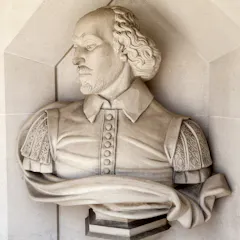
Disrupting and repositioning the traditional narratives of Shakespeare’s plays helps to challenge western notions of culture, heritage and values.

Three stories from Australia and the UK exploring the role of art in helping people deal with the challenges life throws at them. Listen to The Conversation Weekly podcast.

While many actors may aim to fully “become” their character with the use of “method acting” it seems there is a serious misunderstanding of the term and what its founder actually had in mind.

Enid Blyton’s books made for great plays, offering children an alternative to star-studded pantomimes for the first time.

A fierce lyricist and sophisticated composer, Sondheim is responsible for some of musical theatre’s most iconic productions.
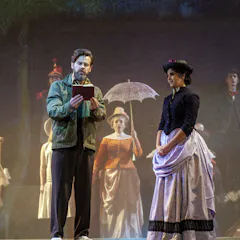
In 2011, I established a Sondheim repertory theatre company. I didn’t expect his death to hit me as hard as it has.
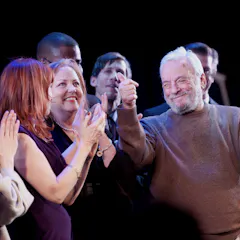
One of Sondheim’s greatest achievements was his ability to write women that actors want to play. His works have singularly elevated the Broadway diva – of all ages.
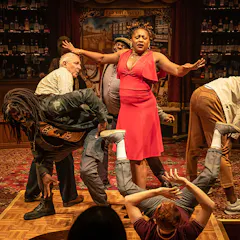
Zadie Smith’s first play delivers on what women want.

Kip Williams’ modern telling of Julius Caesar asks us to consider just how political stories are told, re-told, and told again.

Up to the mid-18th century, audience members could actually sit on stage alongside the performers.
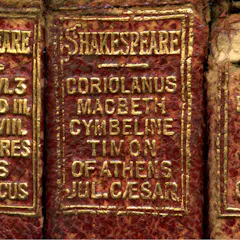
The bard’s plays were not always so readily available. It took a handful of savvy publishers to see the potential in publishing his plays.
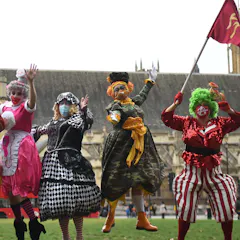
Theatre companies who experimented with outside performances during the pandemic should not abandon them.
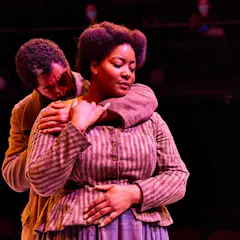
Black British women have been staging plays in recent years about Britain’s role in slavery, a history the country is too eager to forget.
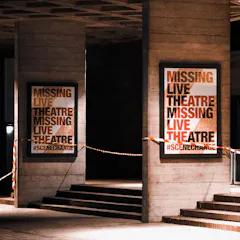
The end of the pandemic may be in sight. The pain for Australia’s theatre sector is only just beginning.
Top contributors
-

Professor of Creative Arts, Griffith University
-
Researcher, The Australian Centre, The University of Melbourne
-
Research Affiliate, Monash University
-
Lecturer in English, Australian National University
-
Full Professor/CRC in Socially Engaged Theatre; Director, C-SET, University of Regina
-
Associate Professor of English Literature, University of Sydney
-
Professor of Drama and Theatre Studies, Royal Holloway, University of London
-
Lecturer, Performing Arts, Adelaide University
-
Senior Lecturer in Theatre and Performance Studies, UNSW
-
Senior Lecturer in Theatre, The University of Melbourne
-
Senior Lecturer, English and Theatre Studies, The University of Melbourne
-
Lecturer in English and Writing, University of Sydney
-
Associate Professor of Theatre Arts, Curtin University
-
Professor of Shakespeare and Early Modern Drama, The University of Melbourne
-
Sessional lecturer and researcher, The University of Melbourne