
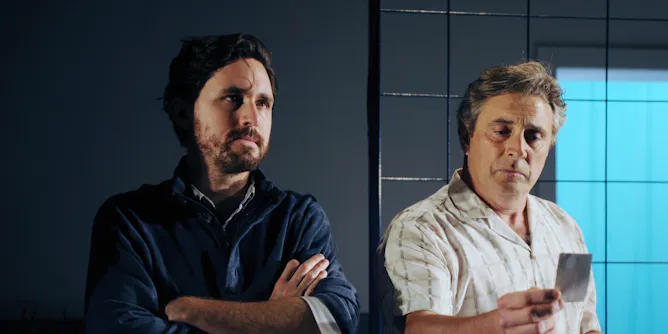
Jurassica, the latest play from Red Stitch, is a cross-generational reflection on the migrant experience. It’s part of a long tradition of plays exploring the challenges faced by Italian-Australians.
Articles on Theatre
Displaying 361 - 380 of 464 articles

Is there value in reviving Western classics in post-colonial (South) Africa? Is this not perpetuating Western cultural imperialism?
The Experiment – showing at the Melbourne Festival – is just that: an experiment. It aims to create a meditation in which disquieting questions can menacingly float. Does it succeed? Well …
As a theatre director and supporter of the arts, Jules Wright was political, provocative and passionate. She was also overlooked in Australia’s obituaries when she died earlier this year. Why?
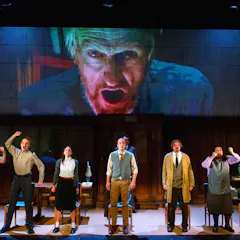
Orwell’s 1984 is a heavily laden text, which turned the author’s name into a byword for authoritarian nightmare. So what can we take from the 2015 stage version at the Melbourne Festival?

The Melbourne Festival production of Desdemona, written by Toni Morrison and with music by Malian songstress Rokia Traore, puts the women of Shakespeare’s Othello centre stage.

Tony Morrison’s Desdemona, which opens today in Melbourne, asks many questions of its audience. Perhaps most pressingly: what does it really mean to listen, rather than hear?
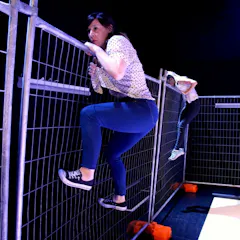
From Afar on a Hill is an immersive theatre work that provides insight into the lived experience of asylum seekers and lays bare the arbitrariness of Australia’s immigration policies.
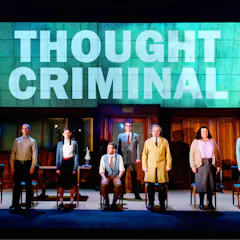
Many still regard George Orwell’s 1984 and its message about the nature of language and power “definitive”. But globalisation has revolutionised how we communicate; 1984 tells us nothing about our future.
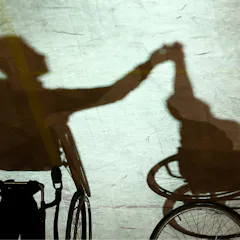
This year’s Melbourne Fringe Festival program features an array of performances by artists with disabilities. Their work tells its audience what the mainstream looks like from the margins.
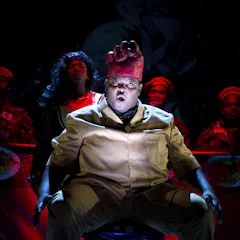
Brett Bailey’s Macbeth at Brisbane Festival is a powerful production that relocates Verdi’s opera (based on Shakespeare’s play) to the ongoing conflict in the Democratic Republic of Congo.

An expanded program of interactive performances for children at this year’s Melbourne Fringe Festival harnesses their audience’s innate creative abilities and invites them to both watch and join in.
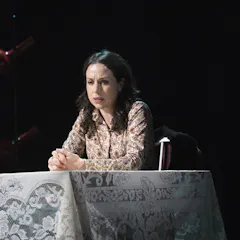
This production of a very great play by the State Theatre Company of South Australia is beautiful, clarified, and haunting. You will be relieved to know it is “excellent”. More to the point it is right.
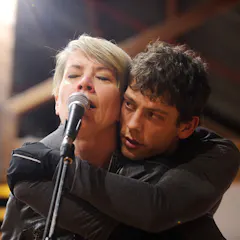
Regardless of reasoning and the plethora of scholarship that exists, Greek tragedy remains the most modern form of drama. It is unafraid to question everything we value.

Seventeen is the story of teenagers on the brink of adulthood; its canny trick is a cast of actors in their 70s. Despite this, it’s a conservative play that adheres to a predictably happy ending.
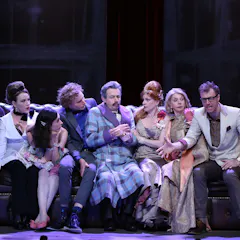
‘Theatre directors come in two kinds: “star” and “of use”. I’m in the latter category, which means that, for any given play, there are at least three or four other directors who could do it equally well.’
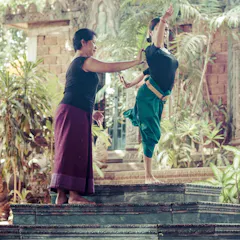
New stories can offer insight on alternative ways of living out our lives. As the experience in Cambodia shows, the performing arts can help us face up to enormous challenges and possibilities.
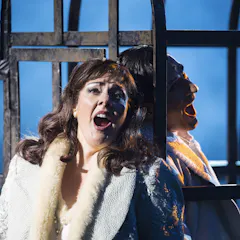
A gang-rape scene in a new London staging of Rossini’s Guillaume Tell was greeted with audience booing, and has sparked ongoing controversy. Are opera directors at risk of miscomprehending the medium?
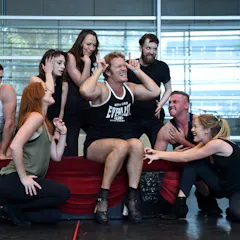
In cultural policy every good idea becomes a bad one if the context is confused. The fact there wasn’t initial clarity around the Program for Excellence indicates it will probably do more harm than good.
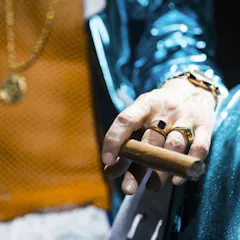
The cast have made a personal and emotional sacrifice in entering into the nightmare world of Jimmy Savile. And for that, they deserve our respect and praise.
Top contributors
-

Professor of Creative Arts, Griffith University
-
Researcher, The Australian Centre, The University of Melbourne
-
Research Affiliate, Monash University
-
Lecturer in English, Australian National University
-
Full Professor/CRC in Socially Engaged Theatre; Director, C-SET, University of Regina
-
Associate Professor of English Literature, University of Sydney
-
Professor of Drama and Theatre Studies, Royal Holloway, University of London
-
Lecturer, Performing Arts, Adelaide University
-
Associate professor in Theatre and Performance Studies, UNSW
-
Senior Lecturer in Theatre, The University of Melbourne
-
Senior Lecturer, English and Theatre Studies, The University of Melbourne
-
Lecturer in English and Writing, University of Sydney
-
Associate Professor of Theatre Arts, Curtin University
-
Professor of Shakespeare and Early Modern Drama, The University of Melbourne
-
Sessional lecturer and researcher, The University of Melbourne