
The new subscription model shows how local theaters can work together to build audiences instead of treating each other as competition.
Articles on Theater
Displaying all articles

Instead of treating creative work as a legitimate field, US labor policy, copyright law and the tax code have failed to offer artists stability or protection.
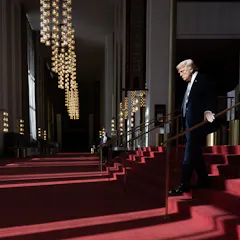
The president has followed in the footsteps of Louis XIV of France and the czars of Russia, who operated national theaters as extensions of monarchical power.
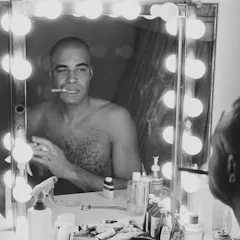
In the heat of the Civil Rights Movement, Jones didn’t give rousing speeches or lead marches. Instead, he doubled down on his art.
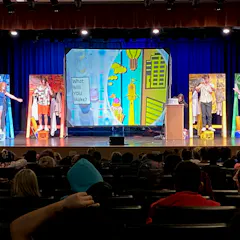
Is it a STEM education or a STEAM education? Integrating arts into science programming and vice versa can pique kids’ curiosity − a play touring Michigan aims to do just that.

The use of music in theater goes back to ancient Greece, and its popularity has grown to the modern-day productions of ‘Hamilton.’

Comedians like Stephen Colbert might mock the entertainment mecca, but live theater is in too much of a crisis to dismiss the town’s formula of spectacle meets story.

These wartime abductions aren’t specific to the Russia-Ukraine conflict. Throughout history, they’ve inflicted trauma on society’s most vulnerable – making them a rich subject matter for the stage.
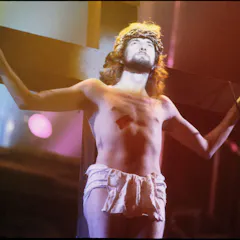
Andrew Lloyd Webber and Tim Rice’s famous musical has long inspired controversy for how it depicts the story of Jesus of Nazareth.
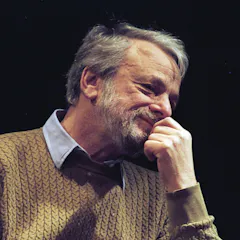
To the famous composer, the gun serves not as a tool of self-defense, but as an instrument of self-expression and self-realization.

Even before the pandemic, access to arts programs and qualified instructors varied greatly among schools and districts.
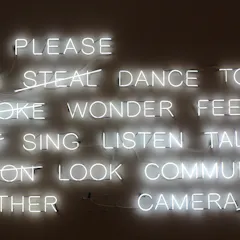
Until wonder is welcomed in all workplaces, the health of our society and our capacity to imagine new alternatives is contingent on the ability to experience and refine wonder in artistic spaces.
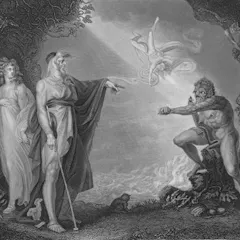
Scholars have scoured the works of the great playwright for clues about his faith. A scholar of theology and Shakespeare’s works says it isn’t as simple as that.

Despite recent social movements that have garnered greater inclusivity in the arts, disabled actors are still waiting for their moment in the spotlight.
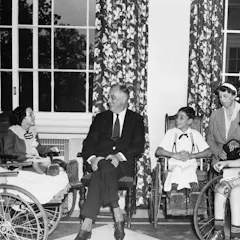
Franklin Delano Roosevelt’s personal battle with polio, and his steady hand while overseeing a national eradication campaign, highlights decisive leadership against a virus that terrified America.
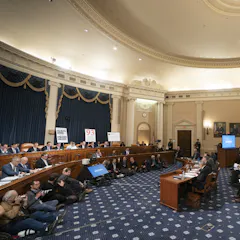
Since its beginnings, theater has been where the public can see what was happening, a venue for transparency and a point of view on real-life scenarios. It defines the American political landscape.
Top contributors
-

Associate professor, Washington University in St. Louis
-
Professor of Performing Arts, Emerson College
-
Dean of the College of Fine Arts, Boston University
-
Professor of Systematic Theology, Seminary of the Southwest
-
Professor of Government, Wesleyan University
-
Professor of Theater and Dance, University of Kansas
-
Professor of Acting, Michigan State University
-
John and Penelope Biggs Distinguished Professor of Classics, Washington University in St. Louis
-
Assistant Professor of Music Education, Michigan State University
-
Professor of American Studies, Brandeis University
-
Assistant Professor of Theatre, Villanova University
-
Acting Chair of Theater, School of Theater, Film and Television, University of California, Los Angeles
-
Professor of History, Wesleyan University
-
Associate Professor of Public and Environmental Affairs, Indiana University
-
Associate Professor of Management, York University, Canada