

Despite gains for the Greens and slumps for Labour and National, the overall left-right balance remains largely unchanged.
Articles on te Pāti Māori
Displaying all articles

If the Opportunity Party holds the balance of power after the election, its ‘honouring te Tiriti’ policy could be a deal maker – or breaker.
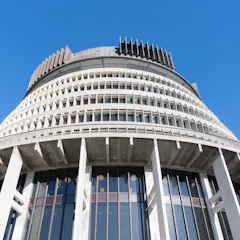
Voters can expect a lot of political polling in the lead-up to NZ’s general election in November. It’s important to know what the numbers can and can’t reveal.

ACT won’t work with Labour, Labour won’t work with NZ First, National won’t work with Te Pāti Māori … What happened to the cross-party compromise MMP was meant to foster?
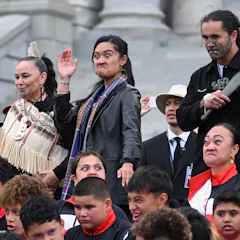
As the deadline approaches for Te Pāti Māori MPs to appear before the Privileges Committee, the place of tikanga in our democratic institutions is the real issue.
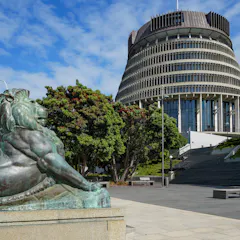
While Māori have seen a steady increase in representation in parliament since the beginning of MMP, other ethnic minorities have experienced uneven growth. The new parliament will see a step back.

A new generation of Māori politicians is rising. Young and self-assured, they are the children of a movement that began 40 years ago.
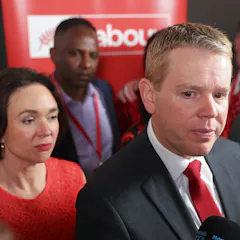
The final outcome of the general election may not be known for two weeks. But one thing is clear: the country has resoundingly rejected the government that led it through the pandemic.
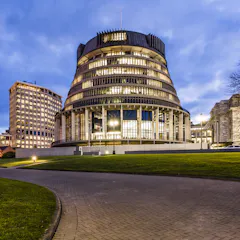
With final results awaiting the inclusion of special votes, the shape of New Zealand’s next parliament hangs in the balance. Here are the variables in play.
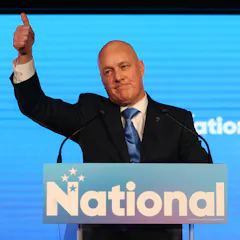
New Zealand has swung decisively back to the right at the 2023 general election. With official results pending, it seems National and ACT can still form a government without the help of NZ First.
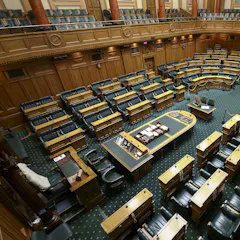
With two days of the campaign left, what had earlier seemed like a relatively predictable election has narrowed considerably, with several variables potentially influencing the outcome.

The final days of the campaign have seen both major parties warn of instability if the other wins. But behind the jockeying for power, other forces are shaping the future of New Zealand politics.
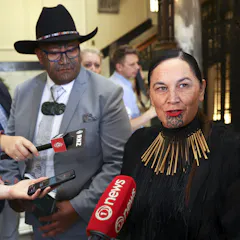
Te Pāti Māori was born out of protest. After almost two decades, the party is carving out a political presence beyond its traditional base of support.
Top contributors
-

Professor of Politics, Te Kunenga ki Pūrehuroa – Massey University
-
Election Analyst (Psephologist) at The Conversation; and Honorary Associate, School of Mathematics and Statistics, The University of Melbourne
-
Adjunct Professor, Stout Research Centre, Victoria University of Wellington and Auckland University of Technology, Professor of Political Science, Charles Sturt University
-
Lecturer in Māori Studies, Te Herenga Waka — Victoria University of Wellington
-
Research Associate, Public Policy Institute, University of Auckland, Waipapa Taumata Rau
-
PhD Candidate, Department of Political Science and International Relations, University of Canterbury
-
Professor of Political Science and International Relations, University of Canterbury