

Despite gains for the Greens and slumps for Labour and National, the overall left-right balance remains largely unchanged.
Articles on Political polls
Displaying 1 - 20 of 22 articles
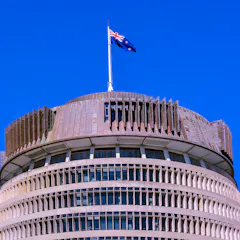
With just over two months until the election, polls have settled into a new normal, with no clear frontrunner evident.
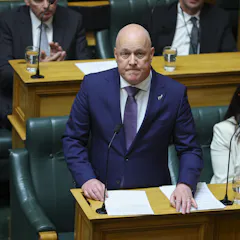
Whatever the outcome at today’s caucus meeting, Christopher Luxon has been found wanting as a political leader. But so has Labour’s Chris Hipkins.
Voters can expect a lot of political polling in the lead-up to NZ’s general election in November. It’s important to know what the numbers can and can’t reveal.
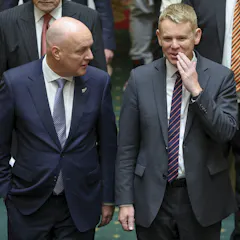
The Leadership Capital Index measures political performance in ten areas. It shows both major party leaders struggling for traction. See if you agree – and have your say.
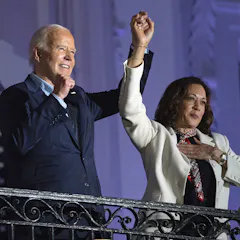
Now that President Biden has pulled out of the race, let’s look at the numbers we have for a Harris vs Trump contest.
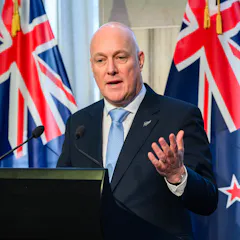
Poor personal and party polling early in the government’s term puts the spotlight on Christopher Luxon’s leadership. He has the power bases, but can he mobilise them effectively – and in time?
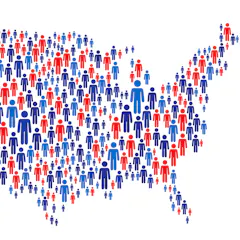
There are many ways bad mathematics interferes with our democracy. Assigning delegates is just one example.

Imprecision in election polling has long been recognized. But advance polls are still useful in recognizing trends in voter preferences, and candidates’ weak points.
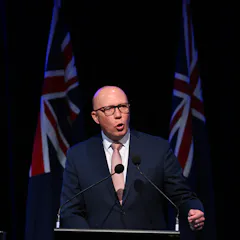
Michelle Grattan explains what a government with a so-called ‘unelectable’ hard man at the helm might look like.
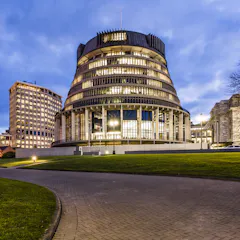
With final results awaiting the inclusion of special votes, the shape of New Zealand’s next parliament hangs in the balance. Here are the variables in play.
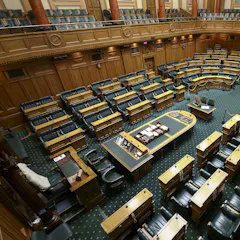
With two days of the campaign left, what had earlier seemed like a relatively predictable election has narrowed considerably, with several variables potentially influencing the outcome.
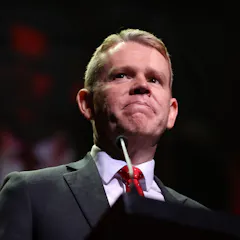
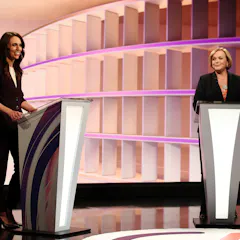
The election campaign’s first live TV debate offered a glimpse of the leadership challenge faced by Labour’s Chris Hipkins – to connect with voter’s values and interests, not just their current mood.
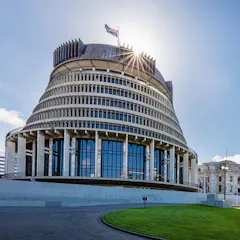
The Conversation’s poll-watcher breaks down the party support trend since March – which has all been surging one way, despite some variation between pollsters.

Political polls can make for dramatic headlines. But they are a snapshot of when they were taken, not a predictor of election outcomes. Follow these expert tips to make sense of the stats.

Recent political polls in New Zealand and elsewhere have consistently failed to reflect eventual outcomes. Voters and pundits alike should avoid reading them too literally.

People know a lot about their friends and neighbors – and pollsters can learn from that information, if they ask.
During the MMP era, the average vote share of the highest-polling party has been steadily climbing — with big implications for New Zealand democracy.

There was a time when well-known journalists resented preelection polls and didn’t mind saying so. One even said he felt “secret glee and relief when the polls go wrong.” Why did they feel this way?
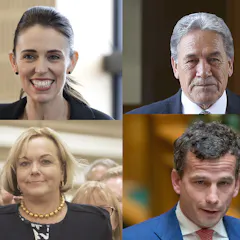
With the polls showing a clear trend to the left, are we also witnessing a fundamental shift in the way New Zealand governments are formed?
Top contributors
-

Election Analyst (Psephologist) at The Conversation; and Honorary Associate, School of Mathematics and Statistics, The University of Melbourne
-
Research Associate, Public Policy Institute, University of Auckland, Waipapa Taumata Rau
-
Professor of Politics, Te Kunenga ki Pūrehuroa – Massey University
-
Associate Professor, School of Management and Marketing Te Kahui Kahurangi, Te Kunenga ki Pūrehuroa – Massey University
-
Professor Emeritus of Communication, American University School of Communication
-
University Professor Emeritus, Politics and Public Policy/Administration, York University, Canada
-
Director of Behavioral Science & Policy Initiative, Schaeffer Institute of Public Policy & Government Service, USC Price School of Public Policy, USC Dornsife College of Letters, Arts and Sciences
-
Professorial Fellow, University of Canberra
-
PhD student in Sociology, Dalhousie University
-
Honorary Academic in Psychology, University of Auckland, Waipapa Taumata Rau
-
Honorary Associate Professor, University of Auckland, Waipapa Taumata Rau
-
Professor of Human Social Dynamics, Santa Fe Institute; External Faculty, Complexity Science Hub Vienna; Associate Researcher, Harding Center for Risk Literacy, University of Potsdam
-
Professor of Mathematics, Director of Institute for Mathematics and Democracy, Wellesley College
-
Professor of Sociology, Western University
-
Associate Professor of Politics, Te Herenga Waka — Victoria University of Wellington