
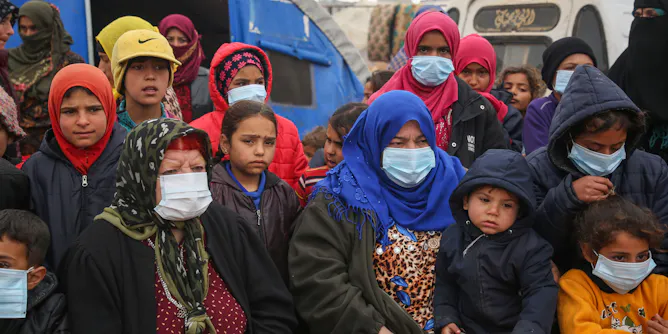
Everyone in Syria is fighting a slightly different war from everyone else, there are outsiders with their own goals – and the coronavirus is about to make everything much worse.
Articles on Syrian crisis
Displaying all articles
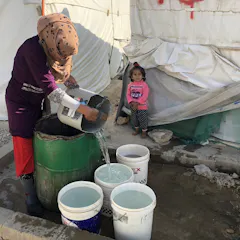
Both drought and violence drove many Syrians out of their homes; even if the war ends, the continuing difficulty of farming will make it hard for them to return.

Since the 1940s, Congress has largely let the president make decisions, while members of the House and Senate endorse or condemn those actions from the sidelines.
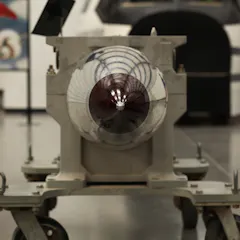
The US has 50 nuclear bombs stored in Turkey. As tensions rise between the two countries, a look at how they got there and what might happen next.
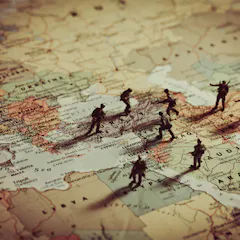
Now that the US has pulled out Syria, is the war actually over?
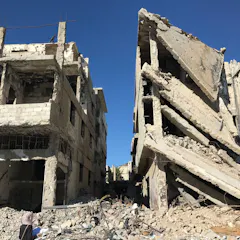
Work to preserve the country’s heritage is already happening.
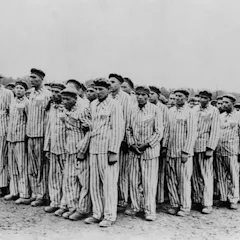
6 million Jews were killed in the Holocaust. What happened then, and how we can keep to the promise – “never again”?
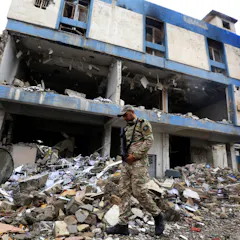
Coalition forces are careful about how they report civilian deaths. And we think war is painless, as a result.
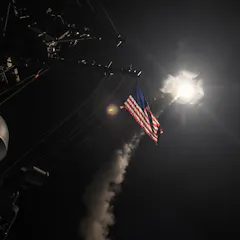
The question now is how recent critical changes will impact on-the-ground military strategy.
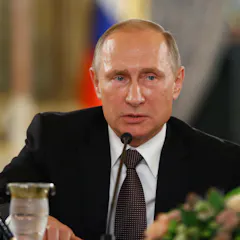
Russia has managed to regain, at least in part, its role as a powerful interlocutor in the Middle East, which it lost after the fall of the Soviet Union.
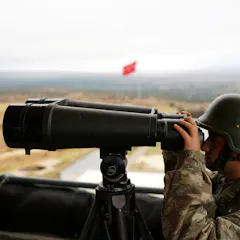
Caught out by the side effects of the Syrian civil war and deteriorating relations with the EU and the US, Turkey now appears to be in search of South-South cooperation.
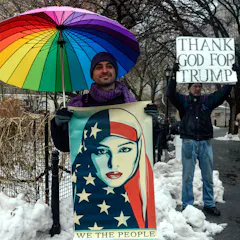
Data since 1950s show Americans have always been wary of refugees. A public opinion expert explains current attitudes toward Syrian refugees and what it means for building consensus on policy.
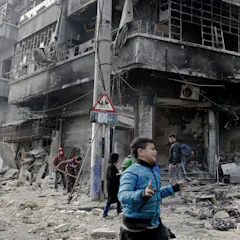
This roundup from our archives explains some of the major conflicts unfolding in the seven countries singled out by Trump’s executive order.
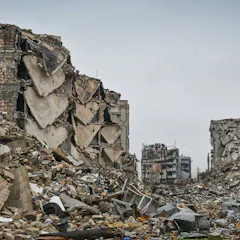
Food, water and climate are complex, interconnected systems that when disrupted can cause severe social and political shocks.
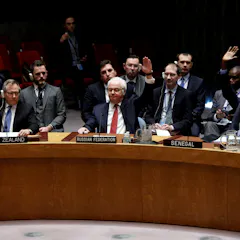
Despite the cataclysmic risks of the Cold War, times have never been as dangerous as these since 1945. Freedom and the rule of law are both under threat.
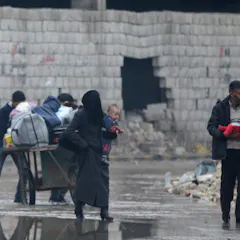
The images we have seen of Aleppo could play an important role in future discourses about the responsibility to protect.
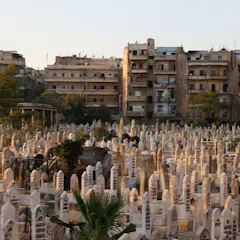
The international community seems totally incapable of stopping the bloodshed in Syria. But we can express our outrage.
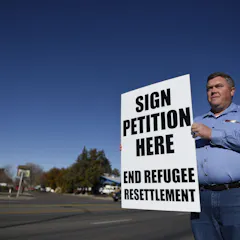
The US has met its goal for resettling Syrian refugees in 2016, and will aim to take in 110,000 more in 2017. A migration expert examines whether fears of their arrival are well founded.
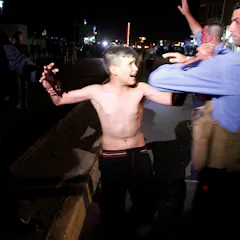
A young boy is strapped with explosives and sent to detonate himself and those around him at a school. An expert on terrorism explains how and why children become embroiled in militant conflicts.

Aleppo has 85,000 children. Dozens are injured every week, just like five-year old Omran Daqneesh whose pictures have shocked the world. Many have far worse injuries and will not survive.
Top contributors
-

non-resident senior fellow Center for European Policy Analysis
-
Senior lecturer, Monash University
-
Professor of Anthropology, The Ohio State University
-
Associate Professor of Political Science and Public Policy, Penn State
-
Professor & Director, Global Sustainability Institute, Anglia Ruskin University
-
Associate Professor in International Relations, University of Southern Denmark
-
Associate Clinical Professor, University of Illinois Chicago
-
Associate Professor of International Relations, Marmara University
-
British Academy Research Fellow, University of Oxford
-
Professor of Communication and Middle East Studies, Georgia State University
-
Professor of International Security and War Studies, University of Southern Denmark
-
Director Middle East Directions Programme / Robert Schuman Centre for Advanced Studies, European University Institute
-
Associate Professor of Political Science, Rochester Institute of Technology; Institute for Humane Studies
-
Associate Professor of Political Science, Clark University
-
Senior Fellow, James Martin Center for Nonproliferation Studies, Middlebury College