

Music therapy offers a flexible and accessible way of supporting wellbeing and addressing traumatic experiences.
Articles on Syria
Displaying 141 - 160 of 914 articles
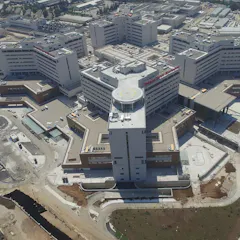
February earthquakes wreaked havoc across Turkey and Syria, killing tens of thousands of people. An engineer originally from Turkey describes what kept some buildings functional while others collapsed.
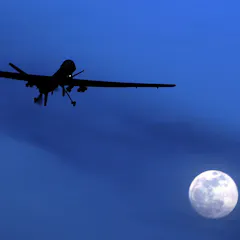
As Russia’s war in Ukraine illustrates, the use of lethal automated weapons, or LAWS, can always be justified. Their ability to desensitize their users from the act of killing, however, shouldn’t be.

A Federal Court justice ruled four men, suspected ISIS members, must be repatriated to Canada from a Syrian detention camp. Here’s why the decision is flawed and an ongoing appeal is justified.

When government responses to a natural disaster do not address the specific needs and vulnerabilities of women and girls, women tend to lose trust in the institutions.
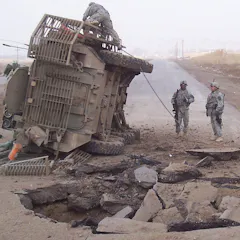
Both proponents and opponents of the war believe the invasion was an act of imperialism. But what does this mean exactly?
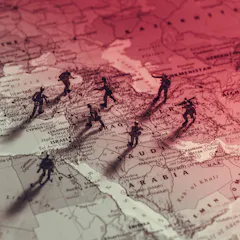
There are big power plays afoot in one of the world’s most contested and unstable regions.
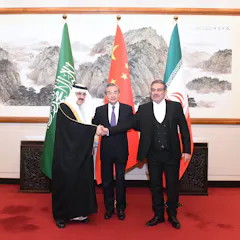
Detente between Tehran and Riyadh will not magically solve all the political and sectarian tensions in the Middle East.
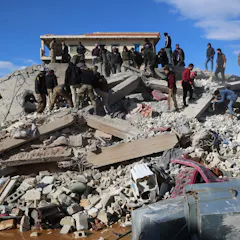
A scholar who visited Syria after the earthquake observes that as the war has dragged on, a humanitarian organization she’s researched for 10 years has branched out.
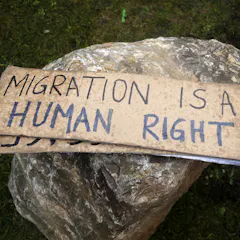
Recognizing the challenges posed by climate-induced displacement is important. But officials must avoid rhetoric about displaced people that can fuel xenophobia.

The earthquake that struck Turkey and neighboring Syria on Feb. 6, 2023, was a natural disaster, but its consequences have been shaped by the human tragedy of the Syrian civil war.

Hosting migrants isn’t only motivated by humanitarian reasons. In Germany immigration provides solutions to demographic and economic problems.
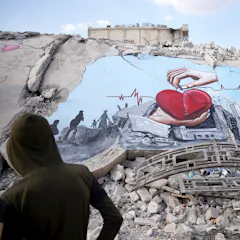
Food, shelter and medical supplies are important but not the only things that help people get back on their feet.
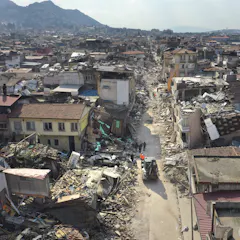
A historian of the late Roman world, who visited earthquake-devastated Antakya several times, writes about the city’s rich history and recovery after being devastated in the past.
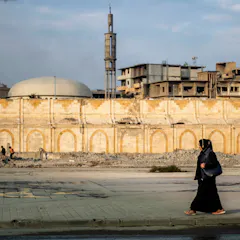
While some world leaders and foreign policy experts expected IS to increase its attacks during COVID-19’s early days, travel bans and curfews helped slow violence.

We might expect that accounts of earthquakes from the medieval period have been lost to history, but some have survived.
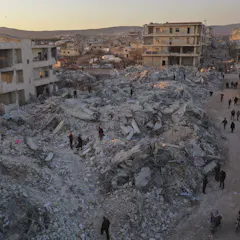
Politics stood in the way of a humanitarian response that could have saved hundreds, if not thousands, of lives.
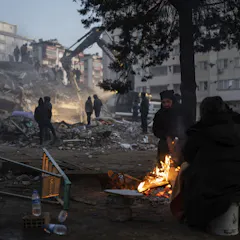
The focus of efforts to save the lives of earthquake victims needs to shift to the emerging threats from disease and lack of clean water and shelter.
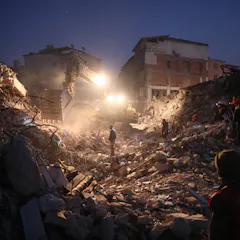
Turkey has repeatedly attempted to improve its earthquake preparedness. So what went wrong?
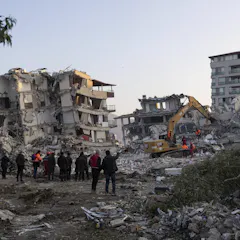
The devastating outcomes of earthquakes is worsened when buildings cannot withstand the impact. Also, increased urban density and new construction materials are complicating search-and-rescue efforts.
Top contributors
-

Professor of International Politics, Clinton Institute, University College Dublin
-
Professor of Peace Studies, University of Bradford
-
Director of the Curtin Extremism Research Network (CERN), Curtin University
-
Professorial Fellow, University of Canberra
-
Senior Lecturer, School of Social Sciences, UNSW
-
Professor of Islamic Studies, Head of School, The Centre for Islamic Studies and Civilisation, Charles Sturt University
-
Honorary Senior Fellow, The University of Melbourne
-
Professor of International Relations, Lancaster University
-
Director of Dickinson Program in New Zealand & Associate Professor of Politics at the University of Otago, Dickinson College
-
Professor in The Division of Global Affairs and The Department of Political Science, Rutgers University - Newark
-
British Academy Research Fellow, University of Oxford
-
Research Fellow, Middle East Studies, Deakin University
-
Professor of Modern Middle Eastern History, University of California, Los Angeles
-
Professor in the Department of Government, University of Essex
-
Professor of Middle Eastern Studies and Public Policy and Director of the Interdisciplinary Studies Institute, UMass Amherst