
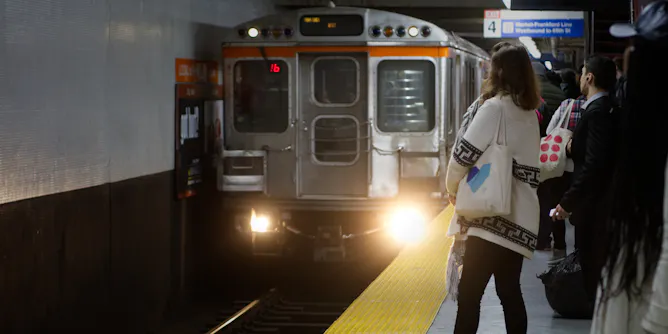
Researchers found 10 times more black carbon on the 15th Street/City Hall subway platform than on the sidewalk above.
Articles on Subways
Displaying all articles
Everyone likes getting something for nothing, but history shows why the math behind free public transit doesn’t add up.
Public buses, subways and trains are relatively safe, fast and cheap. But competition from rideshares and concerns over COVID-19 will soon see some local agencies short of funds.

Images of water gushing into subway stations filled social media following heavy rain in New York City. Solutions are at hand – but it takes money and political will, an expert explains.
Increasing even part-time remote work disrupts public transit revenue. Agencies need to adapt fare structures and business models to meet the changing work market.
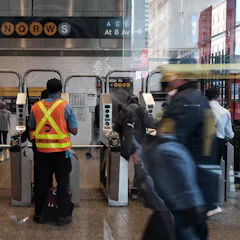
Transit agencies could use the money to buy new subway cars, buses and maintain rails. The funding is designed to build on last year’s emergency aid, which kept transit operating through the pandemic.
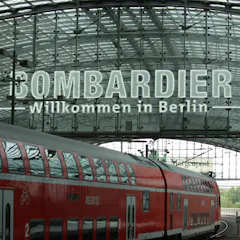
Building infrastructure takes time. To develop sustainable transportation, Canada needs to invest in high-quality infrastructure that will enable us to make environmentally friendly travel choices.

Even in cities with good public transportation, some areas can be ‘transit deserts,’ where demand exceeds supply. Living in these zones makes it hard to access good jobs, health care and other services.
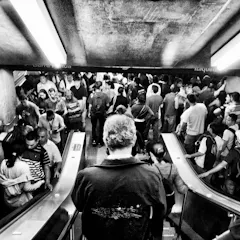
Subways seem like the perfect solution to improve air quality in cities. But what about air quality underground?
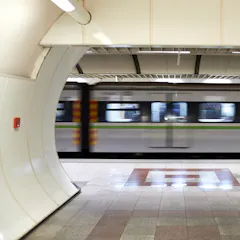
The St Petersburg attack shows how engineering and psychology can help optimise how people are evacuated in a disaster.
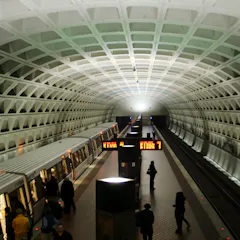
How did urban public transport in America, like much of our infrastructure, get to be in such bad shape? Will millennials help turn it around?
Top contributors
-

Tenured Scientist, Consejo Superior de Investigaciones Científicas (CSIC)
-
Director of the Institute of Environmental Assessment and Water Research (IDAEA), Instituto de Diagnóstico Ambiental y Estudios del Agua (IDAEA - CSIC)
-
Masters of Community and Regional Planning Candidate, The University of Texas at Austin
-
Senior Lecturer, Lund University
-
Assistant Professor of Community and Regional Planning and Director, Urban Information Lab, The University of Texas at Austin
-
John Rennie Short is a Friend of The Conversation.
Professor Emeritus of Public Policy, University of Maryland, Baltimore County
-
Associate Professor of Civil and Environmental Engineering, University of California, Davis
-
Associate Senior Lecturer in Evacuation Modelling, Lund University
-
Professeur titulaire, Université du Québec à Montréal (UQAM)
-
Professor of Geophysics, Columbia University
-
Professor of Urban Policy and Planning, Hunter College
-
Professor of Urban and Regional Planning, University of Florida
-
Professor of International Business, Ivey Business School, Western University
-
Professeur au département d'études urbaines et touristiques, Université du Québec à Montréal (UQAM)
-
Associate Professor of Biochemistry, Villanova University